
⚡ OFFICIAL NTA ASSESSMENT GENERATOR & WORD (.DOCX) EXPORTER
Structure of Atom · Practice Worksheet
JEE Main Chemistry · Curated Assessment Set Print directly or export as a beautifully formatted Microsoft Word document with embedded 180-DPI mathematical prompt clips and step-by-step derivations.
EDUPROD JEE MAIN TEST SERIES · NTA PATTERN
Structure of Atom · Practice Worksheet
JEE Main Chemistry · Curated Assessment Set · Assessment Code: JEE-101
Total Marks: 80
Marking: +4 / -1 (Sec A) · +4 / 0 (Sec B)
QUESTION 1
CHEMISTRY · Structure of Atom
SECTION A · MCQ (+4, -1)
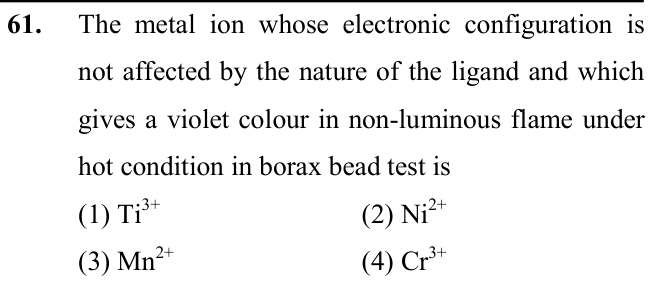
Candidate Response:
(1) (2) (3) (4)
⚡ OFFICIAL KEY: 2
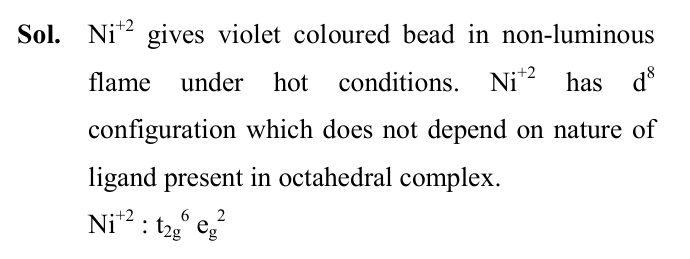
Step-by-Step Derivation
QUESTION 2
CHEMISTRY · Structure of Atom
SECTION A · MCQ (+4, -1)
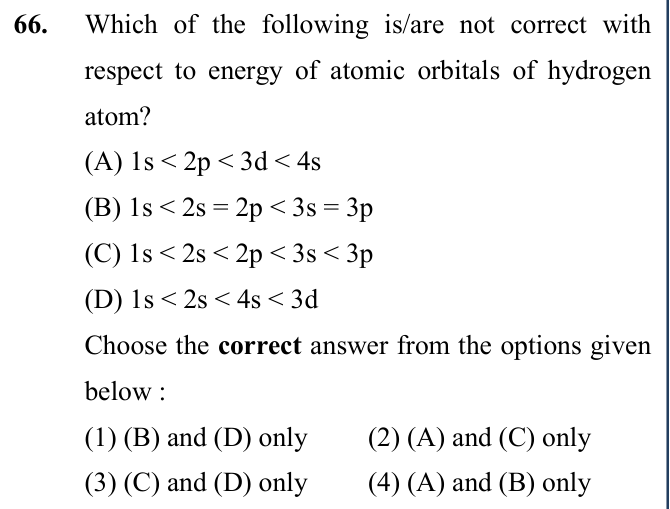
Candidate Response:
(1) (2) (3) (4)
⚡ OFFICIAL KEY: 3
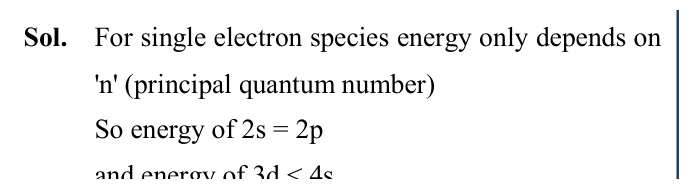
Step-by-Step Derivation
QUESTION 3
CHEMISTRY · Structure of Atom
SECTION A · MCQ (+4, -1)
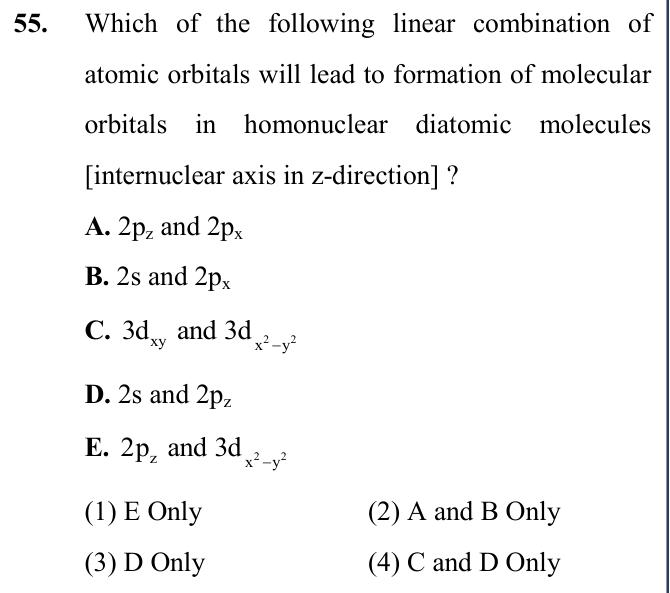
Candidate Response:
(1) (2) (3) (4)
⚡ OFFICIAL KEY: 3
Step-by-Step Derivation
QUESTION 4
CHEMISTRY · Structure of Atom
SECTION A · MCQ (+4, -1)
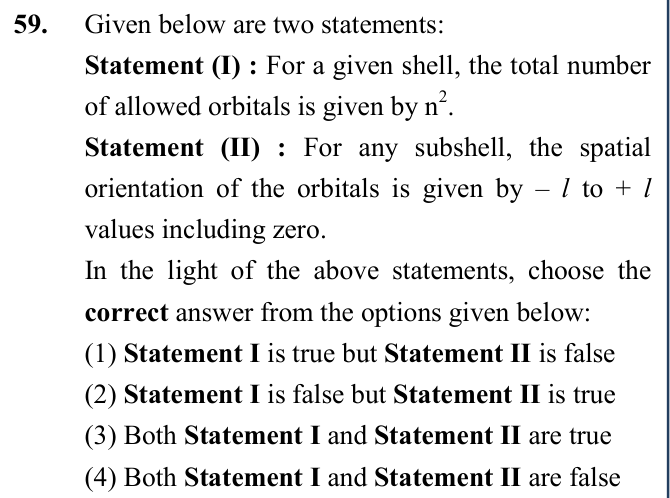
Candidate Response:
(1) (2) (3) (4)
⚡ OFFICIAL KEY: 3
Step-by-Step Derivation

QUESTION 5
CHEMISTRY · Structure of Atom
SECTION A · MCQ (+4, -1)
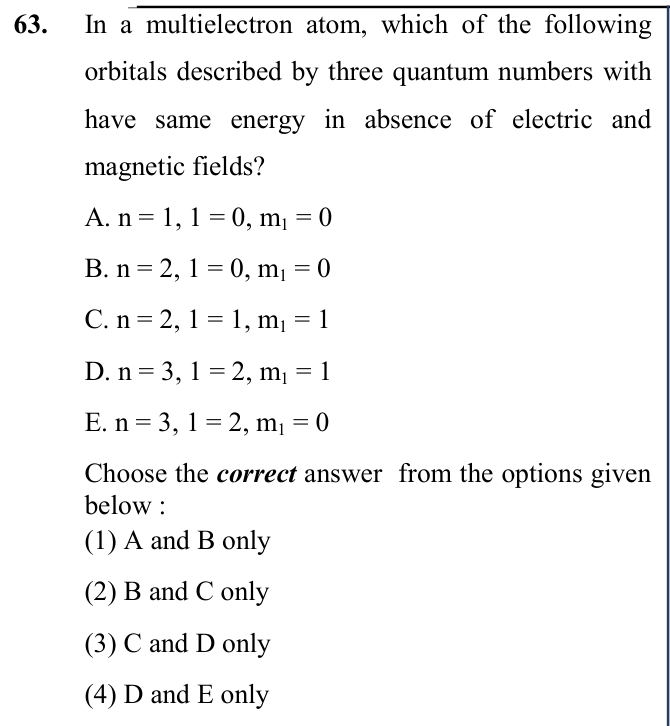
Candidate Response:
(1) (2) (3) (4)
⚡ OFFICIAL KEY: 4
Step-by-Step Derivation
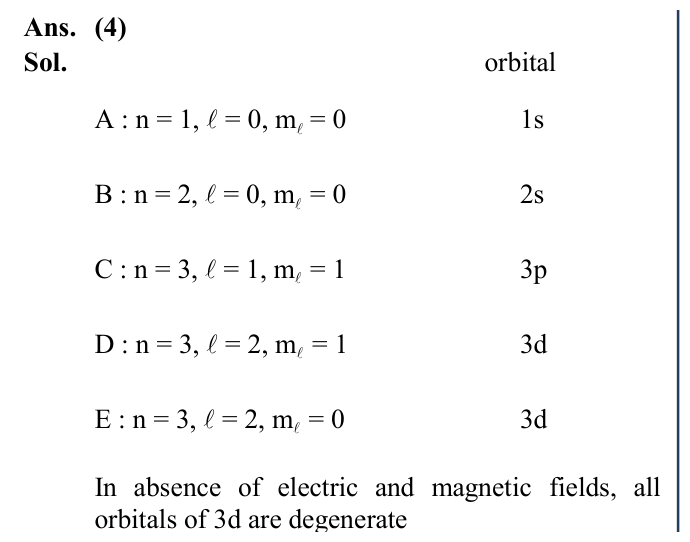
QUESTION 6
CHEMISTRY · Structure of Atom
SECTION A · MCQ (+4, -1)
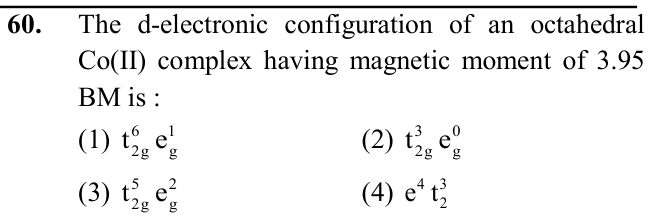
Candidate Response:
(1) (2) (3) (4)
⚡ OFFICIAL KEY: 3
Step-by-Step Derivation
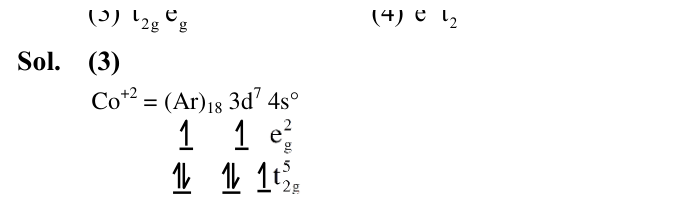
QUESTION 7
CHEMISTRY · Structure of Atom
SECTION A · MCQ (+4, -1)
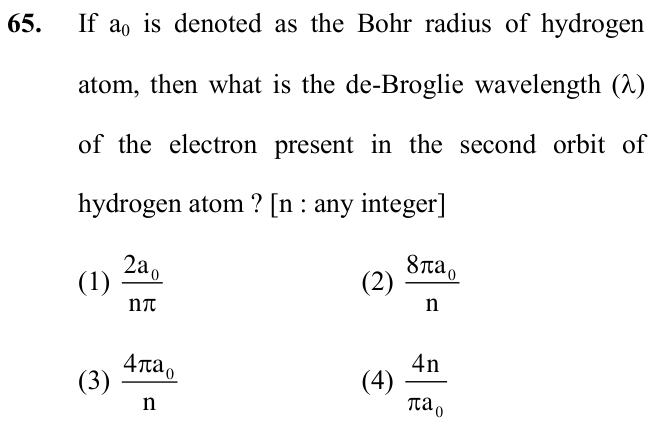
Candidate Response:
(1) (2) (3) (4)
⚡ OFFICIAL KEY: 2
Step-by-Step Derivation
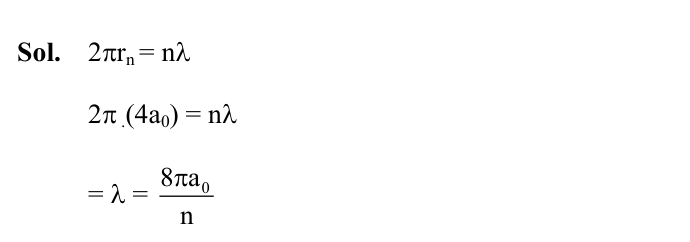
QUESTION 8
CHEMISTRY · Structure of Atom
SECTION B · NUMERICAL (+4, 0)

Numerical Value:
[ ]
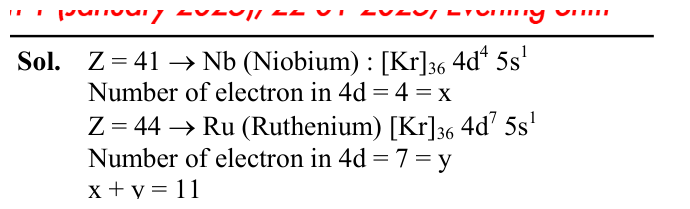
⚡ OFFICIAL KEY: 11
Step-by-Step Derivation
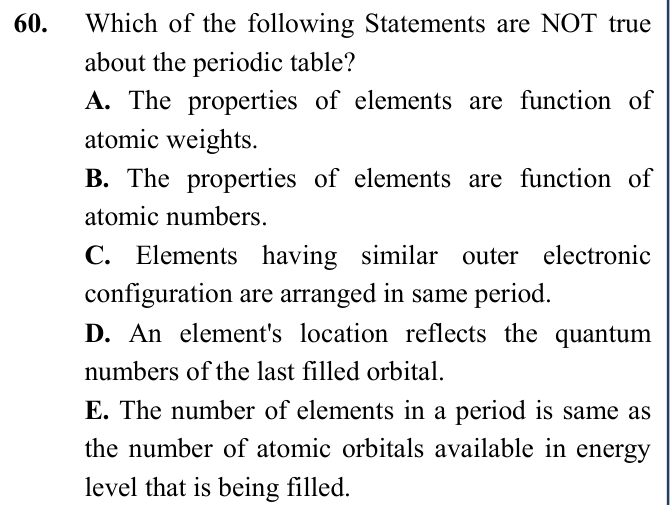
QUESTION 9
CHEMISTRY · Structure of Atom
SECTION A · MCQ (+4, -1)
Candidate Response:
(1) (2) (3) (4)
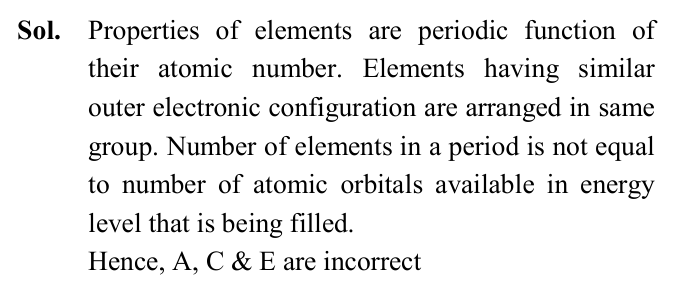
⚡ OFFICIAL KEY: 1
Step-by-Step Derivation
QUESTION 10
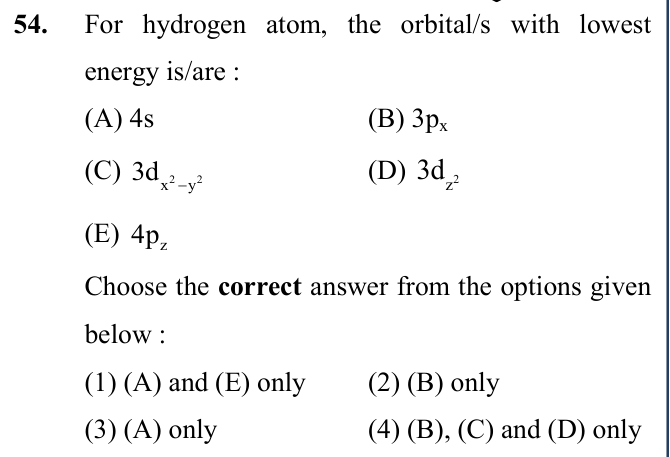
CHEMISTRY · Structure of Atom
SECTION A · MCQ (+4, -1)
Candidate Response:
(1) (2) (3) (4)
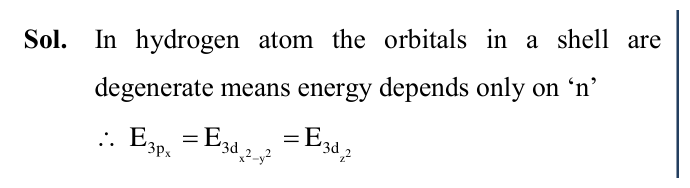
⚡ OFFICIAL KEY: 4
Step-by-Step Derivation
QUESTION 11
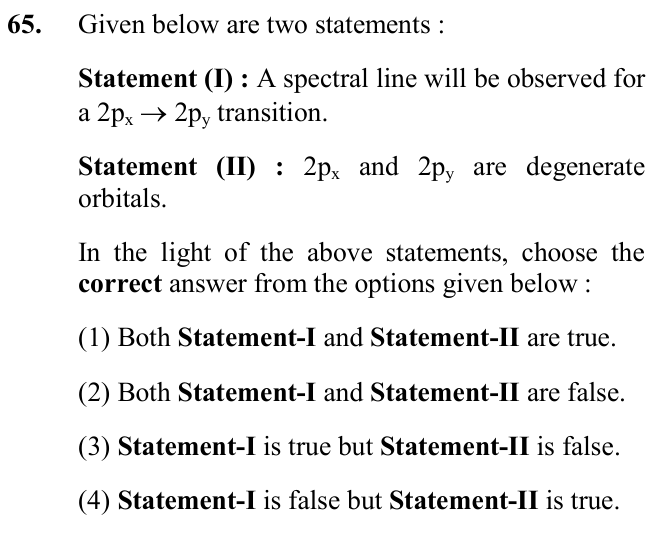
CHEMISTRY · Structure of Atom
SECTION A · MCQ (+4, -1)
Candidate Response:
(1) (2) (3) (4)
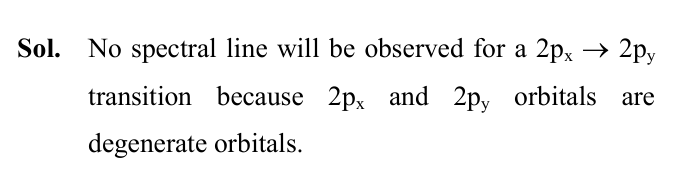
⚡ OFFICIAL KEY: 4
Step-by-Step Derivation
QUESTION 12
CHEMISTRY · Structure of Atom
SECTION A · MCQ (+4, -1)
Cathode rays consist of a stream of...
(1) Alpha particles
(2) Electrons
(3) Neutrons
(4) Protons
Candidate Response:
(1) (2) (3) (4)
⚡ OFFICIAL KEY: Electrons
Step-by-Step Derivation
Cathode rays are streams of electrons.
QUESTION 13
CHEMISTRY · Structure of Atom
SECTION A · MCQ (+4, -1)
According to Planck, radiant energy is emitted or absorbed discontinuously as small packets called...
(1) Orbits
(2) Quanta
(3) Waves
(4) Electrons
Candidate Response:
(1) (2) (3) (4)
⚡ OFFICIAL KEY: Quanta
Step-by-Step Derivation
Planck proposed energy is transferred in discrete quanta.
QUESTION 14
CHEMISTRY · Structure of Atom
SECTION A · MCQ (+4, -1)
Which spectral series of the hydrogen atom lies in the visible region?
(1) Lyman series
(2) Balmer series
(3) Brackett series
(4) Paschen series
Candidate Response:
(1) (2) (3) (4)
⚡ OFFICIAL KEY: Balmer series
Step-by-Step Derivation
The Balmer series (n → 2) falls in the visible region.
QUESTION 15
CHEMISTRY · Structure of Atom
SECTION A · MCQ (+4, -1)
What is the spin-only magnetic moment of the Fe3+ ion (Z = 26)?
(1) 3.87 BM
(2) 4.90 BM
(3) 5.92 BM
(4) 6.93 BM
Candidate Response:
(1) (2) (3) (4)
⚡ OFFICIAL KEY: 5.92 BM
Step-by-Step Derivation
Fe3+ has the configuration [Ar] 3d⁵ with 5 unpaired electrons. The spin-only magnetic moment is μ = sqrt[n(n + 2)] = sqrt[5 x 7] = √(35) = 5.92 BM.
QUESTION 16
CHEMISTRY · Structure of Atom
SECTION A · MCQ (+4, -1)
In a Rutherford α-scattering experiment, if the kinetic energy of the incident α particle is doubled, how does the distance of closest approach (r₀) change?
(1) It remains unchanged
(2) It is quadrupled
(3) It is halved
(4) It is doubled
Candidate Response:
(1) (2) (3) (4)
⚡ OFFICIAL KEY: It is halved
Step-by-Step Derivation
At closest approach all the kinetic energy K converts into electrostatic potential energy: K = (2Ze²)/(4·π*ε₀ * r₀), so r₀ is inversely proportional to K. Doubling K halves r₀.
QUESTION 17
CHEMISTRY · Structure of Atom
SECTION A · MCQ (+4, -1)
According to the Aufbau principle, electrons occupy orbitals in order of increasing...
(1) Shape
(2) Energy
(3) Spin
(4) Size
Candidate Response:
(1) (2) (3) (4)
⚡ OFFICIAL KEY: Energy
Step-by-Step Derivation
Aufbau filling proceeds from lower to higher energy orbitals.
QUESTION 18
CHEMISTRY · Structure of Atom
SECTION A · MCQ (+4, -1)
In Bohr's model, the angular momentum of an electron in a stationary orbit is an integral multiple of...
(1) h
(2) 2πh
(3) h/2π
(4) h²/4π
Candidate Response:
(1) (2) (3) (4)
⚡ OFFICIAL KEY: h/2π
Step-by-Step Derivation
Bohr quantised angular momentum as mvr = nh/2π.
QUESTION 19
CHEMISTRY · Structure of Atom
SECTION A · MCQ (+4, -1)
In the photoelectric effect, increasing the intensity of light of a fixed frequency increases the...
(1) Number of emitted electrons
(2) Work function of the metal
(3) Kinetic energy of electrons
(4) Threshold frequency
Candidate Response:
(1) (2) (3) (4)
⚡ OFFICIAL KEY: Number of emitted electrons
Step-by-Step Derivation
Intensity increases the count of photoelectrons; frequency increases their kinetic energy.
QUESTION 20
CHEMISTRY · Structure of Atom
SECTION A · MCQ (+4, -1)
What is the orbital angular momentum of an electron in a 3p orbital?
(1) 0
(2) h/(2·π)
(3) √(2) * h/(2·π)
(4) 2 * h/(2·π)
Candidate Response:
(1) (2) (3) (4)
⚡ OFFICIAL KEY: √(2) * h/(2·π)
Step-by-Step Derivation
For a p orbital the azimuthal quantum number is l = 1. Orbital angular momentum L = sqrt[l(l + 1)] * h/(2·π) = √(1 x 2) * h/(2·π) = √(2) * h/(2·π). An s electron (l = 0) would have L = 0.