
⚡ OFFICIAL NTA ASSESSMENT GENERATOR & WORD (.DOCX) EXPORTER
Classification of Elements and Periodicity in Properties · Practice Worksheet
JEE Main Chemistry · Curated Assessment Set Print directly or export as a beautifully formatted Microsoft Word document with embedded 180-DPI mathematical prompt clips and step-by-step derivations.
EDUPROD JEE MAIN TEST SERIES · NTA PATTERN
Classification of Elements and Periodicity in Properties · Practice Worksheet
JEE Main Chemistry · Curated Assessment Set · Assessment Code: JEE-101
Total Marks: 60
Marking: +4 / -1 (Sec A) · +4 / 0 (Sec B)
QUESTION 1
CHEMISTRY · Classification of Elements
SECTION A · MCQ (+4, -1)
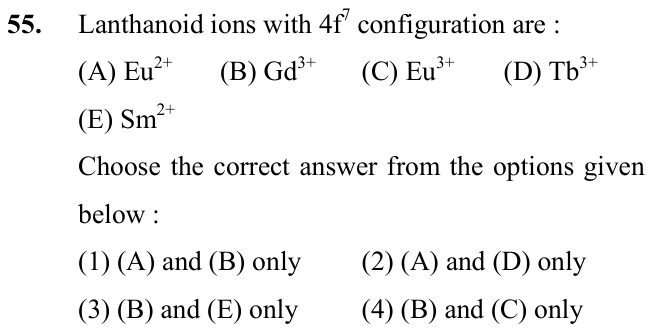
Candidate Response:
(1) (2) (3) (4)
QUESTION 2
CHEMISTRY · Classification of Elements
SECTION A · MCQ (+4, -1)
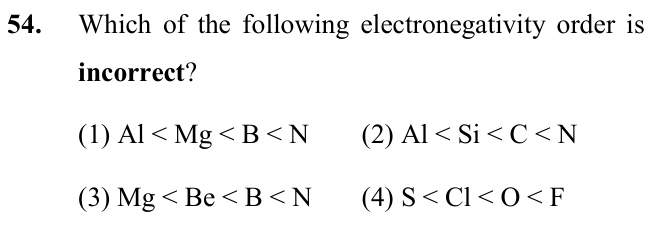
Candidate Response:
(1) (2) (3) (4)
QUESTION 3
CHEMISTRY · Classification of Elements
SECTION A · MCQ (+4, -1)
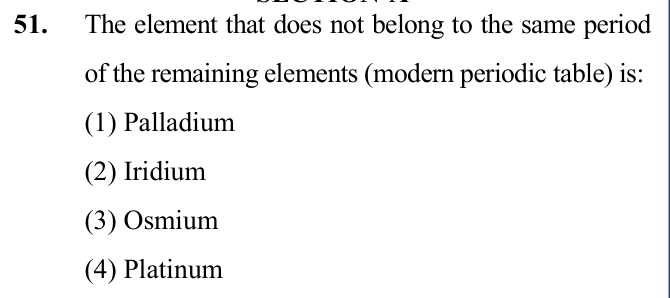
Candidate Response:
(1) (2) (3) (4)
QUESTION 4
CHEMISTRY · Classification of Elements
SECTION A · MCQ (+4, -1)
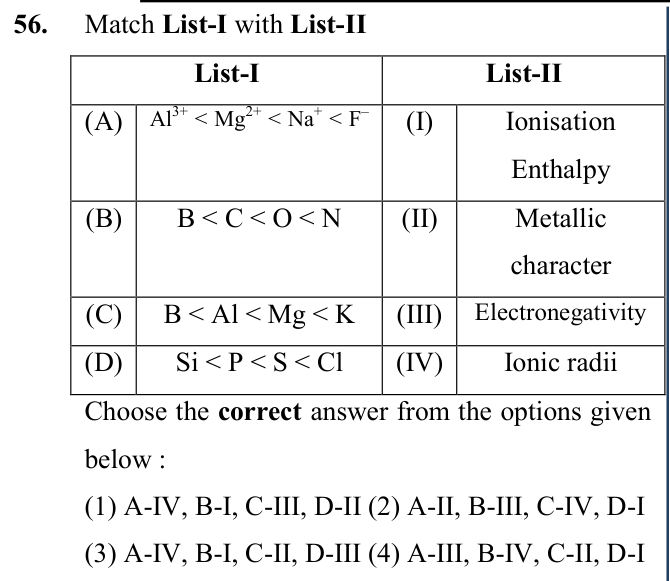
Candidate Response:
(1) (2) (3) (4)
QUESTION 5
CHEMISTRY · Classification of Elements
SECTION A · MCQ (+4, -1)
Candidate Response:
(1) (2) (3) (4)
QUESTION 6
CHEMISTRY · Classification of Elements
SECTION A · MCQ (+4, -1)
Candidate Response:
(1) (2) (3) (4)
QUESTION 7
CHEMISTRY · Classification of Elements
SECTION A · MCQ (+4, -1)
Candidate Response:
(1) (2) (3) (4)
QUESTION 8
CHEMISTRY · Classification of Elements and Periodicity in Properties
SECTION A · MCQ (+4, -1)
For a given atom, which type of radius is the largest?
(1) van der Waals radius
(2) covalent radius
(3) metallic radius
(4) ionic radius
Candidate Response:
(1) (2) (3) (4)
QUESTION 9
CHEMISTRY · Classification of Elements and Periodicity in Properties
SECTION A · MCQ (+4, -1)
Which of the following oxides is amphoteric?
(1) Na₂O
(2) Al₂O₃
(3) SO₂
(4) CaO
Candidate Response:
(1) (2) (3) (4)
QUESTION 10
CHEMISTRY · Classification of Elements and Periodicity in Properties
SECTION A · MCQ (+4, -1)
An element has IE₁ = 738 kJ/mol, IE₂ = 1451 kJ/mol, and IE₃ = 7733 kJ/mol. What is the formula of its chloride?
(1) MCl
(2) MCl₂
(3) MCl₃
(4) MCl₄
Candidate Response:
(1) (2) (3) (4)
QUESTION 11
CHEMISTRY · Classification of Elements and Periodicity in Properties
SECTION A · MCQ (+4, -1)
The modern periodic law states that the physical and chemical properties of elements are a periodic function of their
(1) mass number
(2) atomic number
(3) number of neutrons
(4) atomic mass
Candidate Response:
(1) (2) (3) (4)
QUESTION 12
CHEMISTRY · Classification of Elements and Periodicity in Properties
SECTION A · MCQ (+4, -1)
Chlorine has a more negative electron gain enthalpy (-349 kJ/mol) than fluorine (-328 kJ/mol). Why?
(1) Chlorine has fewer protons than fluorine
(2) Fluorine has a completely filled 2p subshell
(3) Fluorine's compact 2p orbital causes strong electron-electron repulsion against the incoming electron
(4) Chlorine has a higher electronegativity than fluorine
Candidate Response:
(1) (2) (3) (4)
QUESTION 13
CHEMISTRY · Classification of Elements and Periodicity in Properties
SECTION A · MCQ (+4, -1)
On the Mulliken scale, electronegativity is defined as the
(1) average of ionisation energy and electron affinity
(2) difference of ionisation energy and electron affinity
(3) ratio of charge to ionic radius
(4) square root of bond energy difference
Candidate Response:
(1) (2) (3) (4)
QUESTION 14
CHEMISTRY · Classification of Elements and Periodicity in Properties
SECTION A · MCQ (+4, -1)
An element has the valence electronic configuration 4d¹⁰ 5s¹. Identify its period, group, and block.
(1) Period 4, Group 11, d-block
(2) Period 5, Group 10, d-block
(3) Period 5, Group 1, s-block
(4) Period 5, Group 11, d-block
Candidate Response:
(1) (2) (3) (4)
QUESTION 15
CHEMISTRY · Classification of Elements and Periodicity in Properties
SECTION A · MCQ (+4, -1)
Among the isoelectronic ions K⁺, Cl⁻, Ca²⁺, and S²⁻ (all with 18 electrons), which has the largest ionic radius?
(1) Cl⁻
(2) K⁺
(3) Ca²⁺
(4) S²⁻
Candidate Response:
(1) (2) (3) (4)