
⚡ OFFICIAL NTA ASSESSMENT GENERATOR & WORD (.DOCX) EXPORTER
Classification of Elements and Periodicity in Properties · Practice Worksheet
JEE Main Chemistry · Curated Assessment Set Print directly or export as a beautifully formatted Microsoft Word document with embedded 180-DPI mathematical prompt clips and step-by-step derivations.
EDUPROD JEE MAIN TEST SERIES · NTA PATTERN
Classification of Elements and Periodicity in Properties · Practice Worksheet
JEE Main Chemistry · Curated Assessment Set · Assessment Code: JEE-101
Total Marks: 100
Marking: +4 / -1 (Sec A) · +4 / 0 (Sec B)
QUESTION 1
CHEMISTRY · Classification of Elements
SECTION A · MCQ (+4, -1)
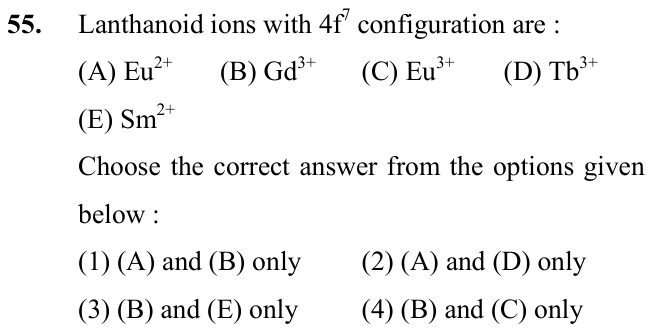
Candidate Response:
(1) (2) (3) (4)
⚡ OFFICIAL KEY: 1
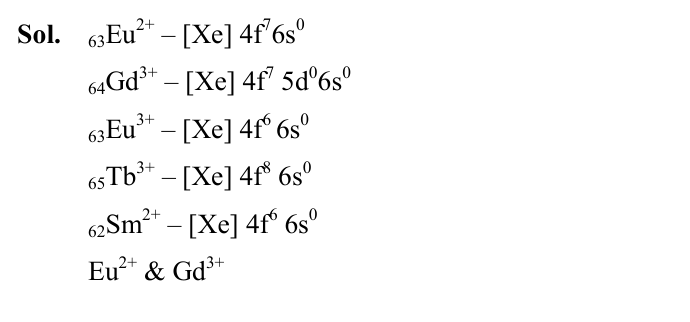
Step-by-Step Derivation
QUESTION 2
CHEMISTRY · Classification of Elements
SECTION A · MCQ (+4, -1)
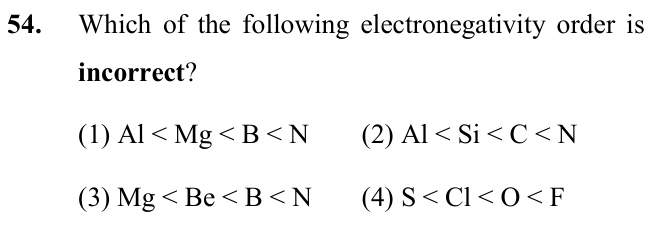
Candidate Response:
(1) (2) (3) (4)
⚡ OFFICIAL KEY: 1
Step-by-Step Derivation

QUESTION 3
CHEMISTRY · Classification of Elements
SECTION A · MCQ (+4, -1)
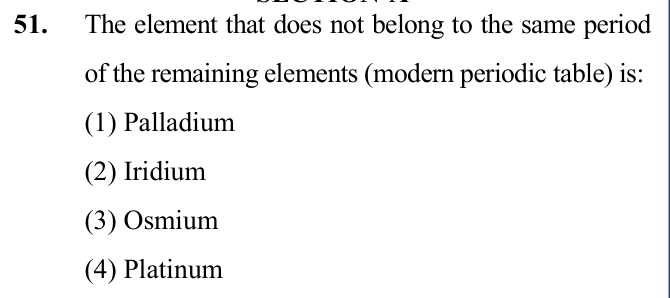
Candidate Response:
(1) (2) (3) (4)
⚡ OFFICIAL KEY: 1
Step-by-Step Derivation
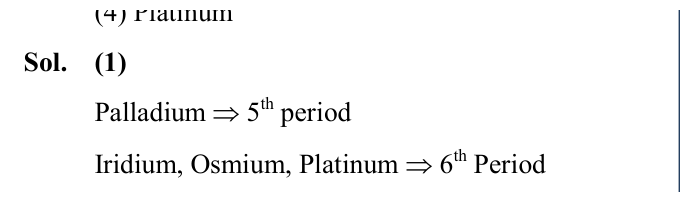
QUESTION 4
CHEMISTRY · Classification of Elements
SECTION A · MCQ (+4, -1)
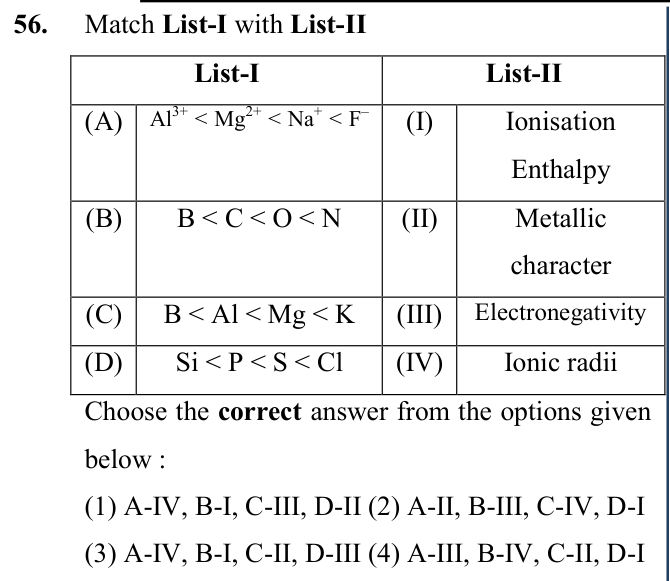
Candidate Response:
(1) (2) (3) (4)
⚡ OFFICIAL KEY: 3
Step-by-Step Derivation
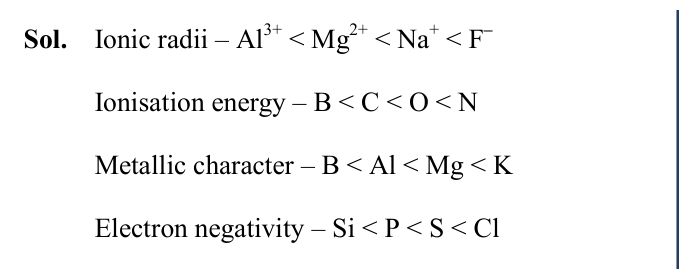
QUESTION 5
CHEMISTRY · Classification of Elements
SECTION A · MCQ (+4, -1)
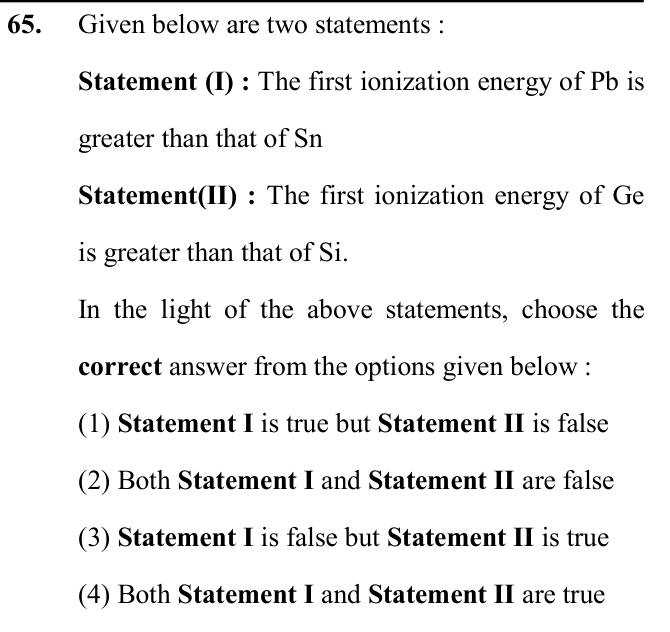
Candidate Response:
(1) (2) (3) (4)
⚡ OFFICIAL KEY: 1
Step-by-Step Derivation
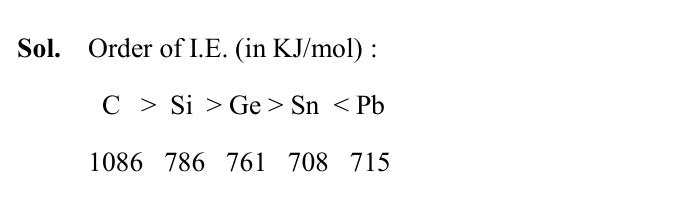
QUESTION 6
CHEMISTRY · Classification of Elements
SECTION A · MCQ (+4, -1)
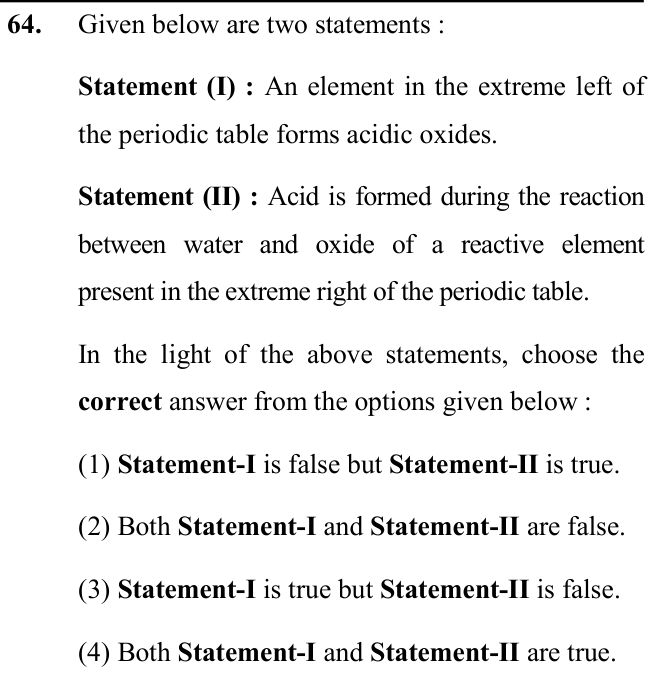
Candidate Response:
(1) (2) (3) (4)
⚡ OFFICIAL KEY: 1
Step-by-Step Derivation
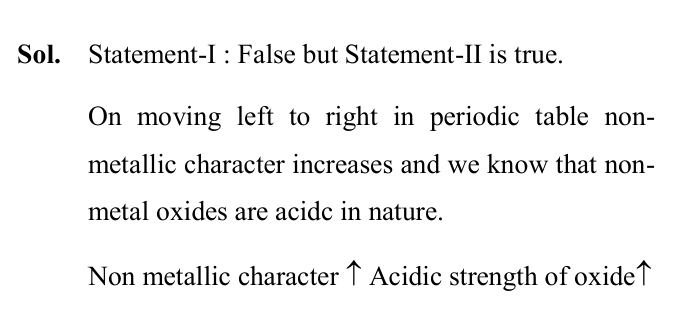
QUESTION 7
CHEMISTRY · Classification of Elements
SECTION A · MCQ (+4, -1)
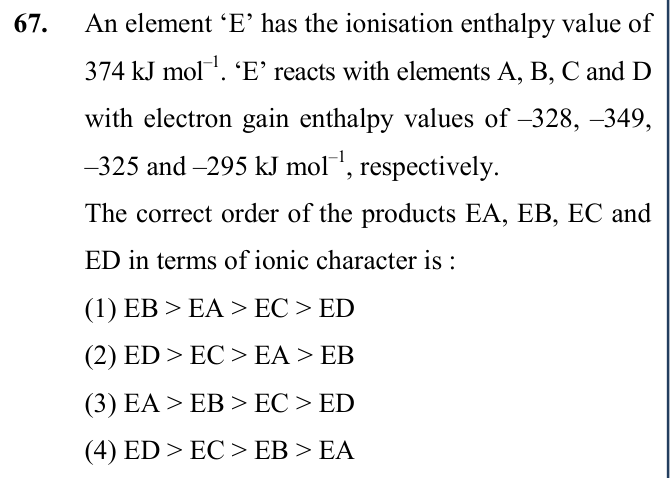
Candidate Response:
(1) (2) (3) (4)
⚡ OFFICIAL KEY: 1
Step-by-Step Derivation

QUESTION 8
CHEMISTRY · Classification of Elements and Periodicity in Properties
SECTION A · MCQ (+4, -1)
For a given atom, which type of radius is the largest?
(1) van der Waals radius
(2) covalent radius
(3) metallic radius
(4) ionic radius
Candidate Response:
(1) (2) (3) (4)
⚡ OFFICIAL KEY: van der Waals radius
Step-by-Step Derivation
The van der Waals radius (non-bonded contact) is larger than the covalent or metallic radius.
QUESTION 9
CHEMISTRY · Classification of Elements and Periodicity in Properties
SECTION A · MCQ (+4, -1)
Which of the following oxides is amphoteric?
(1) Na₂O
(2) Al₂O₃
(3) SO₂
(4) CaO
Candidate Response:
(1) (2) (3) (4)
⚡ OFFICIAL KEY: Al₂O₃
Step-by-Step Derivation
Aluminium oxide reacts with both acids and bases: Al₂O₃ + 6HCl -> 2AlCl₃ + 3H₂O (as a base) and Al₂O₃ + 2NaOH + 3H₂O -> 2Na[Al(OH)₄] (as an acid). Na₂O and CaO are basic; SO₂ is acidic.
QUESTION 10
CHEMISTRY · Classification of Elements and Periodicity in Properties
SECTION A · MCQ (+4, -1)
An element has IE₁ = 738 kJ/mol, IE₂ = 1451 kJ/mol, and IE₃ = 7733 kJ/mol. What is the formula of its chloride?
(1) MCl
(2) MCl₂
(3) MCl₃
(4) MCl₄
Candidate Response:
(1) (2) (3) (4)
⚡ OFFICIAL KEY: MCl₂
Step-by-Step Derivation
The huge jump between IE₂ and IE₃ means the first two electrons are valence electrons and the third comes from a stable noble-gas core. Hence the element has 2 valence electrons (magnesium) and forms MCl₂.
QUESTION 11
CHEMISTRY · Classification of Elements and Periodicity in Properties
SECTION A · MCQ (+4, -1)
The modern periodic law states that the physical and chemical properties of elements are a periodic function of their
(1) mass number
(2) atomic number
(3) number of neutrons
(4) atomic mass
Candidate Response:
(1) (2) (3) (4)
⚡ OFFICIAL KEY: atomic number
Step-by-Step Derivation
Moseley showed that properties depend on atomic number, not atomic mass.
QUESTION 12
CHEMISTRY · Classification of Elements and Periodicity in Properties
SECTION A · MCQ (+4, -1)
Chlorine has a more negative electron gain enthalpy (-349 kJ/mol) than fluorine (-328 kJ/mol). Why?
(1) Chlorine has fewer protons than fluorine
(2) Fluorine has a completely filled 2p subshell
(3) Fluorine's compact 2p orbital causes strong electron-electron repulsion against the incoming electron
(4) Chlorine has a higher electronegativity than fluorine
Candidate Response:
(1) (2) (3) (4)
⚡ OFFICIAL KEY: Fluorine's compact 2p orbital causes strong electron-electron repulsion against the incoming electron
Step-by-Step Derivation
Fluorine's 2p subshell is very small and dense, so an incoming electron experiences severe repulsion from the seven existing electrons, partially offsetting nuclear attraction. Chlorine's larger, more diffuse 3p subshell accommodates the electron with less repulsion.
QUESTION 13
CHEMISTRY · Classification of Elements and Periodicity in Properties
SECTION A · MCQ (+4, -1)
On the Mulliken scale, electronegativity is defined as the
(1) average of ionisation energy and electron affinity
(2) difference of ionisation energy and electron affinity
(3) ratio of charge to ionic radius
(4) square root of bond energy difference
Candidate Response:
(1) (2) (3) (4)
⚡ OFFICIAL KEY: average of ionisation energy and electron affinity
Step-by-Step Derivation
Mulliken electronegativity is proportional to (IE + EA)/2, unlike Pauling's bond-energy scale.
QUESTION 14
CHEMISTRY · Classification of Elements and Periodicity in Properties
SECTION A · MCQ (+4, -1)
An element has the valence electronic configuration 4d¹⁰ 5s¹. Identify its period, group, and block.
(1) Period 4, Group 11, d-block
(2) Period 5, Group 10, d-block
(3) Period 5, Group 1, s-block
(4) Period 5, Group 11, d-block
Candidate Response:
(1) (2) (3) (4)
⚡ OFFICIAL KEY: Period 5, Group 11, d-block
Step-by-Step Derivation
The highest principal quantum number n = 5 gives Period 5. The differentiating electron enters the d-subshell (block = d). Group = (n-1)d electrons + ns electrons = 10 + 1 = 11 (silver, Ag).
QUESTION 15
CHEMISTRY · Classification of Elements and Periodicity in Properties
SECTION A · MCQ (+4, -1)
Among the isoelectronic ions K⁺, Cl⁻, Ca²⁺, and S²⁻ (all with 18 electrons), which has the largest ionic radius?
(1) Cl⁻
(2) K⁺
(3) Ca²⁺
(4) S²⁻
Candidate Response:
(1) (2) (3) (4)
⚡ OFFICIAL KEY: S²⁻
Step-by-Step Derivation
With the same number of electrons, radius is inversely proportional to nuclear charge. S²⁻ has the smallest atomic number (Z = 16), so its electron cloud is held least tightly and it is the largest.
QUESTION 16
CHEMISTRY · Classification of Elements and Periodicity in Properties
SECTION A · MCQ (+4, -1)
Lithium shows a diagonal relationship with which element?
(1) magnesium
(2) calcium
(3) sodium
(4) potassium
Candidate Response:
(1) (2) (3) (4)
⚡ OFFICIAL KEY: magnesium
Step-by-Step Derivation
Li and Mg have similar size and polarising power, giving diagonal similarity.
QUESTION 17
CHEMISTRY · Classification of Elements and Periodicity in Properties
SECTION A · MCQ (+4, -1)
Elements whose last electron enters the (n-1)d orbital belong to which block of the periodic table?
(1) f-block
(2) s-block
(3) d-block
(4) p-block
Candidate Response:
(1) (2) (3) (4)
⚡ OFFICIAL KEY: d-block
Step-by-Step Derivation
The d-block is filled when the last electron enters the (n-1)d subshell.
QUESTION 18
CHEMISTRY · Classification of Elements and Periodicity in Properties
SECTION A · MCQ (+4, -1)
Which halogen has the most negative (most favourable) electron gain enthalpy?
(1) bromine
(2) chlorine
(3) iodine
(4) fluorine
Candidate Response:
(1) (2) (3) (4)
⚡ OFFICIAL KEY: chlorine
Step-by-Step Derivation
Fluorine's small size causes strong electron-electron repulsion, so chlorine is more negative.
QUESTION 19
CHEMISTRY · Classification of Elements and Periodicity in Properties
SECTION A · MCQ (+4, -1)
The first ionisation enthalpy of nitrogen is higher than that of oxygen because nitrogen has a
(1) half-filled 2p subshell
(2) smaller atomic radius
(3) higher electronegativity
(4) fully filled 2s orbital
Candidate Response:
(1) (2) (3) (4)
⚡ OFFICIAL KEY: half-filled 2p subshell
Step-by-Step Derivation
The half-filled 2p3 configuration is extra stable, raising nitrogen's first IE.
QUESTION 20
CHEMISTRY · Classification of Elements and Periodicity in Properties
SECTION A · MCQ (+4, -1)
Why does [BF₆]³⁻ not exist, whereas [AlF₆]³⁻ is well known?
(1) Fluorine is too small to bond to boron
(2) Boron is more electronegative than aluminium
(3) Aluminium has a lower oxidation state than boron
(4) Boron (Period 2) has no vacant d-orbitals to exceed a covalency of 4; aluminium (Period 3) has vacant 3d orbitals
Candidate Response:
(1) (2) (3) (4)
⚡ OFFICIAL KEY: Boron (Period 2) has no vacant d-orbitals to exceed a covalency of 4; aluminium (Period 3) has vacant 3d orbitals
Step-by-Step Derivation
Period 2 elements have only four valence orbitals (one 2s, three 2p) and no d-orbitals, so their maximum covalency is 4 ([BF₄]- forms, [BF₆]³⁻ cannot). Aluminium has vacant 3d orbitals and can accept six ligands.
QUESTION 21
CHEMISTRY · Classification of Elements and Periodicity in Properties
SECTION A · MCQ (+4, -1)
For isoelectronic species, how does ionic radius change with increasing nuclear charge?
(1) it decreases
(2) it increases
(3) it stays constant
(4) it first increases then decreases
Candidate Response:
(1) (2) (3) (4)
⚡ OFFICIAL KEY: it decreases
Step-by-Step Derivation
Greater nuclear charge pulls the same number of electrons closer, shrinking the ion.
QUESTION 22
CHEMISTRY · Classification of Elements and Periodicity in Properties
SECTION A · MCQ (+4, -1)
For the same element, how do the three types of atomic radius compare, from smallest to largest?
(1) covalent < van der Waals < metallic
(2) covalent < metallic < van der Waals
(3) metallic < covalent < van der Waals
(4) van der Waals < metallic < covalent
Candidate Response:
(1) (2) (3) (4)
⚡ OFFICIAL KEY: covalent < metallic < van der Waals
Step-by-Step Derivation
Covalent bonds involve orbital overlap that pulls nuclei closest together; metallic radii are intermediate; van der Waals radii (non-bonded contacts) are largest because there is no overlap.
QUESTION 23
CHEMISTRY · Classification of Elements and Periodicity in Properties
SECTION A · MCQ (+4, -1)
Which carbon atom is the most electronegative: the carbon in ethane (sp³), ethene (sp²), or ethyne (sp)?
(1) All three are identical
(2) Ethyne carbon (sp, 50% s-character)
(3) Ethane carbon (sp³)
(4) Ethene carbon (sp²)
Candidate Response:
(1) (2) (3) (4)
⚡ OFFICIAL KEY: Ethyne carbon (sp, 50% s-character)
Step-by-Step Derivation
More s-character means the bonding electrons are held closer to the nucleus. The sp-hybridised ethyne carbon (50% s-character) is more electronegative than sp² (33%) or sp³ (25%).
QUESTION 24
CHEMISTRY · Classification of Elements and Periodicity in Properties
SECTION A · MCQ (+4, -1)
A very large jump between two successive ionisation enthalpies indicates that the next electron is being removed from
(1) the valence shell
(2) a stable noble-gas core
(3) a bonding orbital
(4) a half-filled orbital
Candidate Response:
(1) (2) (3) (4)
⚡ OFFICIAL KEY: a stable noble-gas core
Step-by-Step Derivation
Removing an electron from the stable noble-gas core needs a large energy jump.
QUESTION 25
CHEMISTRY · Classification of Elements and Periodicity in Properties
SECTION A · MCQ (+4, -1)
Which period 3 oxide is amphoteric?
(1) SO3
(2) Al2O3
(3) MgO
(4) Na2O
Candidate Response:
(1) (2) (3) (4)
⚡ OFFICIAL KEY: Al2O3
Step-by-Step Derivation
Al2O3 reacts with both acids and bases, sitting between basic and acidic oxides.