
⚡ OFFICIAL NTA ASSESSMENT GENERATOR & WORD (.DOCX) EXPORTER
Chemical Bonding and Molecular Structure · Practice Worksheet
JEE Main Chemistry · Curated Assessment Set Print directly or export as a beautifully formatted Microsoft Word document with embedded 180-DPI mathematical prompt clips and step-by-step derivations.
EDUPROD JEE MAIN TEST SERIES · NTA PATTERN
Chemical Bonding and Molecular Structure · Practice Worksheet
JEE Main Chemistry · Curated Assessment Set · Assessment Code: JEE-101
Total Marks: 60
Marking: +4 / -1 (Sec A) · +4 / 0 (Sec B)
QUESTION 1
CHEMISTRY · Chemical Bonding & Molecular Structure
SECTION A · MCQ (+4, -1)
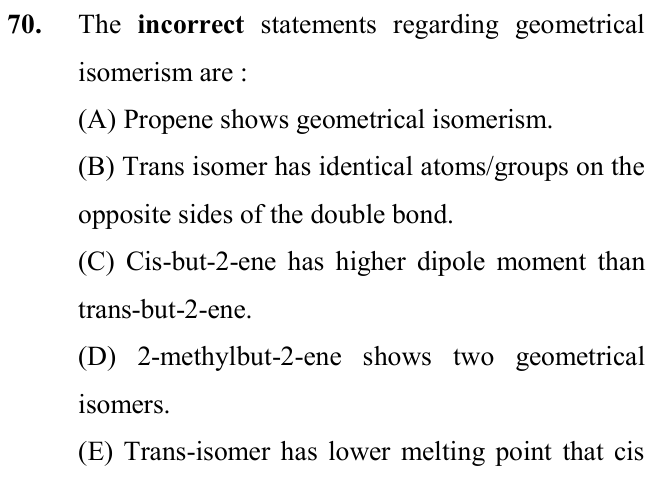
Candidate Response:
(1) (2) (3) (4)
⚡ OFFICIAL KEY: 1
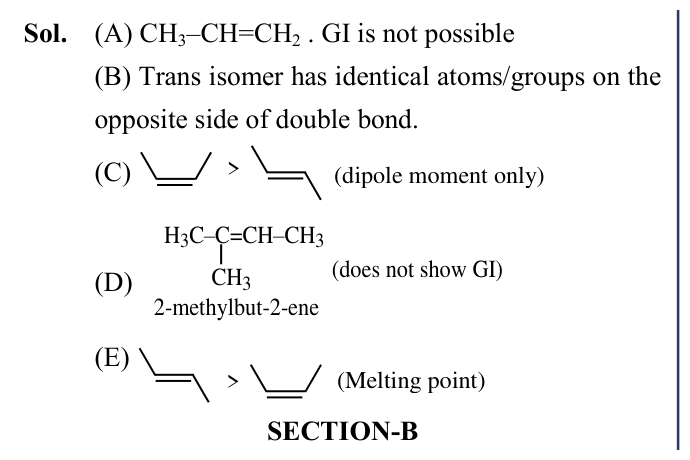
Step-by-Step Derivation
QUESTION 2
CHEMISTRY · Chemical Bonding & Molecular Structure
SECTION A · MCQ (+4, -1)
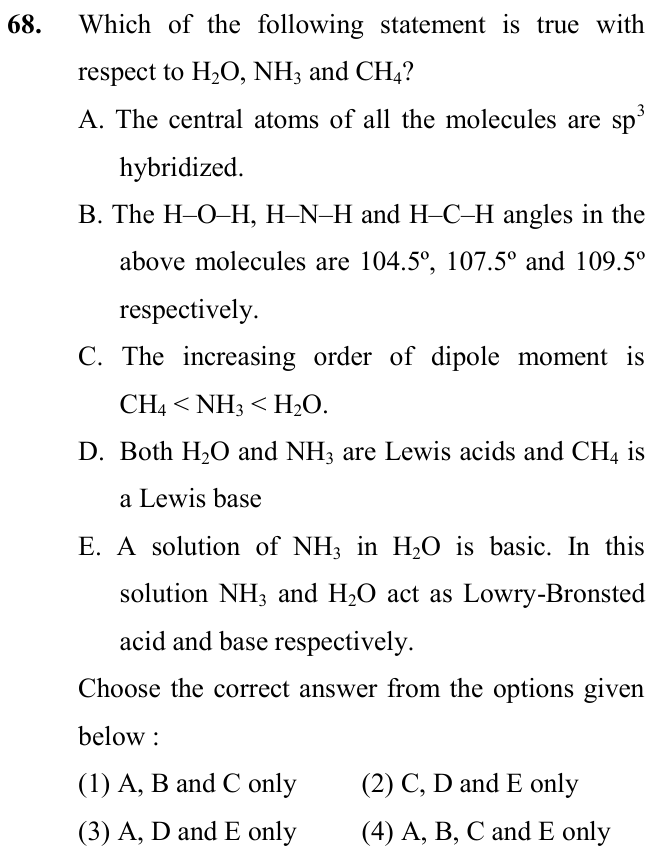
Candidate Response:
(1) (2) (3) (4)
⚡ OFFICIAL KEY: 1
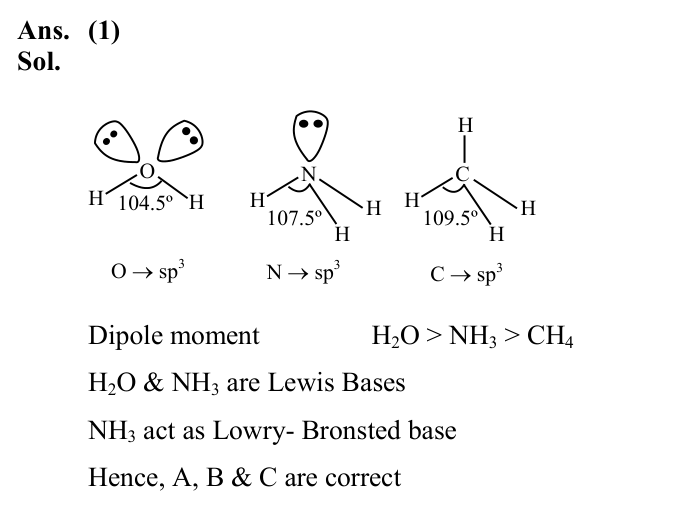
Step-by-Step Derivation
QUESTION 3
CHEMISTRY · Chemical Bonding & Molecular Structure
SECTION A · MCQ (+4, -1)
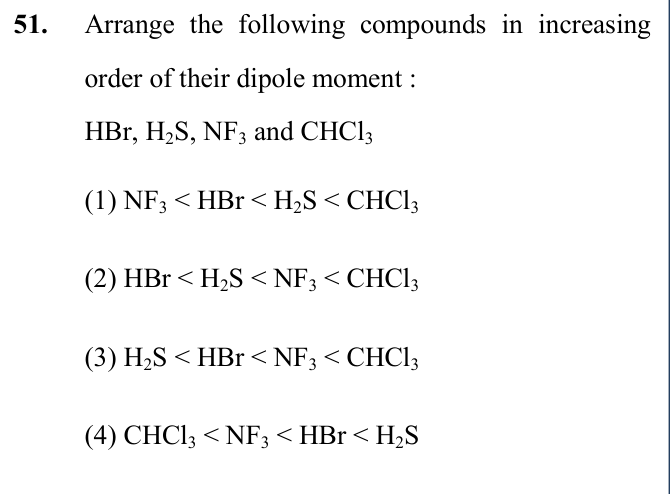
Candidate Response:
(1) (2) (3) (4)
⚡ OFFICIAL KEY: 1
Step-by-Step Derivation
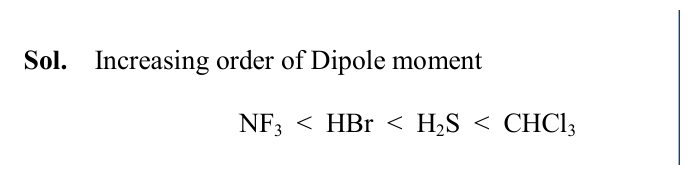
QUESTION 4
CHEMISTRY · Chemical Bonding & Molecular Structure
SECTION A · MCQ (+4, -1)
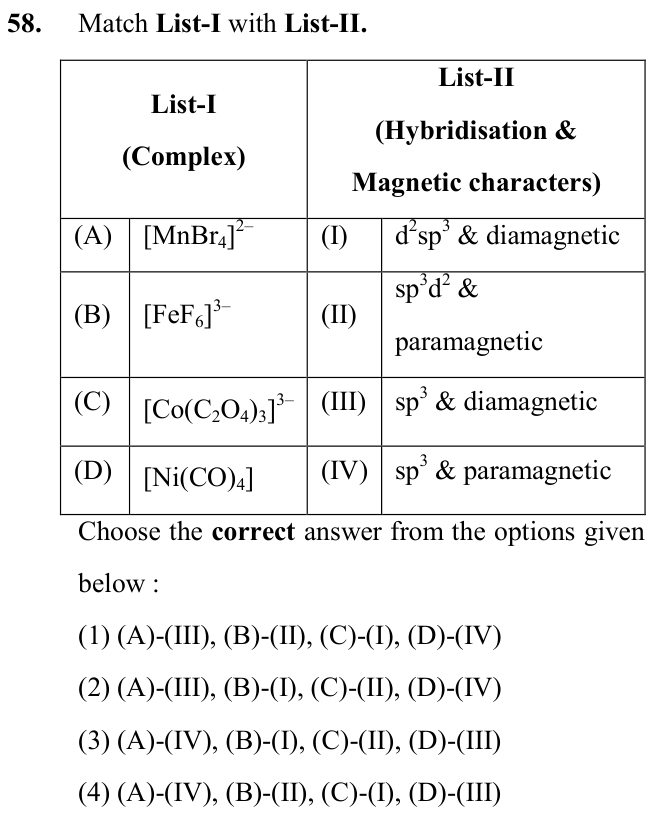
Candidate Response:
(1) (2) (3) (4)
⚡ OFFICIAL KEY: 4
Step-by-Step Derivation
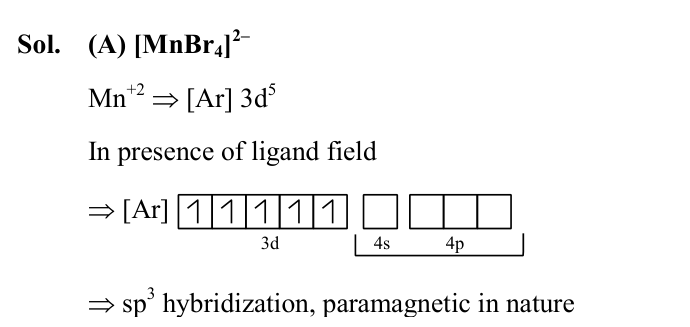
QUESTION 5
CHEMISTRY · Chemical Bonding and Molecular Structure
SECTION A · MCQ (+4, -1)
For N2 (Z <= 7), the σ(2p) molecular orbital is higher in energy than the π(2p) orbitals because of
(1) nuclear repulsion
(2) 2s-2p mixing
(3) spin pairing
(4) stronger π overlap
Candidate Response:
(1) (2) (3) (4)
⚡ OFFICIAL KEY: 2s-2p mixing
Step-by-Step Derivation
s-p mixing raises σ(2p) above π(2p) for Z <= 7, reversing the usual order.
QUESTION 6
CHEMISTRY · Chemical Bonding and Molecular Structure
SECTION A · MCQ (+4, -1)
The most stable Lewis structure of a molecule is the one in which the formal charges are
(1) all positive
(2) closest to zero
(3) all negative
(4) largest in magnitude
Candidate Response:
(1) (2) (3) (4)
⚡ OFFICIAL KEY: closest to zero
Step-by-Step Derivation
Structures with formal charges near zero are the most stable.
QUESTION 7
CHEMISTRY · Chemical Bonding and Molecular Structure
SECTION A · MCQ (+4, -1)
Ortho-nitrophenol exhibits which type of hydrogen bonding?
(1) no hydrogen bonding
(2) both intramolecular and intermolecular
(3) intramolecular
(4) intermolecular
Candidate Response:
(1) (2) (3) (4)
⚡ OFFICIAL KEY: intramolecular
Step-by-Step Derivation
The -OH and -NO2 groups are close enough in the ortho position for intramolecular H-bonding.
QUESTION 8
CHEMISTRY · Chemical Bonding and Molecular Structure
SECTION A · MCQ (+4, -1)
Which compound has the higher lattice enthalpy?
(1) LiCl
(2) MgO
(3) KCl
(4) NaCl
Candidate Response:
(1) (2) (3) (4)
⚡ OFFICIAL KEY: MgO
Step-by-Step Derivation
MgO has doubly charged ions (Mg2+, O2-), so the product z1·z2 = 4 gives an immense lattice enthalpy (~3900 kJ/mol).
QUESTION 9
CHEMISTRY · Chemical Bonding and Molecular Structure
SECTION A · MCQ (+4, -1)
In VSEPR theory, the strongest electron-pair repulsion is between
(1) all pairs equally
(2) lone pair and lone pair
(3) lone pair and bond pair
(4) bond pair and bond pair
Candidate Response:
(1) (2) (3) (4)
⚡ OFFICIAL KEY: lone pair and lone pair
Step-by-Step Derivation
Repulsion order is lone pair-lone pair > lone pair-bond pair > bond pair-bond pair.
QUESTION 10
CHEMISTRY · Chemical Bonding and Molecular Structure
SECTION A · MCQ (+4, -1)
According to Fajan's rules, covalent character in an ionic compound increases when the cation is
(1) small and highly charged
(2) large and singly charged
(3) large and highly charged
(4) small and singly charged
Candidate Response:
(1) (2) (3) (4)
⚡ OFFICIAL KEY: small and highly charged
Step-by-Step Derivation
A small, highly charged cation polarises the anion, increasing covalent character.
QUESTION 11
CHEMISTRY · Chemical Bonding and Molecular Structure
SECTION A · MCQ (+4, -1)
In a trigonal bipyramidal arrangement, lone pairs preferentially occupy which positions?
(1) apical
(2) axial
(3) alternating axial and equatorial
(4) equatorial
Candidate Response:
(1) (2) (3) (4)
⚡ OFFICIAL KEY: equatorial
Step-by-Step Derivation
Equatorial lone pairs experience less repulsion than axial lone pairs.
QUESTION 12
CHEMISTRY · Chemical Bonding and Molecular Structure
SECTION A · MCQ (+4, -1)
Arrange the following in order of INCREASING bond length: O2²⁻, O2-, O2, O2+.
(1) O2 < O2+ < O2- < O2²⁻
(2) O2²⁻ < O2- < O2 < O2+
(3) O2+ < O2- < O2 < O2²⁻
(4) O2+ < O2 < O2- < O2²⁻
Candidate Response:
(1) (2) (3) (4)
⚡ OFFICIAL KEY: O2+ < O2 < O2- < O2²⁻
Step-by-Step Derivation
Bond order: O2+ = 2.5, O2 = 2.0, O2- = 1.5, O2²⁻ = 1.0. Higher bond order → shorter bond.
QUESTION 13
CHEMISTRY · Chemical Bonding and Molecular Structure
SECTION A · MCQ (+4, -1)
The steric number of a central atom is the sum of its
(1) σ bonds and lone pairs
(2) σ and π bonds
(3) bonds and all valence electrons
(4) π bonds and lone pairs
Candidate Response:
(1) (2) (3) (4)
⚡ OFFICIAL KEY: σ bonds and lone pairs
Step-by-Step Derivation
Steric number (σ bonds + lone pairs) fixes the hybridisation type.
QUESTION 14
CHEMISTRY · Chemical Bonding and Molecular Structure
SECTION A · MCQ (+4, -1)
Arrange the following in increasing covalent character: LiF, LiCl, LiBr, LiI.
(1) LiBr < LiCl < LiF < LiI
(2) LiF < LiI < LiCl < LiBr
(3) LiI < LiBr < LiCl < LiF
(4) LiF < LiCl < LiBr < LiI
Candidate Response:
(1) (2) (3) (4)
⚡ OFFICIAL KEY: LiF < LiCl < LiBr < LiI
Step-by-Step Derivation
As the anion grows (F- < Cl- < Br- < I-), it is polarised more by Li+, so covalent character increases down the halide series.
QUESTION 15
CHEMISTRY · Chemical Bonding and Molecular Structure
SECTION A · MCQ (+4, -1)
What is the formal charge on each atom in carbon dioxide, O=C=O?
(1) C = 0, each O = 0
(2) C = +2, each O = -1
(3) C = 0, each O = -1
(4) C = -2, each O = +1
Candidate Response:
(1) (2) (3) (4)
⚡ OFFICIAL KEY: C = 0, each O = 0
Step-by-Step Derivation
C: 4 - 0 - (1/2)(8) = 0. Each O: 6 - 4 - (1/2)(4) = 0. All formal charges are zero.