
⚡ OFFICIAL NTA ASSESSMENT GENERATOR & WORD (.DOCX) EXPORTER
Chemical Bonding and Molecular Structure · Practice Worksheet
JEE Main Chemistry · Curated Assessment Set Print directly or export as a beautifully formatted Microsoft Word document with embedded 180-DPI mathematical prompt clips and step-by-step derivations.
EDUPROD JEE MAIN TEST SERIES · NTA PATTERN
Chemical Bonding and Molecular Structure · Practice Worksheet
JEE Main Chemistry · Curated Assessment Set · Assessment Code: JEE-101
Total Marks: 100
Marking: +4 / -1 (Sec A) · +4 / 0 (Sec B)
QUESTION 1
CHEMISTRY · Chemical Bonding & Molecular Structure
SECTION A · MCQ (+4, -1)
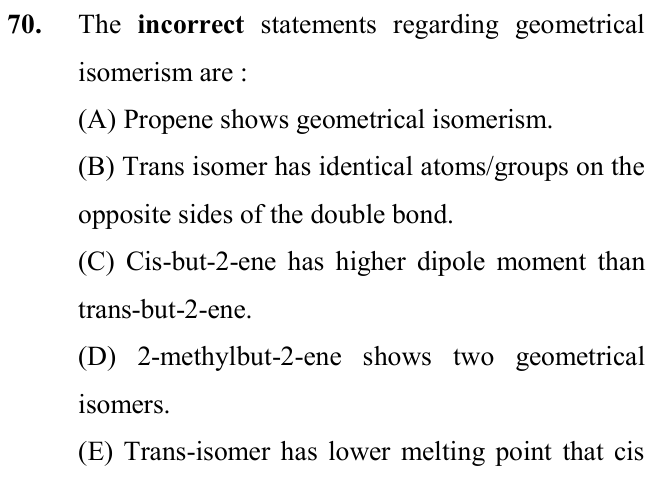
Candidate Response:
(1) (2) (3) (4)
⚡ OFFICIAL KEY: 1
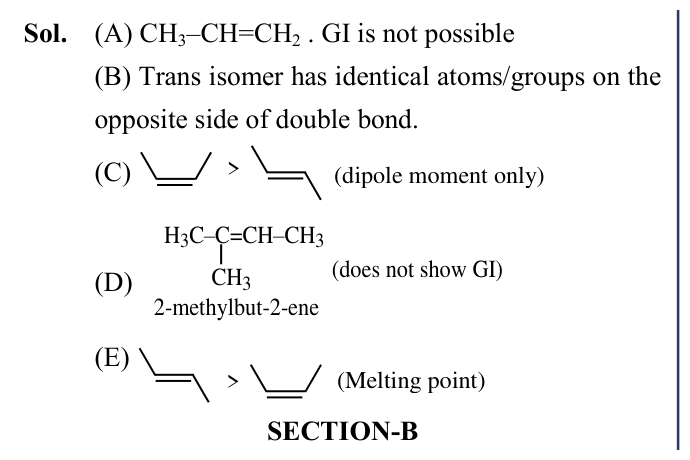
Step-by-Step Derivation
QUESTION 2
CHEMISTRY · Chemical Bonding & Molecular Structure
SECTION A · MCQ (+4, -1)
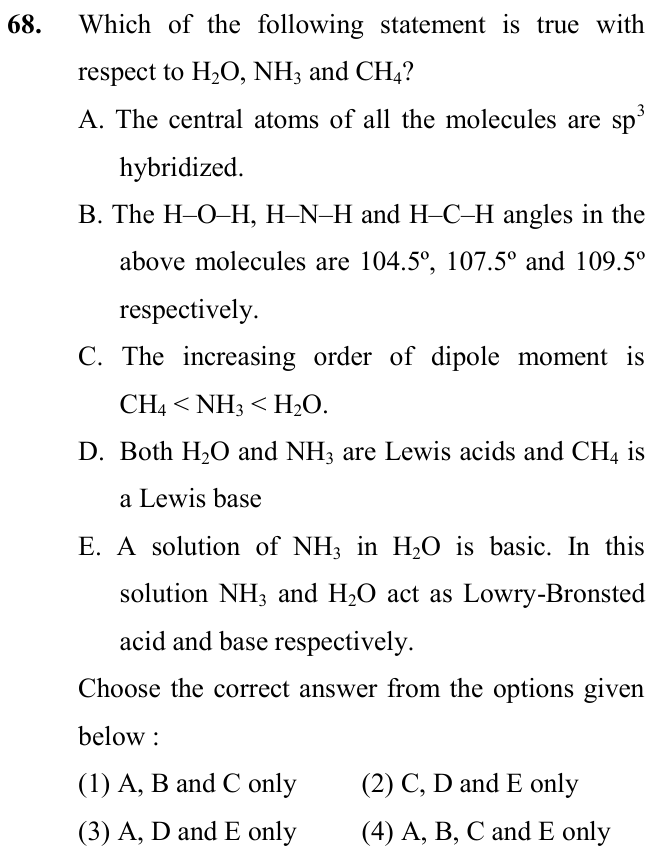
Candidate Response:
(1) (2) (3) (4)
⚡ OFFICIAL KEY: 1
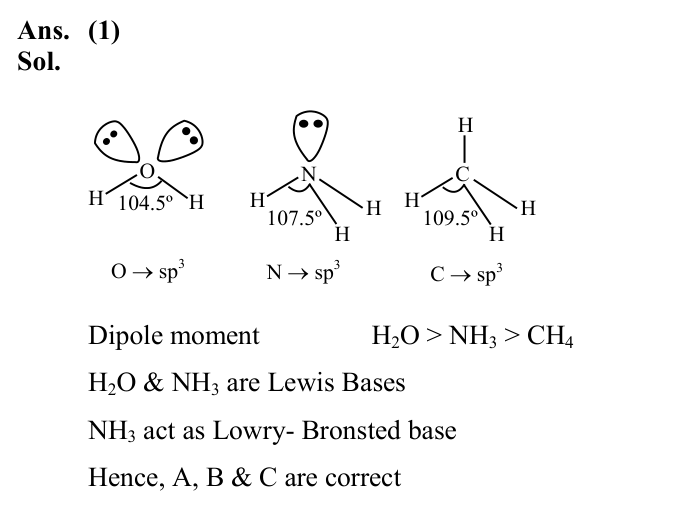
Step-by-Step Derivation
QUESTION 3
CHEMISTRY · Chemical Bonding & Molecular Structure
SECTION A · MCQ (+4, -1)
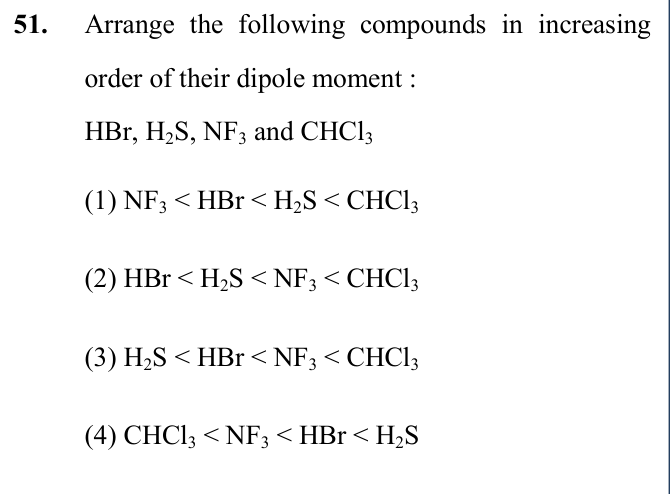
Candidate Response:
(1) (2) (3) (4)
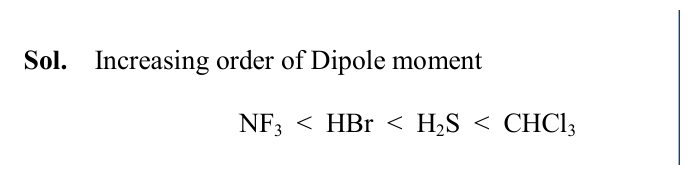
⚡ OFFICIAL KEY: 1
Step-by-Step Derivation
QUESTION 4
CHEMISTRY · Chemical Bonding & Molecular Structure
SECTION A · MCQ (+4, -1)
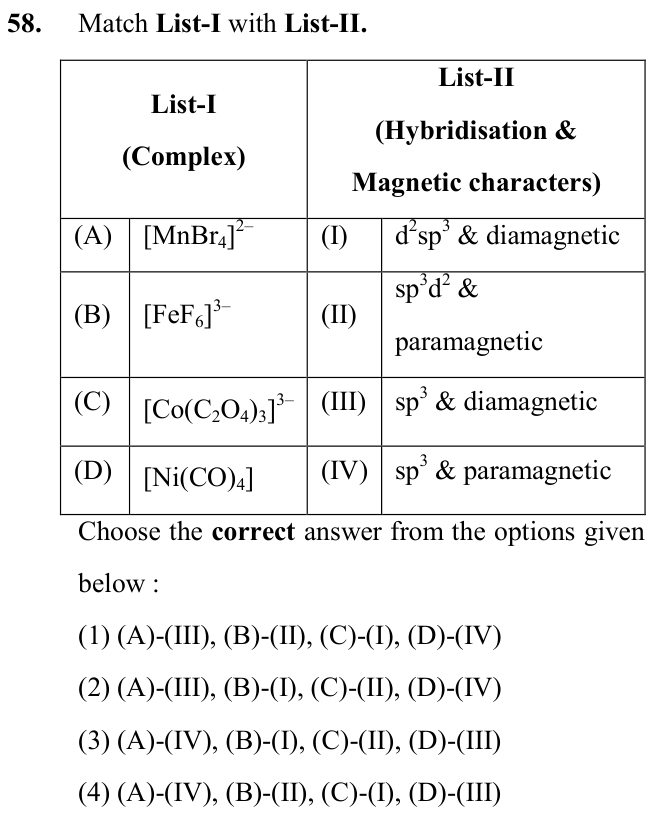
Candidate Response:
(1) (2) (3) (4)
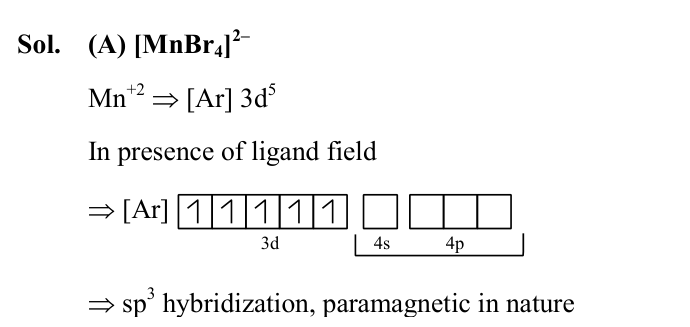
⚡ OFFICIAL KEY: 4
Step-by-Step Derivation
QUESTION 5
CHEMISTRY · Chemical Bonding and Molecular Structure
SECTION A · MCQ (+4, -1)
For N2 (Z <= 7), the σ(2p) molecular orbital is higher in energy than the π(2p) orbitals because of
(1) nuclear repulsion
(2) 2s-2p mixing
(3) spin pairing
(4) stronger π overlap
Candidate Response:
(1) (2) (3) (4)
⚡ OFFICIAL KEY: 2s-2p mixing
Step-by-Step Derivation
s-p mixing raises σ(2p) above π(2p) for Z <= 7, reversing the usual order.
QUESTION 6
CHEMISTRY · Chemical Bonding and Molecular Structure
SECTION A · MCQ (+4, -1)
The most stable Lewis structure of a molecule is the one in which the formal charges are
(1) all positive
(2) closest to zero
(3) all negative
(4) largest in magnitude
Candidate Response:
(1) (2) (3) (4)
⚡ OFFICIAL KEY: closest to zero
Step-by-Step Derivation
Structures with formal charges near zero are the most stable.
QUESTION 7
CHEMISTRY · Chemical Bonding and Molecular Structure
SECTION A · MCQ (+4, -1)
Ortho-nitrophenol exhibits which type of hydrogen bonding?
(1) no hydrogen bonding
(2) both intramolecular and intermolecular
(3) intramolecular
(4) intermolecular
Candidate Response:
(1) (2) (3) (4)
⚡ OFFICIAL KEY: intramolecular
Step-by-Step Derivation
The -OH and -NO2 groups are close enough in the ortho position for intramolecular H-bonding.
QUESTION 8
CHEMISTRY · Chemical Bonding and Molecular Structure
SECTION A · MCQ (+4, -1)
Which compound has the higher lattice enthalpy?
(1) LiCl
(2) MgO
(3) KCl
(4) NaCl
Candidate Response:
(1) (2) (3) (4)
⚡ OFFICIAL KEY: MgO
Step-by-Step Derivation
MgO has doubly charged ions (Mg2+, O2-), so the product z1·z2 = 4 gives an immense lattice enthalpy (~3900 kJ/mol).
QUESTION 9
CHEMISTRY · Chemical Bonding and Molecular Structure
SECTION A · MCQ (+4, -1)
In VSEPR theory, the strongest electron-pair repulsion is between
(1) all pairs equally
(2) lone pair and lone pair
(3) lone pair and bond pair
(4) bond pair and bond pair
Candidate Response:
(1) (2) (3) (4)
⚡ OFFICIAL KEY: lone pair and lone pair
Step-by-Step Derivation
Repulsion order is lone pair-lone pair > lone pair-bond pair > bond pair-bond pair.
QUESTION 10
CHEMISTRY · Chemical Bonding and Molecular Structure
SECTION A · MCQ (+4, -1)
According to Fajan's rules, covalent character in an ionic compound increases when the cation is
(1) small and highly charged
(2) large and singly charged
(3) large and highly charged
(4) small and singly charged
Candidate Response:
(1) (2) (3) (4)
⚡ OFFICIAL KEY: small and highly charged
Step-by-Step Derivation
A small, highly charged cation polarises the anion, increasing covalent character.
QUESTION 11
CHEMISTRY · Chemical Bonding and Molecular Structure
SECTION A · MCQ (+4, -1)
In a trigonal bipyramidal arrangement, lone pairs preferentially occupy which positions?
(1) apical
(2) axial
(3) alternating axial and equatorial
(4) equatorial
Candidate Response:
(1) (2) (3) (4)
⚡ OFFICIAL KEY: equatorial
Step-by-Step Derivation
Equatorial lone pairs experience less repulsion than axial lone pairs.
QUESTION 12
CHEMISTRY · Chemical Bonding and Molecular Structure
SECTION A · MCQ (+4, -1)
Arrange the following in order of INCREASING bond length: O2²⁻, O2-, O2, O2+.
(1) O2 < O2+ < O2- < O2²⁻
(2) O2²⁻ < O2- < O2 < O2+
(3) O2+ < O2- < O2 < O2²⁻
(4) O2+ < O2 < O2- < O2²⁻
Candidate Response:
(1) (2) (3) (4)
⚡ OFFICIAL KEY: O2+ < O2 < O2- < O2²⁻
Step-by-Step Derivation
Bond order: O2+ = 2.5, O2 = 2.0, O2- = 1.5, O2²⁻ = 1.0. Higher bond order → shorter bond.
QUESTION 13
CHEMISTRY · Chemical Bonding and Molecular Structure
SECTION A · MCQ (+4, -1)
The steric number of a central atom is the sum of its
(1) σ bonds and lone pairs
(2) σ and π bonds
(3) bonds and all valence electrons
(4) π bonds and lone pairs
Candidate Response:
(1) (2) (3) (4)
⚡ OFFICIAL KEY: σ bonds and lone pairs
Step-by-Step Derivation
Steric number (σ bonds + lone pairs) fixes the hybridisation type.
QUESTION 14
CHEMISTRY · Chemical Bonding and Molecular Structure
SECTION A · MCQ (+4, -1)
Arrange the following in increasing covalent character: LiF, LiCl, LiBr, LiI.
(1) LiBr < LiCl < LiF < LiI
(2) LiF < LiI < LiCl < LiBr
(3) LiI < LiBr < LiCl < LiF
(4) LiF < LiCl < LiBr < LiI
Candidate Response:
(1) (2) (3) (4)
⚡ OFFICIAL KEY: LiF < LiCl < LiBr < LiI
Step-by-Step Derivation
As the anion grows (F- < Cl- < Br- < I-), it is polarised more by Li+, so covalent character increases down the halide series.
QUESTION 15
CHEMISTRY · Chemical Bonding and Molecular Structure
SECTION A · MCQ (+4, -1)
What is the formal charge on each atom in carbon dioxide, O=C=O?
(1) C = 0, each O = 0
(2) C = +2, each O = -1
(3) C = 0, each O = -1
(4) C = -2, each O = +1
Candidate Response:
(1) (2) (3) (4)
⚡ OFFICIAL KEY: C = 0, each O = 0
Step-by-Step Derivation
C: 4 - 0 - (1/2)(8) = 0. Each O: 6 - 4 - (1/2)(4) = 0. All formal charges are zero.
QUESTION 16
CHEMISTRY · Chemical Bonding and Molecular Structure
SECTION A · MCQ (+4, -1)
Why can two helium atoms not form a stable He2 molecule?
(1) helium atoms are too large to approach closely
(2) the repulsions among 4 electrons and 2 nuclei outweigh the attractions
(3) helium has a completely filled valence shell that blocks overlap
(4) helium only forms bonds under high pressure
Candidate Response:
(1) (2) (3) (4)
⚡ OFFICIAL KEY: the repulsions among 4 electrons and 2 nuclei outweigh the attractions
Step-by-Step Derivation
For He2 the net potential-energy curve never dips below the separated-atom energy, so no stable bond forms.
QUESTION 17
CHEMISTRY · Chemical Bonding and Molecular Structure
SECTION A · MCQ (+4, -1)
Which molecule has the larger net dipole moment?
(1) both are equal
(2) NH3
(3) NF3
(4) neither has a dipole
Candidate Response:
(1) (2) (3) (4)
⚡ OFFICIAL KEY: NH3
Step-by-Step Derivation
In NF3 the N-F bond dipoles oppose the lone-pair dipole, reducing the net moment.
QUESTION 18
CHEMISTRY · Chemical Bonding and Molecular Structure
SECTION A · MCQ (+4, -1)
Resonance energy is the energy difference between the resonance hybrid and the
(1) isolated atoms
(2) sum of all contributing structures
(3) least stable contributing structure
(4) most stable contributing structure
Candidate Response:
(1) (2) (3) (4)
⚡ OFFICIAL KEY: most stable contributing structure
Step-by-Step Derivation
The hybrid is more stable than any single contributing structure by the resonance energy.
QUESTION 19
CHEMISTRY · Chemical Bonding and Molecular Structure
SECTION A · MCQ (+4, -1)
In the carbonate ion (CO3²⁻), all three C-O bonds have identical length. This is best explained because:
(1) the ion is a resonance hybrid of three equivalent structures
(2) the three structures interconvert rapidly at equilibrium
(3) each C-O bond is a pure single bond
(4) one C=O double bond flips between the three positions
Candidate Response:
(1) (2) (3) (4)
⚡ OFFICIAL KEY: the ion is a resonance hybrid of three equivalent structures
Step-by-Step Derivation
Carbonate is a single resonance hybrid; the three canonical structures are mathematical contributors, not interconverting species.
QUESTION 20
CHEMISTRY · Chemical Bonding and Molecular Structure
SECTION A · MCQ (+4, -1)
Why is ethyne (HC≡CH) acidic enough to react with sodium metal, while ethane (CH3CH3) is completely inert?
(1) sodium prefers to react with alkynes only
(2) ethyne has a triple bond that weakens the C-H bond
(3) ethane has more hydrogens to donate
(4) the sp carbon in ethyne has 50% s-character, making its C-H hydrogen more acidic
Candidate Response:
(1) (2) (3) (4)
⚡ OFFICIAL KEY: the sp carbon in ethyne has 50% s-character, making its C-H hydrogen more acidic
Step-by-Step Derivation
Higher s-character pulls electron density closer to the nucleus, increasing the effective electronegativity of the sp carbon and stabilising the conjugate base.
QUESTION 21
CHEMISTRY · Chemical Bonding and Molecular Structure
SECTION A · MCQ (+4, -1)
The bond order of a diatomic molecule is calculated as
(1) (bonding electrons - antibonding electrons)/2
(2) antibonding electrons - bonding electrons
(3) (bonding electrons + antibonding electrons)/2
(4) bonding electrons - antibonding electrons
Candidate Response:
(1) (2) (3) (4)
⚡ OFFICIAL KEY: (bonding electrons - antibonding electrons)/2
Step-by-Step Derivation
Bond order = (Nb - Na)/2 from molecular orbital theory.
QUESTION 22
CHEMISTRY · Chemical Bonding and Molecular Structure
SECTION A · MCQ (+4, -1)
Why is the dipole moment of NH3 (1.47 D) much larger than that of NF3 (0.24 D)?
(1) N-F bonds are non-polar
(2) in NH3 the bond dipoles and the lone-pair dipole reinforce, while in NF3 they oppose
(3) fluorine has a smaller electronegativity than nitrogen
(4) NF3 is linear
Candidate Response:
(1) (2) (3) (4)
⚡ OFFICIAL KEY: in NH3 the bond dipoles and the lone-pair dipole reinforce, while in NF3 they oppose
Step-by-Step Derivation
In NH3 the N-H bond dipoles and the lone pair point in the same direction (add). In NF3 the N-F dipoles point away from N, opposing the lone pair, so they partially cancel.
QUESTION 23
CHEMISTRY · Chemical Bonding and Molecular Structure
SECTION A · MCQ (+4, -1)
Lattice enthalpy is the energy released when one mole of an ionic crystal is formed from
(1) its solid elements
(2) its gaseous atoms
(3) its aqueous ions
(4) its gaseous ions
Candidate Response:
(1) (2) (3) (4)
⚡ OFFICIAL KEY: its gaseous ions
Step-by-Step Derivation
Lattice enthalpy is defined for assembly from isolated gaseous ions.
QUESTION 24
CHEMISTRY · Chemical Bonding and Molecular Structure
SECTION A · MCQ (+4, -1)
Why is the shape of XeF2 linear even though xenon has three lone pairs?
(1) the molecule has no lone pairs
(2) the lone pairs occupy axial positions
(3) all three lone pairs occupy equatorial positions, leaving the two F atoms axial
(4) xenon forms only two bonds by definition
Candidate Response:
(1) (2) (3) (4)
⚡ OFFICIAL KEY: all three lone pairs occupy equatorial positions, leaving the two F atoms axial
Step-by-Step Derivation
Lone pairs always occupy equatorial positions in a trigonal bipyramid; three equatorial lone pairs leave the two fluorines axial (180°).
QUESTION 25
CHEMISTRY · Chemical Bonding and Molecular Structure
SECTION A · MCQ (+4, -1)
How many σ and π bonds are present in ethene (C2H4)?
(1) 5 σ and 1 π
(2) 5 σ and 2 π
(3) 4 σ and 2 π
(4) 4 σ and 1 π
Candidate Response:
(1) (2) (3) (4)
⚡ OFFICIAL KEY: 5 σ and 1 π
Step-by-Step Derivation
Ethene has 4 C-H σ bonds, 1 C-C σ bond, and 1 C-C π bond = 5 σ + 1 π.