
⚡ OFFICIAL NTA ASSESSMENT GENERATOR & WORD (.DOCX) EXPORTER
Chemical Thermodynamics · Practice Worksheet
JEE Main Chemistry · Curated Assessment Set Print directly or export as a beautifully formatted Microsoft Word document with embedded 180-DPI mathematical prompt clips and step-by-step derivations.
EDUPROD JEE MAIN TEST SERIES · NTA PATTERN
Chemical Thermodynamics · Practice Worksheet
JEE Main Chemistry · Curated Assessment Set · Assessment Code: JEE-101
Total Marks: 120
Marking: +4 / -1 (Sec A) · +4 / 0 (Sec B)
QUESTION 1
CHEMISTRY · Thermodynamics
SECTION B · NUMERICAL (+4, 0)
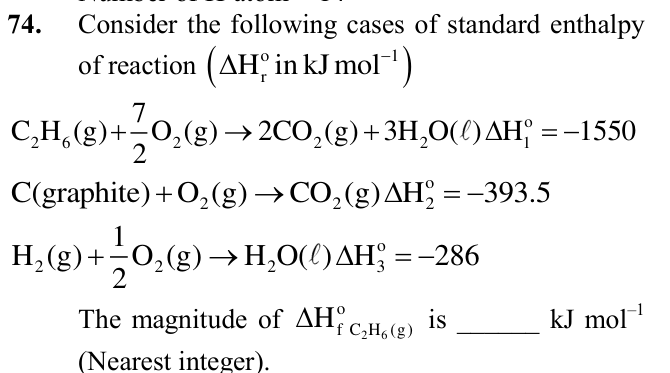
Numerical Value:
[ ]
QUESTION 2
CHEMISTRY · Thermodynamics
SECTION B · NUMERICAL (+4, 0)
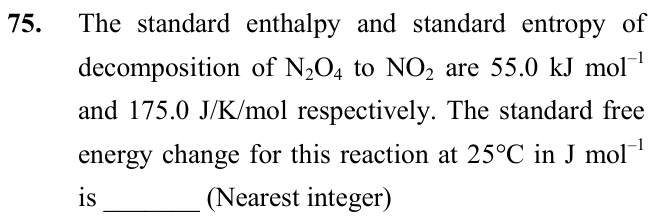
Numerical Value:
[ ]
QUESTION 3
CHEMISTRY · Thermodynamics
SECTION A · MCQ (+4, -1)
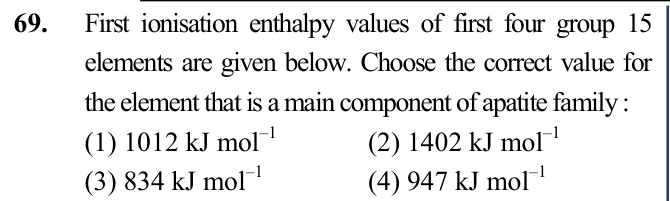
Candidate Response:
(1) (2) (3) (4)
QUESTION 4
CHEMISTRY · Thermodynamics
SECTION A · MCQ (+4, -1)
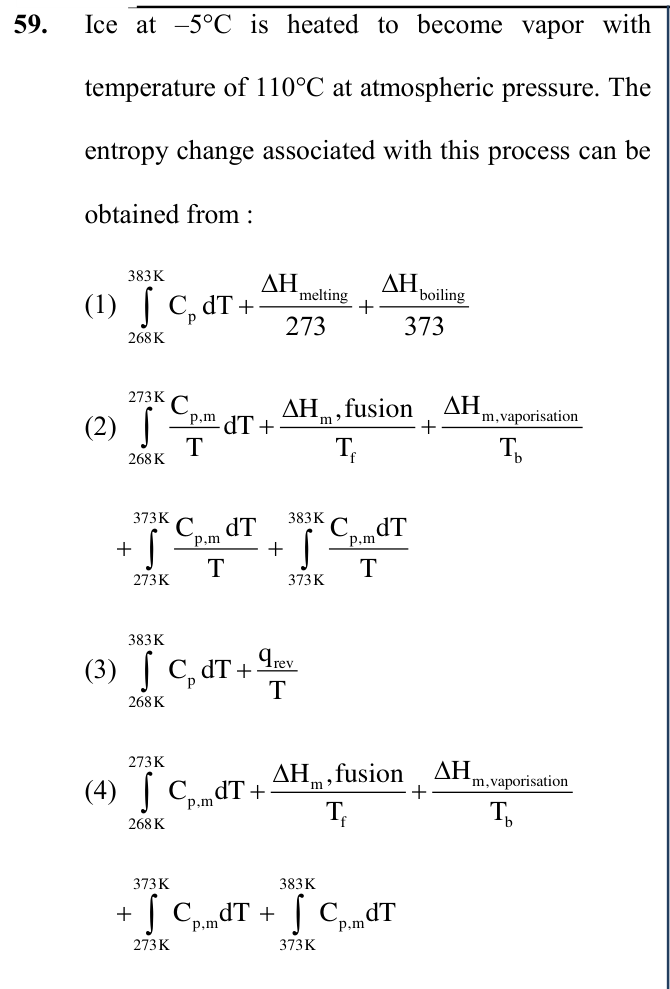
Candidate Response:
(1) (2) (3) (4)
QUESTION 5
CHEMISTRY · Thermodynamics
SECTION A · MCQ (+4, -1)
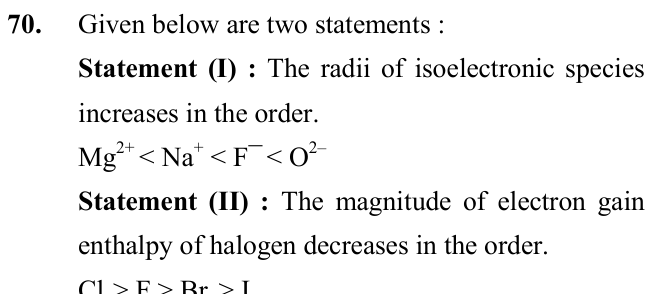
Candidate Response:
(1) (2) (3) (4)
QUESTION 6
CHEMISTRY · Thermodynamics
SECTION B · NUMERICAL (+4, 0)
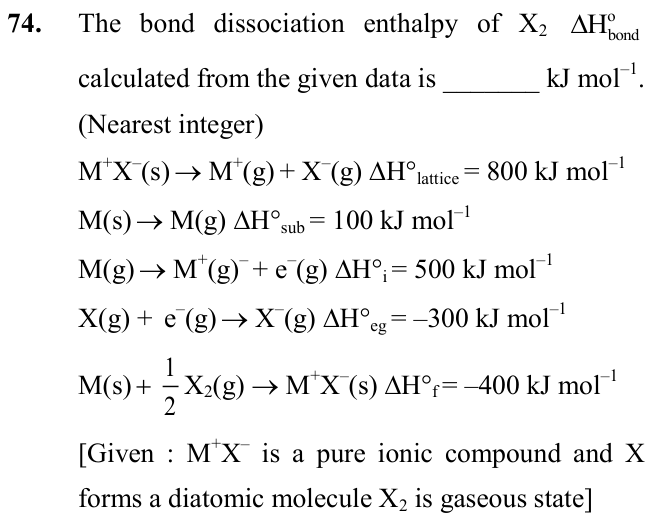
Numerical Value:
[ ]
QUESTION 7
CHEMISTRY · Thermodynamics
SECTION B · NUMERICAL (+4, 0)
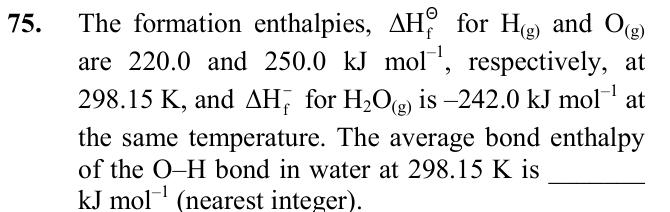
Numerical Value:
[ ]
QUESTION 8
CHEMISTRY · Thermodynamics
SECTION A · MCQ (+4, -1)
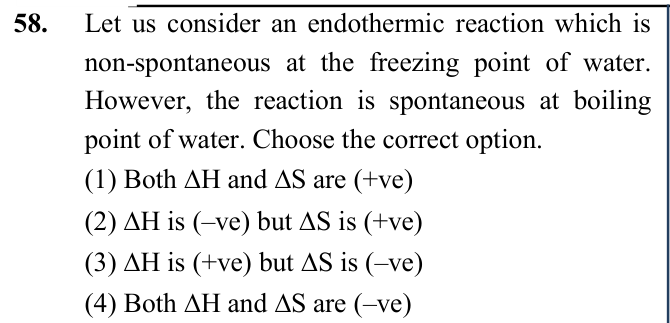
Candidate Response:
(1) (2) (3) (4)
QUESTION 9
CHEMISTRY · Chemical Thermodynamics
SECTION A · MCQ (+4, -1)
Which of the following is a path function?
(1) entropy
(2) internal energy
(3) work
(4) enthalpy
Candidate Response:
(1) (2) (3) (4)
QUESTION 10
CHEMISTRY · Chemical Thermodynamics
SECTION A · MCQ (+4, -1)
The enthalpy of fusion of ice is 6.0 kJ/mol at its melting point, 273.15 K. What is the entropy of fusion?
(1) 0.022 J mol⁻¹ K⁻¹
(2) 88 J mol⁻¹ K⁻¹
(3) 21.97 J mol⁻¹ K⁻¹
(4) 45.5 J mol⁻¹ K⁻¹
Candidate Response:
(1) (2) (3) (4)
QUESTION 11
CHEMISTRY · Chemical Thermodynamics
SECTION A · MCQ (+4, -1)
For a gaseous reaction, the relation between enthalpy change and internal energy change is
(1) ΔH = ΔU - ΔngRT
(2) ΔH = ΔU/ΔngRT
(3) ΔU = ΔH + ΔngRT
(4) ΔH = ΔU + ΔngRT
Candidate Response:
(1) (2) (3) (4)
QUESTION 12
CHEMISTRY · Chemical Thermodynamics
SECTION A · MCQ (+4, -1)
The calculated (localized Kekulé) heat of formation of benzene is +230 kJ/mol, while its experimental heat of formation is +83 kJ/mol. What is the resonance energy of benzene?
(1) −147 kJ/mol
(2) 147 kJ/mol
(3) 313 kJ/mol
(4) −313 kJ/mol
Candidate Response:
(1) (2) (3) (4)
QUESTION 13
CHEMISTRY · Chemical Thermodynamics
SECTION A · MCQ (+4, -1)
At 300 K, the equilibrium constant of a reaction is K = 1. What is Δ_r G°?
(1) Cannot be determined without ΔH
(2) 0 kJ/mol
(3) −8.314 kJ/mol
(4) +8.314 kJ/mol
Candidate Response:
(1) (2) (3) (4)
QUESTION 14
CHEMISTRY · Chemical Thermodynamics
SECTION A · MCQ (+4, -1)
The enthalpy of neutralisation of a weak acid with a strong base is less negative than -57.1 kJ/mol because some energy is used for
(1) dilution
(2) ionisation of the weak acid
(3) hydration of ions
(4) bond formation
Candidate Response:
(1) (2) (3) (4)
QUESTION 15
CHEMISTRY · Chemical Thermodynamics
SECTION A · MCQ (+4, -1)
Using mean bond enthalpies, the reaction enthalpy is calculated as
(1) the average of bonds broken and formed
(2) (bonds broken) - (bonds formed)
(3) the sum of all bond enthalpies
(4) (bonds formed) - (bonds broken)
Candidate Response:
(1) (2) (3) (4)
QUESTION 16
CHEMISTRY · Chemical Thermodynamics
SECTION A · MCQ (+4, -1)
An ideal gas expands isothermally into an evacuated vessel (a vacuum). What are the values of work done (w) and heat absorbed (q)?
(1) w < 0, q > 0
(2) w > 0, q = 0
(3) w = 0, q > 0
(4) w = 0, q = 0
Candidate Response:
(1) (2) (3) (4)
QUESTION 17
CHEMISTRY · Chemical Thermodynamics
SECTION A · MCQ (+4, -1)
Which one of the following thermodynamic quantities is a state function?
(1) Heat exchanged by the system (q)
(2) Work done on the system (w)
(3) Internal energy change, ΔU = q + w
(4) The distance travelled by the piston
Candidate Response:
(1) (2) (3) (4)
QUESTION 18
CHEMISTRY · Chemical Thermodynamics
SECTION A · MCQ (+4, -1)
The standard enthalpy of formation of an element in its standard state is
(1) zero
(2) different for each element
(3) negative
(4) positive
Candidate Response:
(1) (2) (3) (4)
QUESTION 19
CHEMISTRY · Chemical Thermodynamics
SECTION A · MCQ (+4, -1)
0.5 mole of HNO₃ is mixed with 0.2 mole of KOH in a dilute aqueous solution. How much heat is evolved? (Enthalpy of neutralization = 57.1 kJ per equivalent)
(1) 57.1 kJ
(2) 5.71 kJ
(3) 11.42 kJ
(4) 28.55 kJ
Candidate Response:
(1) (2) (3) (4)
QUESTION 20
CHEMISTRY · Chemical Thermodynamics
SECTION A · MCQ (+4, -1)
The standard Gibbs energy change is related to the equilibrium constant K by
(1) ΔG° = -RT/K
(2) ΔG° = K/RT
(3) ΔG° = RT ln K
(4) ΔG° = -RT ln K
Candidate Response:
(1) (2) (3) (4)
QUESTION 21
CHEMISTRY · Chemical Thermodynamics
SECTION A · MCQ (+4, -1)
For the reaction N₂(g) + 3 H₂(g) → 2 NH₃(g) at constant temperature, how do ΔH and ΔU compare?
(1) Cannot be determined
(2) ΔH < ΔU
(3) ΔH > ΔU
(4) ΔH = ΔU
Candidate Response:
(1) (2) (3) (4)
QUESTION 22
CHEMISTRY · Chemical Thermodynamics
SECTION A · MCQ (+4, -1)
For a reaction, ΔH = −10 kJ/mol and ΔS = −20 J mol⁻¹ K⁻¹. Below which temperature is the reaction spontaneous?
(1) 200 K
(2) 0.5 K
(3) 500 K
(4) 1000 K
Candidate Response:
(1) (2) (3) (4)
QUESTION 23
CHEMISTRY · Chemical Thermodynamics
SECTION A · MCQ (+4, -1)
According to the second law of thermodynamics, a process is spontaneous when the total entropy of the universe
(1) remains constant
(2) decreases
(3) increases
(4) becomes zero
Candidate Response:
(1) (2) (3) (4)
QUESTION 24
CHEMISTRY · Chemical Thermodynamics
SECTION A · MCQ (+4, -1)
An ideal gas has a heat capacity ratio γ = C_p / C_v = 1.40. What is its molar heat capacity at constant volume, C_v?
(1) 3.5 R
(2) 1.5 R
(3) 4.5 R
(4) 2.5 R
Candidate Response:
(1) (2) (3) (4)
QUESTION 25
CHEMISTRY · Chemical Thermodynamics
SECTION A · MCQ (+4, -1)
At 298 K and 1 bar, which of the following substances has a standard enthalpy of formation (Δ_f H°) equal to zero?
(1) Br₂(g)
(2) O₃(g)
(3) I₂(g)
(4) Br₂(l)
Candidate Response:
(1) (2) (3) (4)
QUESTION 26
CHEMISTRY · Chemical Thermodynamics
SECTION A · MCQ (+4, -1)
According to Mayer's relation, for one mole of an ideal gas, Cp - Cv equals
(1) zero
(2) R/2
(3) R
(4) 2R
Candidate Response:
(1) (2) (3) (4)
QUESTION 27
CHEMISTRY · Chemical Thermodynamics
SECTION A · MCQ (+4, -1)
Maximum work is obtained when a gas expands
(1) irreversibly
(2) adiabatically
(3) freely into vacuum
(4) reversibly and isothermally
Candidate Response:
(1) (2) (3) (4)
QUESTION 28
CHEMISTRY · Chemical Thermodynamics
SECTION A · MCQ (+4, -1)
Given bond dissociation enthalpies: H–H = 436 kJ/mol, N≡N = 946 kJ/mol, N–H = 391 kJ/mol. Calculate Δ_r H° for N₂(g) + 3 H₂(g) → 2 NH₃(g).
(1) −92 kJ
(2) +92 kJ
(3) −46 kJ
(4) +46 kJ
Candidate Response:
(1) (2) (3) (4)
QUESTION 29
CHEMISTRY · Chemical Thermodynamics
SECTION A · MCQ (+4, -1)
According to Trouton's rule, the molar entropy of vaporisation of most liquids at their boiling point is approximately
(1) 85 J K-1 mol-1
(2) 850 J K-1 mol-1
(3) 0.85 J K-1 mol-1
(4) 8.5 J K-1 mol-1
Candidate Response:
(1) (2) (3) (4)
QUESTION 30
CHEMISTRY · Chemical Thermodynamics
SECTION A · MCQ (+4, -1)
Thermochemically, resonance energy is the difference between the calculated and the experimental
(1) bond length
(2) ionisation energy
(3) bond angle
(4) enthalpy of formation
Candidate Response:
(1) (2) (3) (4)