
⚡ OFFICIAL NTA ASSESSMENT GENERATOR & WORD (.DOCX) EXPORTER
Hydrocarbons · Practice Worksheet
JEE Main Chemistry · Curated Assessment Set Print directly or export as a beautifully formatted Microsoft Word document with embedded 180-DPI mathematical prompt clips and step-by-step derivations.
EDUPROD JEE MAIN TEST SERIES · NTA PATTERN
Hydrocarbons · Practice Worksheet
JEE Main Chemistry · Curated Assessment Set · Assessment Code: JEE-101
Total Marks: 60
Marking: +4 / -1 (Sec A) · +4 / 0 (Sec B)
QUESTION 1
CHEMISTRY · Hydrocarbons
SECTION B · NUMERICAL (+4, 0)
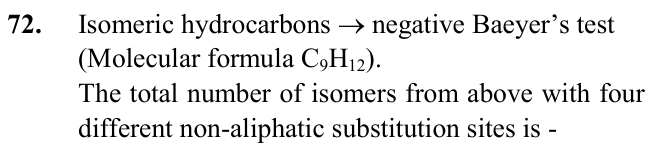
Numerical Value:
[ ]
⚡ OFFICIAL KEY: 2
Step-by-Step Derivation
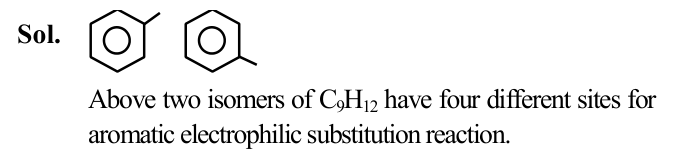
QUESTION 2
CHEMISTRY · Hydrocarbons
SECTION A · MCQ (+4, -1)
Candidate Response:
(1) (2) (3) (4)
⚡ OFFICIAL KEY: 1
Step-by-Step Derivation

QUESTION 3
CHEMISTRY · Hydrocarbons
SECTION A · MCQ (+4, -1)
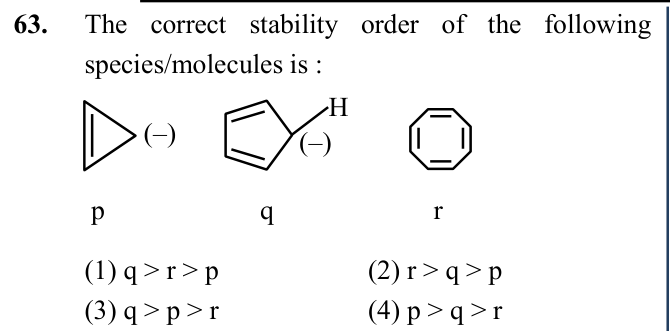
Candidate Response:
(1) (2) (3) (4)
⚡ OFFICIAL KEY: 2
Step-by-Step Derivation
QUESTION 4
CHEMISTRY · Hydrocarbons
SECTION A · MCQ (+4, -1)
Candidate Response:
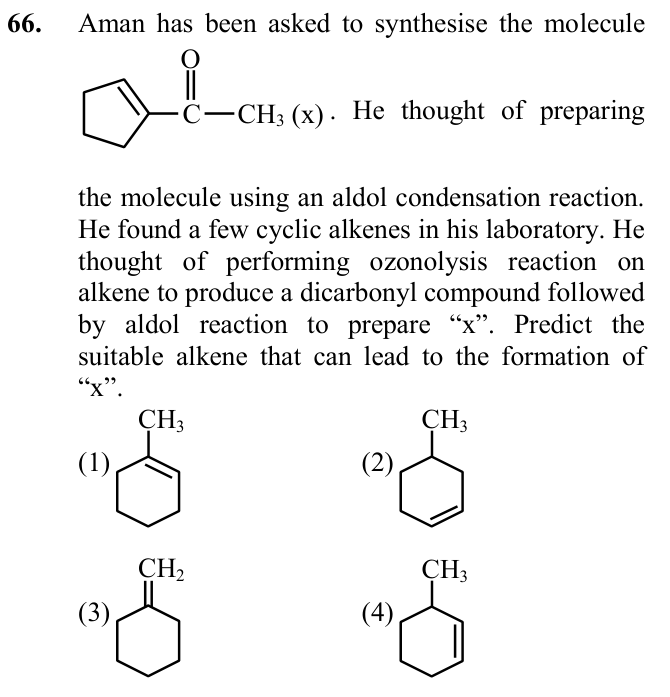
(1) (2) (3) (4)
⚡ OFFICIAL KEY: 1
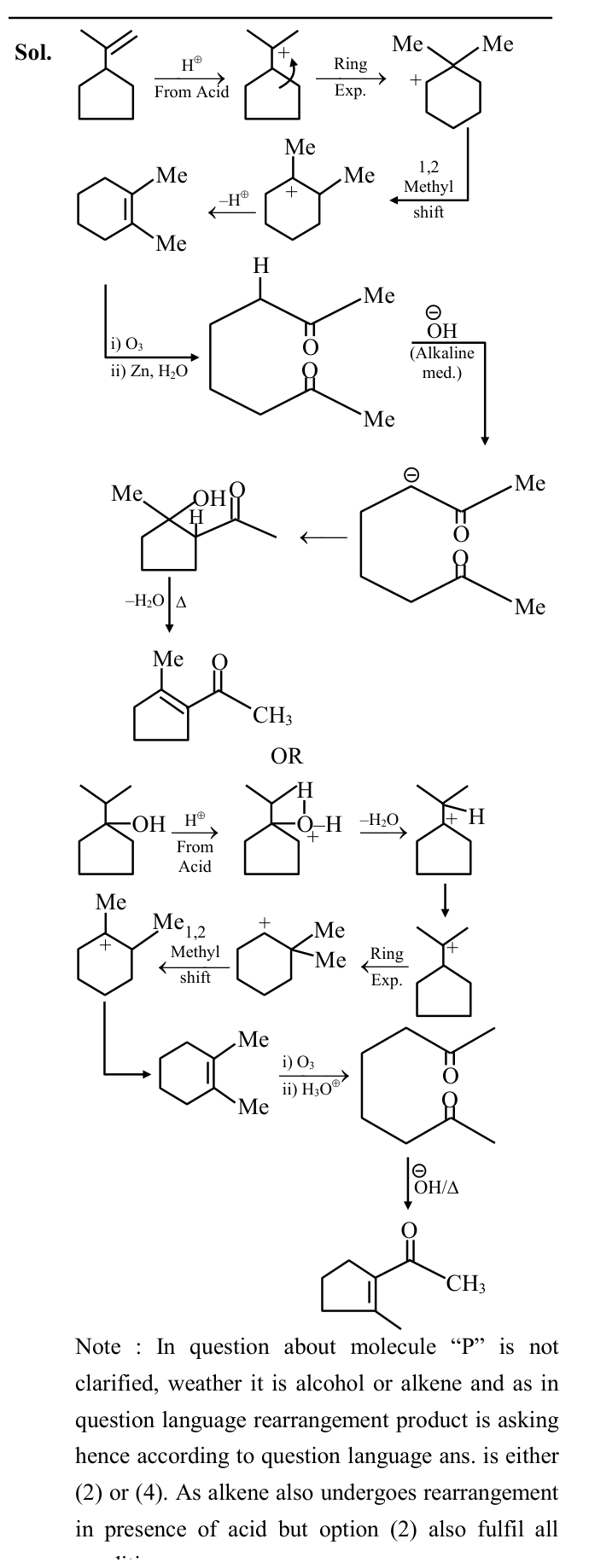
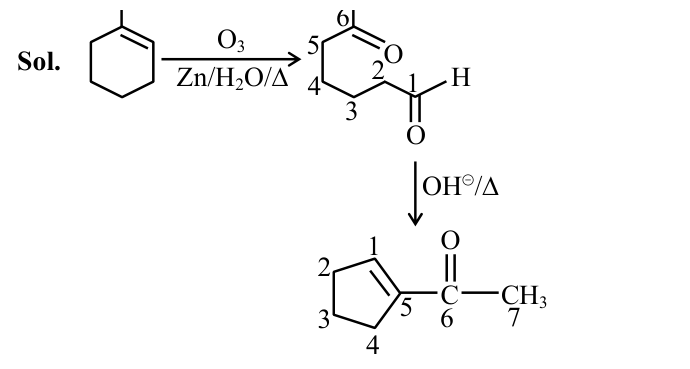
Step-by-Step Derivation
QUESTION 5
CHEMISTRY · Hydrocarbons
SECTION A · MCQ (+4, -1)
Candidate Response:
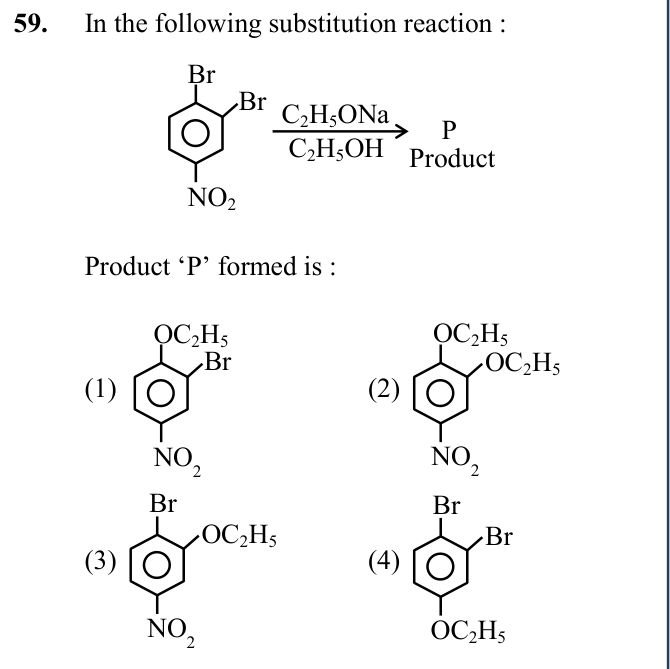
(1) (2) (3) (4)
⚡ OFFICIAL KEY: 1
Step-by-Step Derivation
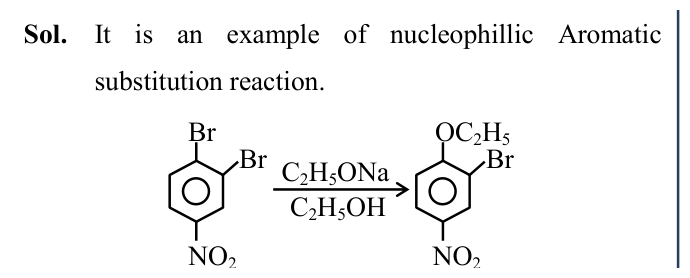
QUESTION 6
CHEMISTRY · Hydrocarbons
SECTION A · MCQ (+4, -1)
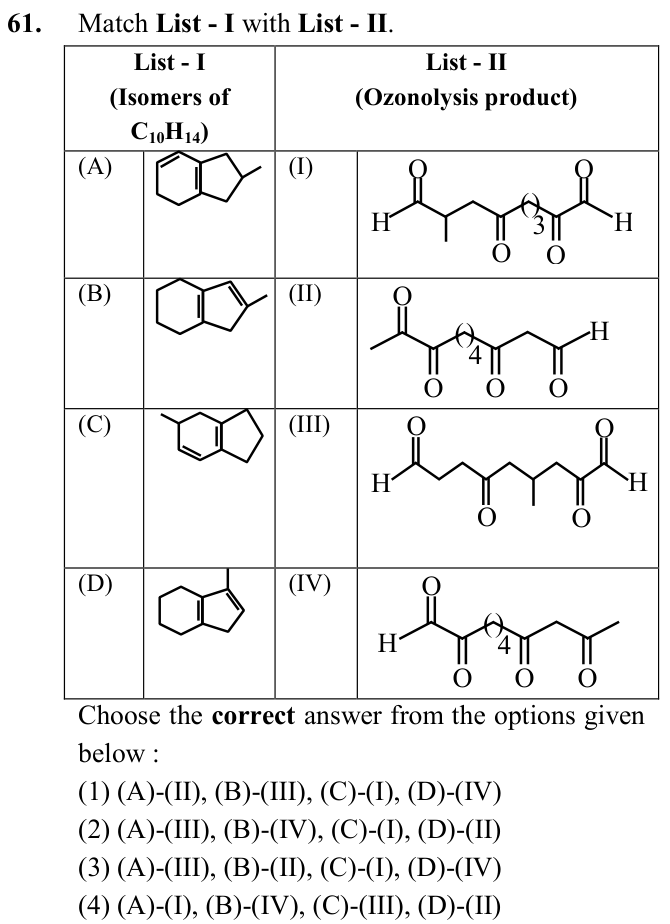
Candidate Response:
(1) (2) (3) (4)
⚡ OFFICIAL KEY: 2
Step-by-Step Derivation
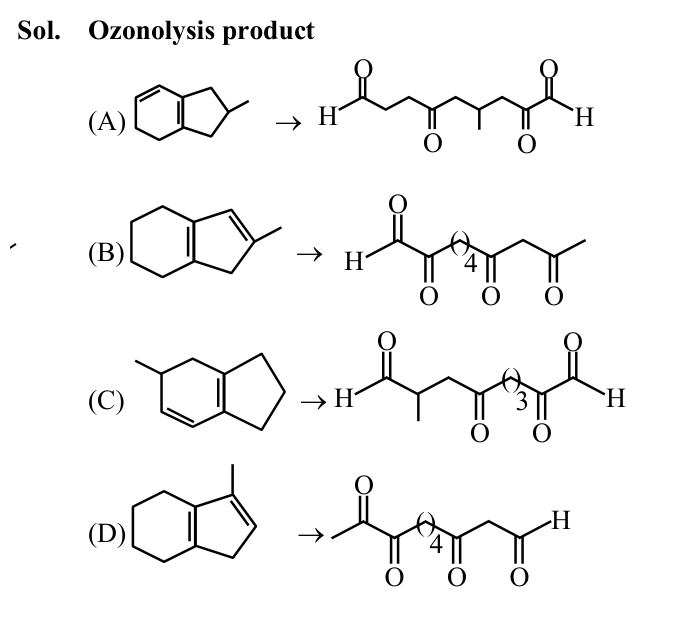
QUESTION 7
CHEMISTRY · Hydrocarbons
SECTION A · MCQ (+4, -1)
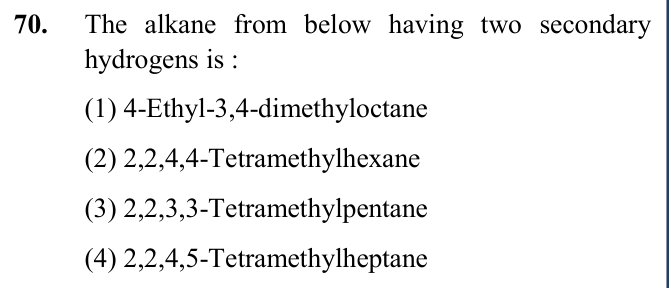
Candidate Response:
(1) (2) (3) (4)
⚡ OFFICIAL KEY: 3
Step-by-Step Derivation

QUESTION 8
CHEMISTRY · Hydrocarbons
SECTION A · MCQ (+4, -1)
Calculate the percentage of 2-chloropropane formed in the monochlorination of propane at 298 K (relative rates: 1° H = 1.0, 2° H = 3.8).
(1) 36.0%
(2) 55.9%
(3) 44.1%
(4) 75.0%
Candidate Response:
(1) (2) (3) (4)
⚡ OFFICIAL KEY: 55.9%
Step-by-Step Derivation
Propane has six 1° H and two 2° H. Weighted contributions: 1° = 6 × 1.0 = 6.0 and 2° = 2 × 3.8 = 7.6, giving a total of 13.6. Percentage of 2-chloropropane = (7.6 / 13.6) × 100 = 55.9%.
QUESTION 9
CHEMISTRY · Hydrocarbons
SECTION A · MCQ (+4, -1)
What is the dihedral angle between the C–H bonds on adjacent carbons in the staggered (most stable) conformation of ethane?
(1) 180°
(2) 120°
(3) 60°
(4) 0°
Candidate Response:
(1) (2) (3) (4)
⚡ OFFICIAL KEY: 60°
Step-by-Step Derivation
In the staggered conformation, each front C–H bond sits midway between two back C–H bonds, giving a dihedral angle of 60°. This minimizes torsional strain, making the staggered form the most stable.
QUESTION 10
CHEMISTRY · Hydrocarbons
SECTION A · MCQ (+4, -1)
Propyne undergoes Kutscherov hydration (H2O, HgSO4 / dilute H2SO4). What is the organic product?
(1) Propan-1-ol
(2) Propanoic acid
(3) Propan-2-one (acetone)
(4) Propanal
Candidate Response:
(1) (2) (3) (4)
⚡ OFFICIAL KEY: Propan-2-one (acetone)
Step-by-Step Derivation
Hydration of an alkyne first forms an enol, which tautomerizes to a carbonyl compound. Markovnikov addition places the OH on the internal carbon, so the enol CH3–C(OH)=CH2 tautomerizes to the ketone acetone.
QUESTION 11
CHEMISTRY · Hydrocarbons
SECTION A · MCQ (+4, -1)
In free-radical halogenation of methane, which step involves homolytic cleavage of the Cl–Cl bond to generate chlorine radicals?
(1) Inhibition
(2) Termination
(3) Propagation
(4) Initiation
Candidate Response:
(1) (2) (3) (4)
⚡ OFFICIAL KEY: Initiation
Step-by-Step Derivation
Initiation homolytically splits Cl2 into two chlorine radicals.
QUESTION 12
CHEMISTRY · Hydrocarbons
SECTION A · MCQ (+4, -1)
Addition of HBr to propene in the presence of peroxides gives which major product?
(1) 1-Bromopropane
(2) 2-Bromopropane
(3) Propan-1-ol
(4) 1,2-Dibromopropane
Candidate Response:
(1) (2) (3) (4)
⚡ OFFICIAL KEY: 1-Bromopropane
Step-by-Step Derivation
The peroxide (Kharasch) effect gives anti-Markovnikov addition, forming 1-bromopropane.
QUESTION 13
CHEMISTRY · Hydrocarbons
SECTION A · MCQ (+4, -1)
Why is chlorobenzene ortho/para-directing in electrophilic substitution even though chlorine is a deactivating group?
(1) Chlorine's +I effect activates the ring.
(2) Chlorine donates electron density only at the meta position.
(3) Chlorine's lone-pair +M resonance stabilizes the σ-complex at ortho/para, while its strong −I effect deactivates the ring overall.
(4) Chlorine is actually a meta-director.
Candidate Response:
(1) (2) (3) (4)
⚡ OFFICIAL KEY: Chlorine's lone-pair +M resonance stabilizes the σ-complex at ortho/para, while its strong −I effect deactivates the ring overall.
Step-by-Step Derivation
Halogens exert two competing effects. The strong −I effect withdraws electron density, making the ring less reactive (deactivating). However, the lone-pair +M resonance donates electron density specifically to the ortho and para positions, stabilizing the arenium ion intermediate there and directing substitution to ortho/para.
QUESTION 14
CHEMISTRY · Hydrocarbons
SECTION A · MCQ (+4, -1)
Which alkane is produced at the anode during the electrolysis of an aqueous solution of sodium propanoate (CH3CH2COONa)?
(1) n-Butane (CH3CH2CH2CH3)
(2) Propane (CH3CH2CH3)
(3) Ethane (CH3CH3)
(4) Methane (CH4)
Candidate Response:
(1) (2) (3) (4)
⚡ OFFICIAL KEY: n-Butane (CH3CH2CH2CH3)
Step-by-Step Derivation
In Kolbe's electrolysis, the propanoate ion loses CO2 at the anode to generate an ethyl radical (CH3CH2•). Two ethyl radicals dimerize to give n-butane (CH3CH2–CH2CH3), while CO2 is released as a byproduct.
QUESTION 15
CHEMISTRY · Hydrocarbons
SECTION A · MCQ (+4, -1)
Compared with its trans isomer, a cis-alkene generally has a higher value of which property?
(1) Boiling point
(2) Symmetry
(3) Melting point
(4) Stability
Candidate Response:
(1) (2) (3) (4)
⚡ OFFICIAL KEY: Boiling point
Step-by-Step Derivation
Cis-alkenes are polar and pack less well, giving a higher boiling point.