
⚡ OFFICIAL NTA ASSESSMENT GENERATOR & WORD (.DOCX) EXPORTER
Chemical Kinetics · Practice Worksheet
JEE Main Chemistry · Curated Assessment Set Print directly or export as a beautifully formatted Microsoft Word document with embedded 180-DPI mathematical prompt clips and step-by-step derivations.
EDUPROD JEE MAIN TEST SERIES · NTA PATTERN
Chemical Kinetics · Practice Worksheet
JEE Main Chemistry · Curated Assessment Set · Assessment Code: JEE-101
Total Marks: 120
Marking: +4 / -1 (Sec A) · +4 / 0 (Sec B)
QUESTION 1
CHEMISTRY · Chemical Kinetics
SECTION A · MCQ (+4, -1)
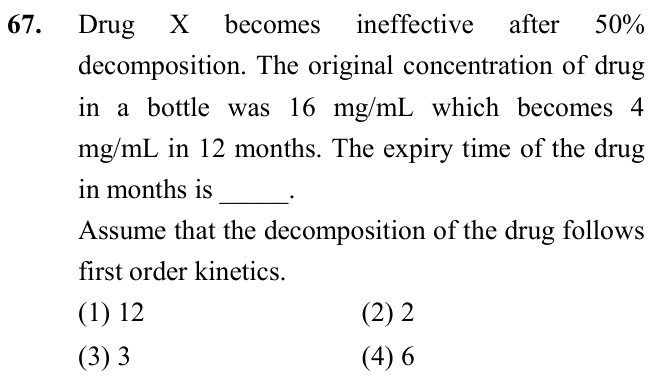
Candidate Response:
(1) (2) (3) (4)
⚡ OFFICIAL KEY: 4
Step-by-Step Derivation

QUESTION 2
CHEMISTRY · Chemical Kinetics
SECTION A · MCQ (+4, -1)
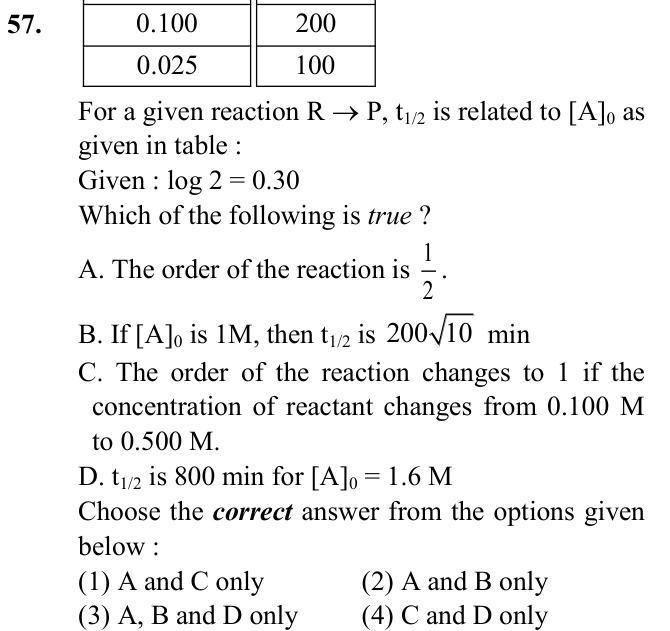
Candidate Response:
(1) (2) (3) (4)
⚡ OFFICIAL KEY: 3
Step-by-Step Derivation
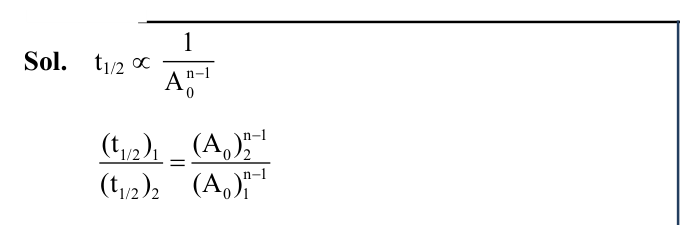
QUESTION 3
CHEMISTRY · Chemical Kinetics
SECTION A · MCQ (+4, -1)
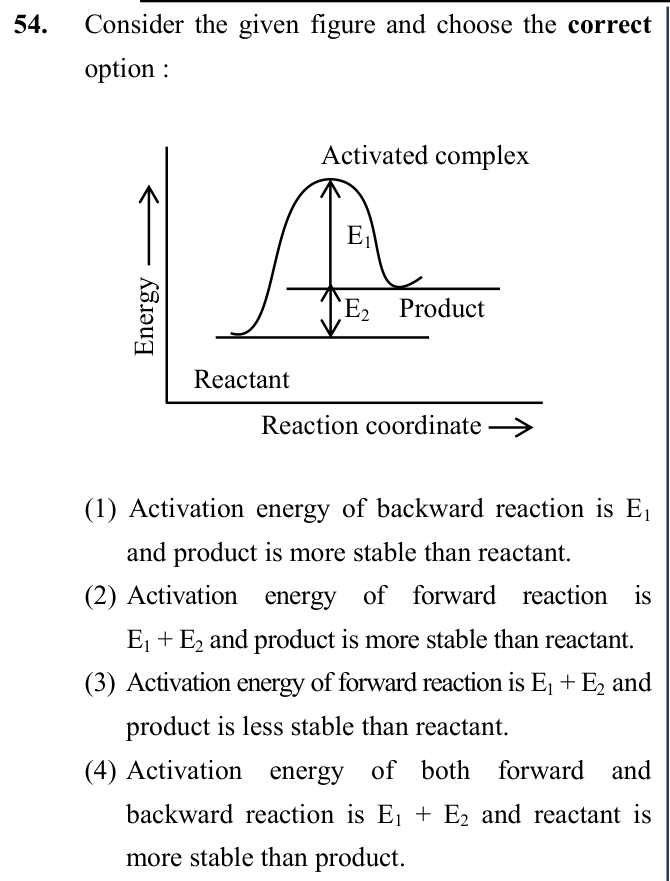
Candidate Response:
(1) (2) (3) (4)
⚡ OFFICIAL KEY: 3
Step-by-Step Derivation
QUESTION 4
CHEMISTRY · Chemical Kinetics
SECTION B · NUMERICAL (+4, 0)
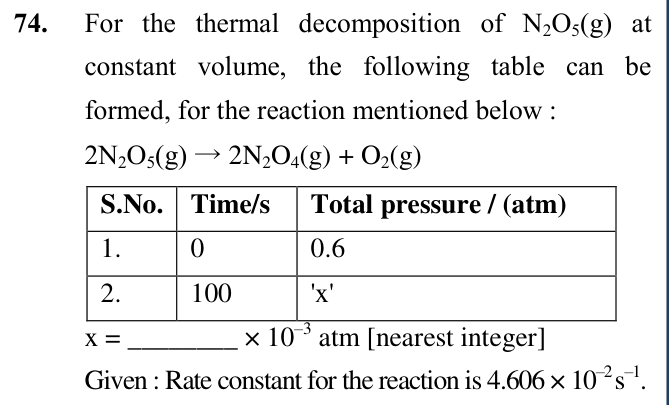
Numerical Value:
[ ]
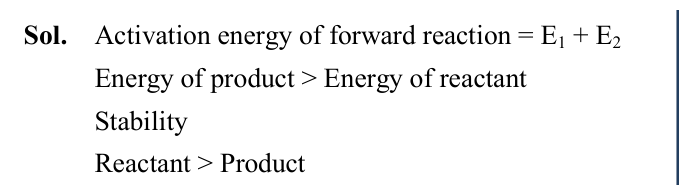
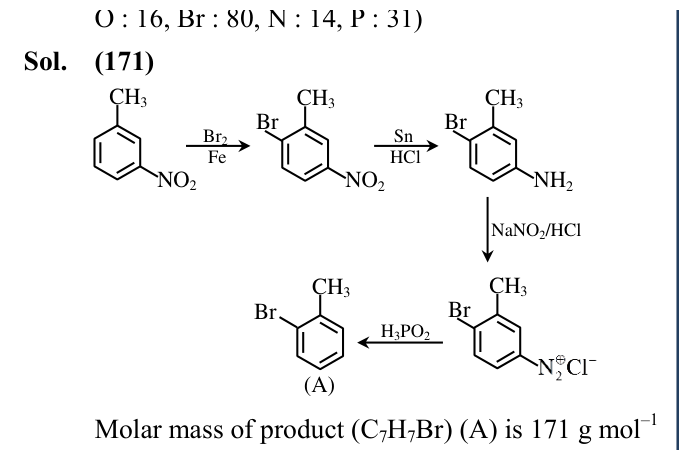
⚡ OFFICIAL KEY: 900
Step-by-Step Derivation
QUESTION 5
CHEMISTRY · Chemical Kinetics
SECTION B · NUMERICAL (+4, 0)
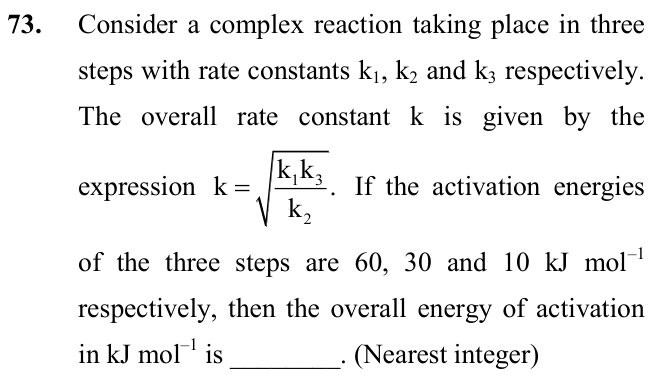
Numerical Value:
[ ]
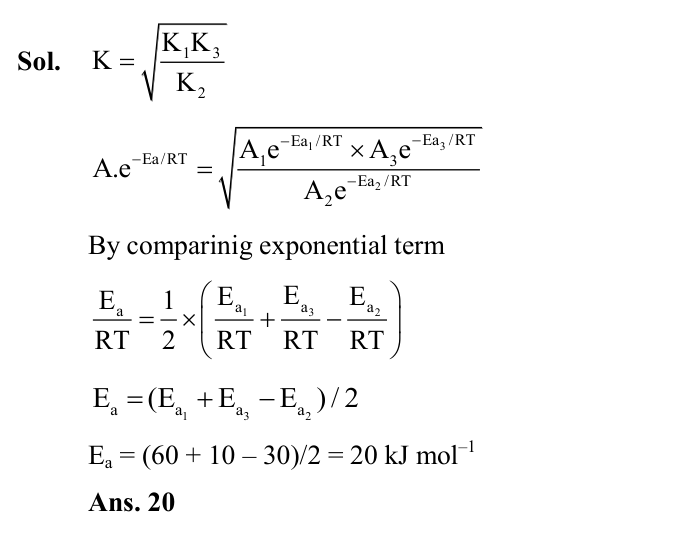
⚡ OFFICIAL KEY: 20
Step-by-Step Derivation
QUESTION 6
CHEMISTRY · Chemical Kinetics
SECTION B · NUMERICAL (+4, 0)
Numerical Value:
[ ]
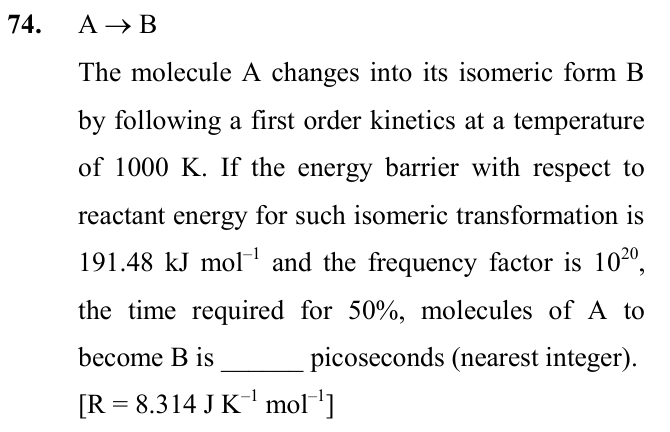
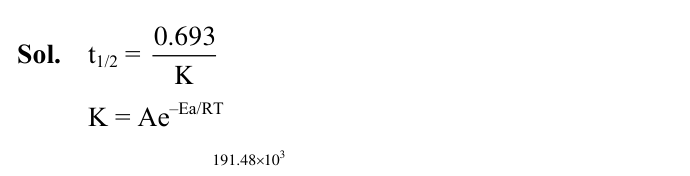
⚡ OFFICIAL KEY: 69
Step-by-Step Derivation
QUESTION 7
CHEMISTRY · Chemical Kinetics
SECTION A · MCQ (+4, -1)
Candidate Response:
(1) (2) (3) (4)
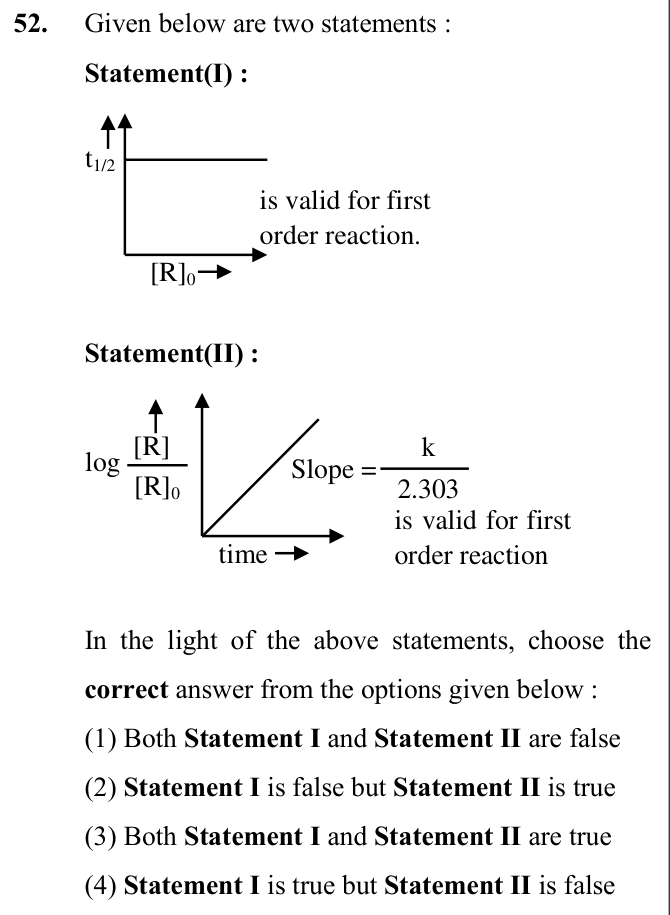
⚡ OFFICIAL KEY: 4
Step-by-Step Derivation
QUESTION 8
CHEMISTRY · Chemical Kinetics
SECTION A · MCQ (+4, -1)
Candidate Response:
(1) (2) (3) (4)
⚡ OFFICIAL KEY: 1
Step-by-Step Derivation
QUESTION 9
CHEMISTRY · Chemical Kinetics
SECTION A · MCQ (+4, -1)
In a multi-step reaction, the overall rate is governed by the step that is the what?
(1) last step
(2) slowest step
(3) first step
(4) fastest step
Candidate Response:
(1) (2) (3) (4)
⚡ OFFICIAL KEY: slowest step
Step-by-Step Derivation
The slowest (rate-determining) step controls the overall reaction rate.
QUESTION 10
CHEMISTRY · Chemical Kinetics
SECTION A · MCQ (+4, -1)
In a stoichiometric rate expression, the rate of reaction equals the rate of change of concentration of a species divided by its what?
(1) molecular mass
(2) molecularity
(3) order
(4) stoichiometric coefficient
Candidate Response:
(1) (2) (3) (4)
⚡ OFFICIAL KEY: stoichiometric coefficient
Step-by-Step Derivation
Each species' rate is divided by its stoichiometric coefficient to give a single common reaction rate.
QUESTION 11
CHEMISTRY · Chemical Kinetics
SECTION A · MCQ (+4, -1)
For a zero-order reaction, which plot yields a straight line?
(1) ln[A] versus t
(2) [A] versus t
(3) 1/[A] versus t
(4) log k versus 1/T
Candidate Response:
(1) (2) (3) (4)
⚡ OFFICIAL KEY: [A] versus t
Step-by-Step Derivation
Zero-order kinetics follows [A] = [A]0 - kt, so a plot of [A] versus t is linear.
QUESTION 12
CHEMISTRY · Chemical Kinetics
SECTION A · MCQ (+4, -1)
Which of the following is determined only by experiment and can be zero or a fraction?
(1) valence
(2) stoichiometric coefficient
(3) order of reaction
(4) molecularity
Candidate Response:
(1) (2) (3) (4)
⚡ OFFICIAL KEY: order of reaction
Step-by-Step Derivation
Order is experimental and may be zero or fractional, whereas molecularity is always a whole number.
QUESTION 13
CHEMISTRY · Chemical Kinetics
SECTION A · MCQ (+4, -1)
Why does the acid-catalysed hydrolysis of ethyl acetate (CH₃COOC₂H₅ + H₂O → CH₃COOH + C₂H₅OH) behave as a pseudo first-order reaction?
(1) The reaction is elementary and inherently first order
(2) Ester is present in large excess over water
(3) The acid catalyst makes both reactants disappear at the same rate
(4) Water is in large excess so [H₂O] stays nearly constant and is folded into k, leaving rate ∝ [ester]
Candidate Response:
(1) (2) (3) (4)
⚡ OFFICIAL KEY: Water is in large excess so [H₂O] stays nearly constant and is folded into k, leaving rate ∝ [ester]
Step-by-Step Derivation
With water in immense excess its concentration changes negligibly during reaction, so [H₂O] behaves as a constant that is absorbed into the rate constant: Rate = k′[ester][H₂O] ≈ k[ester], where k = k′[H₂O].
QUESTION 14
CHEMISTRY · Chemical Kinetics
SECTION A · MCQ (+4, -1)
In the acid-catalysed hydrolysis of cane sugar, 'inversion' refers to the change in the what?
(1) rate constant
(2) activation energy
(3) order of reaction
(4) sign of optical rotation
Candidate Response:
(1) (2) (3) (4)
⚡ OFFICIAL KEY: sign of optical rotation
Step-by-Step Derivation
The optical rotation changes from dextrorotatory to laevorotatory as sucrose is hydrolysed.
QUESTION 15
CHEMISTRY · Chemical Kinetics
SECTION A · MCQ (+4, -1)
According to collision theory, what fraction of molecular collisions possess at least the activation energy Ea?
(1) RT/Ea
(2) 1 − e^(−Ea/RT)
(3) e^(−Ea/RT) (the Boltzmann factor)
(4) Ea/RT
Candidate Response:
(1) (2) (3) (4)
⚡ OFFICIAL KEY: e^(−Ea/RT) (the Boltzmann factor)
Step-by-Step Derivation
Only collisions with energy at least the threshold (E₀ = ground state + Ea) can react. The fraction of collisions in this high-energy tail is the Boltzmann factor e^(−Ea/RT).
QUESTION 16
CHEMISTRY · Chemical Kinetics
SECTION A · MCQ (+4, -1)
In a multi-step reaction, which elementary step governs the overall rate?
(1) The fastest step
(2) The first elementary step, regardless of its speed
(3) The slowest step (the rate determining step)
(4) The step that produces the final product
Candidate Response:
(1) (2) (3) (4)
⚡ OFFICIAL KEY: The slowest step (the rate determining step)
Step-by-Step Derivation
The overall rate of a complex reaction is fixed by its slowest elementary step, the rate determining step (RDS), because the reaction cannot proceed faster than its slowest step.
QUESTION 17
CHEMISTRY · Chemical Kinetics
SECTION A · MCQ (+4, -1)
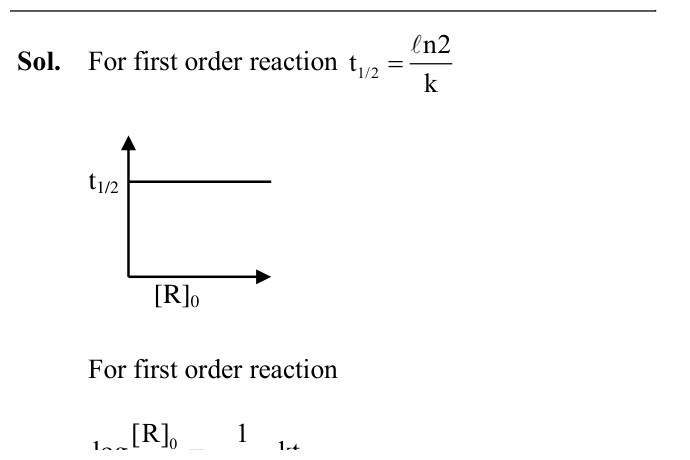
If the initial concentration of a first-order reactant is doubled, what happens to its half-life?
(1) It remains unchanged (t₁/₂ = 0.693/k)
(2) It halves
(3) It doubles
(4) It quadruples
Candidate Response:
(1) (2) (3) (4)
⚡ OFFICIAL KEY: It remains unchanged (t₁/₂ = 0.693/k)
Step-by-Step Derivation
For a first-order reaction t₁/₂ = 0.693/k, which contains no concentration term. Because rate is proportional to [R], the same fraction (half) decays in each successive half-life, so doubling [R]₀ does not change the half-life.
QUESTION 18
CHEMISTRY · Chemical Kinetics
SECTION A · MCQ (+4, -1)
What is the net optical rotation of the equimolar glucose–fructose mixture produced by the complete hydrolysis (inversion) of cane sugar?
(1) +66.5° (dextrorotatory)
(2) −19.9° (net laevorotatory)
(3) 0° (racemic)
(4) +52.5° (dextrorotatory)
Candidate Response:
(1) (2) (3) (4)
⚡ OFFICIAL KEY: −19.9° (net laevorotatory)
Step-by-Step Derivation
Sucrose (+66.5°) hydrolyses to D-glucose (+52.5°) and D-fructose (−92.4°). Fructose's levorotation outweighs glucose's dextrorotation, giving a net laevorotatory mixture of −19.9° (invert sugar).
QUESTION 19
CHEMISTRY · Chemical Kinetics
SECTION A · MCQ (+4, -1)
A catalyst increases the rate of a reaction primarily by doing what?
(1) increasing reactant concentration
(2) increasing the activation energy
(3) increasing the equilibrium constant
(4) lowering the activation energy
Candidate Response:
(1) (2) (3) (4)
⚡ OFFICIAL KEY: lowering the activation energy
Step-by-Step Derivation
A catalyst provides an alternate path with lower activation energy.
QUESTION 20
CHEMISTRY · Chemical Kinetics
SECTION A · MCQ (+4, -1)
For a collision between reactant molecules to be effective, they must possess energy at least equal to the what?
(1) bond dissociation energy
(2) ionisation energy
(3) activation energy
(4) average kinetic energy
Candidate Response:
(1) (2) (3) (4)
⚡ OFFICIAL KEY: activation energy
Step-by-Step Derivation
Only collisions with energy equal to or above the activation energy lead to products.
QUESTION 21
CHEMISTRY · Chemical Kinetics
SECTION A · MCQ (+4, -1)
A bimolecular reaction that behaves as first order because one reactant is present in large excess is called what?
(1) zero-order reaction
(2) elementary reaction
(3) second-order reaction
(4) pseudo first-order reaction
Candidate Response:
(1) (2) (3) (4)
⚡ OFFICIAL KEY: pseudo first-order reaction
Step-by-Step Derivation
With one reactant in large excess, its concentration stays nearly constant, giving apparent first-order kinetics.
QUESTION 22
CHEMISTRY · Chemical Kinetics
SECTION A · MCQ (+4, -1)
In the Arrhenius equation k = A e^(-Ea/RT), the symbol Ea denotes what?
(1) activation energy
(2) average kinetic energy
(3) bond energy
(4) internal energy
Candidate Response:
(1) (2) (3) (4)
⚡ OFFICIAL KEY: activation energy
Step-by-Step Derivation
Ea is the minimum energy reactants must possess for a productive collision.
QUESTION 23
CHEMISTRY · Chemical Kinetics
SECTION A · MCQ (+4, -1)
For a reactant whose concentration decays with time, how does the initial (t = 0) instantaneous rate compare with the average rate measured over any later finite interval?
(1) The average rate is always larger than the instantaneous rate
(2) The two rates are always equal
(3) The initial instantaneous rate is maximal and exceeds any later average rate
(4) The initial rate is smaller than the average rate
Candidate Response:
(1) (2) (3) (4)
⚡ OFFICIAL KEY: The initial instantaneous rate is maximal and exceeds any later average rate
Step-by-Step Derivation
The instantaneous rate is the tangent slope (−d[R]/dt), which is steepest at t = 0 because no products have yet accumulated. As the reactant is consumed the curve flattens, so every later average (secant) rate lies below the initial rate.
QUESTION 24
CHEMISTRY · Chemical Kinetics
SECTION A · MCQ (+4, -1)
For the Arrhenius plot of log k versus 1/T, what is the slope of the straight line?
(1) log A
(2) −Ea / R
(3) −Ea / (2.303 R)
(4) +Ea / (2.303 R)
Candidate Response:
(1) (2) (3) (4)
⚡ OFFICIAL KEY: −Ea / (2.303 R)
Step-by-Step Derivation
Taking logarithms of k = A e^(−Ea/RT) gives log k = log A − Ea/(2.303RT). Plotting log k against 1/T gives a straight line with slope −Ea/(2.303R) and y-intercept log A.
QUESTION 25
CHEMISTRY · Chemical Kinetics
SECTION A · MCQ (+4, -1)
In the modified collision-theory rate constant k = P·Z_AB·e^(−Ea/RT), what does the steric factor P account for?
(1) The total collision frequency
(2) The fraction of collisions with enough energy
(3) The activation energy
(4) The fraction of collisions with the correct spatial orientation
Candidate Response:
(1) (2) (3) (4)
⚡ OFFICIAL KEY: The fraction of collisions with the correct spatial orientation
Step-by-Step Derivation
The steric (probability) factor P corrects for the fact that even energetic collisions must be properly aligned to form products. It is the fraction of collisions with the correct spatial orientation.
QUESTION 26
CHEMISTRY · Chemical Kinetics
SECTION A · MCQ (+4, -1)
The instantaneous rate of a reaction is obtained from the concentration-time curve as the slope of the what?
(1) x-intercept
(2) tangent at a point
(3) chord between two points
(4) area under the curve
Candidate Response:
(1) (2) (3) (4)
⚡ OFFICIAL KEY: tangent at a point
Step-by-Step Derivation
Instantaneous rate is the slope of the tangent to the concentration-time curve at a given instant.
QUESTION 27
CHEMISTRY · Chemical Kinetics
SECTION A · MCQ (+4, -1)
What effect does a catalyst have on the equilibrium constant Kc of a reaction?
(1) It leaves Kc unchanged; the catalyst only lowers Ea and reaches the same equilibrium faster
(2) It increases Kc
(3) It decreases Kc
(4) It shifts Kc toward the products
Candidate Response:
(1) (2) (3) (4)
⚡ OFFICIAL KEY: It leaves Kc unchanged; the catalyst only lowers Ea and reaches the same equilibrium faster
Step-by-Step Derivation
A catalyst lowers the activation energy of both the forward and reverse reactions by the same amount, so it accelerates both directions equally. Their ratio (Kc) therefore stays unchanged; the catalyst only shortens the time to reach equilibrium.
QUESTION 28
CHEMISTRY · Chemical Kinetics
SECTION A · MCQ (+4, -1)
For a zero-order reaction with rate constant k and initial concentration [R]₀, what is the half-life?
(1) t₁/₂ = 2k / [R]₀
(2) t₁/₂ = [R]₀ / (2k)
(3) t₁/₂ = 0.693 / k
(4) t₁/₂ = k / [R]₀
Candidate Response:
(1) (2) (3) (4)
⚡ OFFICIAL KEY: t₁/₂ = [R]₀ / (2k)
Step-by-Step Derivation
For zero order, [R] = [R]₀ − kt. Setting [R] = [R]₀/2 gives t₁/₂ = [R]₀/(2k), so the half-life is directly proportional to the initial concentration.
QUESTION 29
CHEMISTRY · Chemical Kinetics
SECTION A · MCQ (+4, -1)
For a first-order reaction, the half-life is what?
(1) proportional to the square of initial concentration
(2) directly proportional to initial concentration
(3) inversely proportional to initial concentration
(4) independent of initial concentration
Candidate Response:
(1) (2) (3) (4)
⚡ OFFICIAL KEY: independent of initial concentration
Step-by-Step Derivation
For first order, t1/2 = 0.693/k, so it is independent of the initial concentration.
QUESTION 30
CHEMISTRY · Chemical Kinetics
SECTION A · MCQ (+4, -1)
For the decomposition 2N₂O₅ → 4NO₂ + O₂, how is the overall reaction rate written in terms of the rate of formation of NO₂?
(1) Rate = −(1/4) d[NO₂]/dt
(2) Rate = +(1/4) d[NO₂]/dt
(3) Rate = +4 d[NO₂]/dt
(4) Rate = +(1/2) d[NO₂]/dt
Candidate Response:
(1) (2) (3) (4)
⚡ OFFICIAL KEY: Rate = +(1/4) d[NO₂]/dt
Step-by-Step Derivation
For aA + bB → cC + dD the overall rate divides each species by its own stoichiometric coefficient so every species yields the same numerical rate. NO₂ has coefficient 4, so its formation rate must be divided by 4: Rate = +(1/4)d[NO₂]/dt.