
⚡ OFFICIAL NTA ASSESSMENT GENERATOR & WORD (.DOCX) EXPORTER
Alcohols, Phenols and Ethers · Practice Worksheet
JEE Main Chemistry · Curated Assessment Set Print directly or export as a beautifully formatted Microsoft Word document with embedded 180-DPI mathematical prompt clips and step-by-step derivations.
EDUPROD JEE MAIN TEST SERIES · NTA PATTERN
Alcohols, Phenols and Ethers · Practice Worksheet
JEE Main Chemistry · Curated Assessment Set · Assessment Code: JEE-101
Total Marks: 40
Marking: +4 / -1 (Sec A) · +4 / 0 (Sec B)
QUESTION 1
CHEMISTRY · Alcohols, Phenols and Ethers
SECTION A · MCQ (+4, -1)
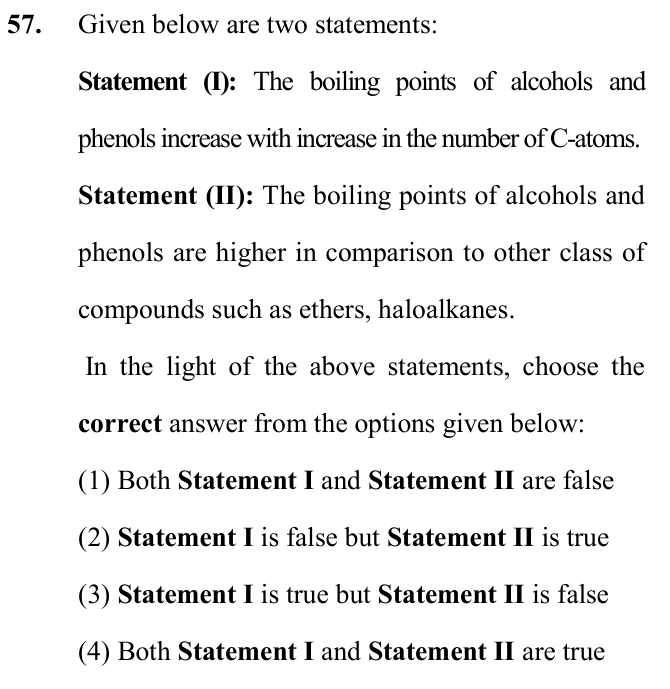
Candidate Response:
(1) (2) (3) (4)
⚡ OFFICIAL KEY: 4
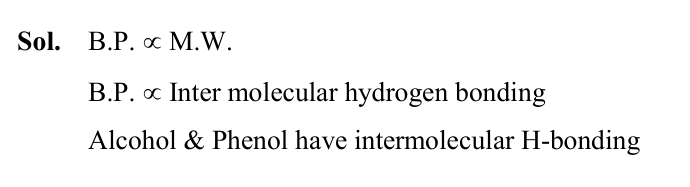
Step-by-Step Derivation
QUESTION 2
CHEMISTRY · Alcohols, Phenols and Ethers
SECTION A · MCQ (+4, -1)
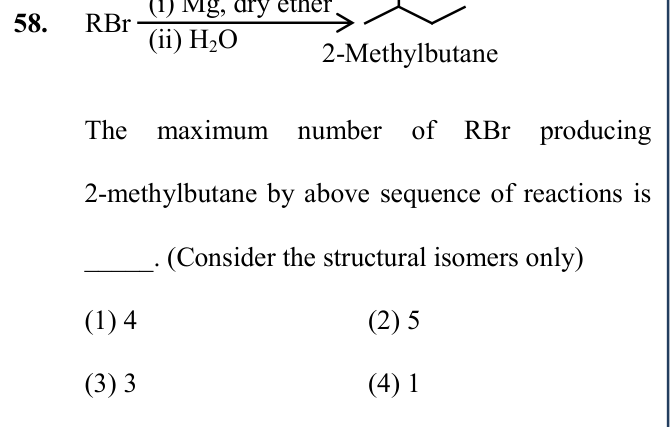
Candidate Response:
(1) (2) (3) (4)
⚡ OFFICIAL KEY: 1
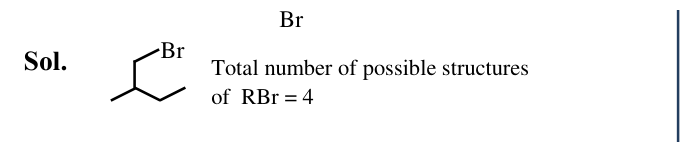
Step-by-Step Derivation
QUESTION 3
CHEMISTRY · Alcohols, Phenols and Ethers
SECTION B · NUMERICAL (+4, 0)
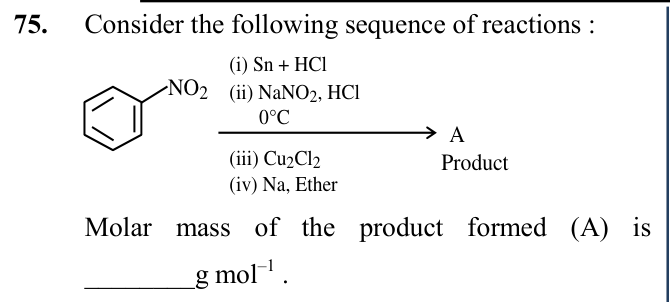
Numerical Value:
[ ]
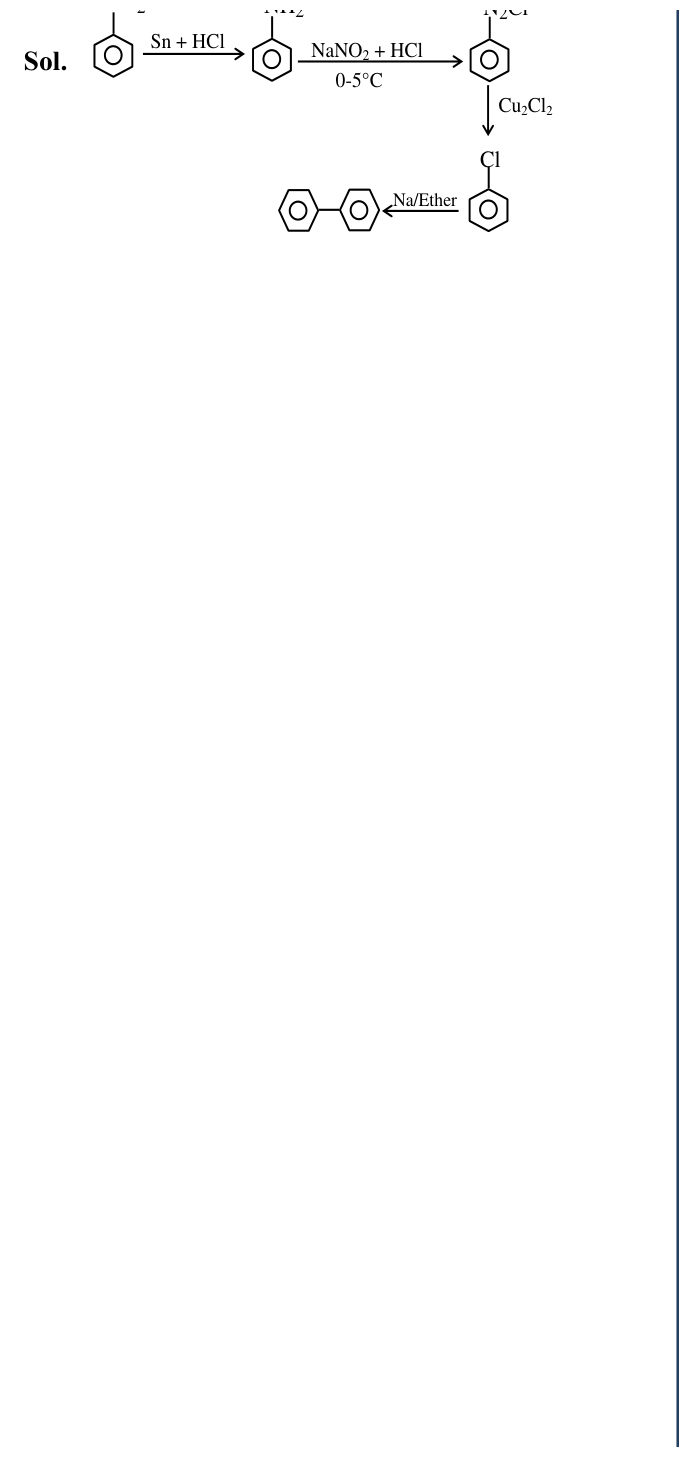
⚡ OFFICIAL KEY: 154
Step-by-Step Derivation
QUESTION 4
CHEMISTRY · Alcohols, Phenols and Ethers
SECTION A · MCQ (+4, -1)
Why is phenol (pKa ≈ 10) far more acidic than ethanol (pKa ≈ 16)?
(1) Phenol has a much weaker O–H bond
(2) The phenoxide ion is resonance-stabilised by delocalisation of the negative charge over the ring
(3) Phenol forms dimers in solution
(4) The ethyl group stabilises the alkoxide ion
Candidate Response:
(1) (2) (3) (4)
⚡ OFFICIAL KEY: The phenoxide ion is resonance-stabilised by delocalisation of the negative charge over the ring
Step-by-Step Derivation
On deprotonation, phenol gives the phenoxide ion, whose negative charge is delocalised over the ortho and para carbons through five resonance structures. This strong stabilisation of the conjugate base makes phenol about 10⁶ times more acidic than ethanol, whose alkoxide ion has no such delocalisation.
QUESTION 5
CHEMISTRY · Alcohols, Phenols and Ethers
SECTION A · MCQ (+4, -1)
In the cleavage of an unsymmetrical ether by HI, the iodide ion preferentially attacks which alkyl group?
(1) the smaller (less hindered) alkyl group
(2) the bulkier alkyl group
(3) neither group
(4) the aryl group
Candidate Response:
(1) (2) (3) (4)
⚡ OFFICIAL KEY: the smaller (less hindered) alkyl group
Step-by-Step Derivation
Iodide attacks the less hindered alkyl group via SN2.
QUESTION 6
CHEMISTRY · Alcohols, Phenols and Ethers
SECTION A · MCQ (+4, -1)
tert-Butyl methyl ether reacts with concentrated HI to give which iodide?
(1) Methyl iodide plus tert-butyl alcohol
(2) tert-Butyl iodide ((CH₃)₃C–I) plus methanol, via an SN1 carbocation mechanism
(3) Both iodides in equal amounts
(4) No reaction occurs
Candidate Response:
(1) (2) (3) (4)
⚡ OFFICIAL KEY: tert-Butyl iodide ((CH₃)₃C–I) plus methanol, via an SN1 carbocation mechanism
Step-by-Step Derivation
Protonation is followed by departure of methanol to give a highly stable 3° carbocation, which is then trapped by iodide. The SN1 pathway therefore yields tert-butyl iodide and methanol, not methyl iodide.
QUESTION 7
CHEMISTRY · Alcohols, Phenols and Ethers
SECTION A · MCQ (+4, -1)
Which statement correctly classifies benzyl alcohol, C₆H₅CH₂OH?
(1) It is a secondary alcohol
(2) It is a primary (benzylic) alcohol because the –OH is bonded to an sp³ side-chain carbon, not the aromatic ring
(3) It is a phenol because it contains a benzene ring
(4) It is a dihydric phenol
Candidate Response:
(1) (2) (3) (4)
⚡ OFFICIAL KEY: It is a primary (benzylic) alcohol because the –OH is bonded to an sp³ side-chain carbon, not the aromatic ring
Step-by-Step Derivation
The –OH group of benzyl alcohol sits on the CH₂ side-chain carbon, which is sp³-hybridised, so the compound is a primary (benzylic) alcohol. A phenol requires the –OH to be bonded directly to an sp² aromatic ring carbon.
QUESTION 8
CHEMISTRY · Alcohols, Phenols and Ethers
SECTION A · MCQ (+4, -1)
Alcohols have much higher boiling points than alkanes of comparable molar mass because of which intermolecular force?
(1) ionic bonding
(2) van der Waals forces
(3) dipole-induced dipole forces
(4) hydrogen bonding
Candidate Response:
(1) (2) (3) (4)
⚡ OFFICIAL KEY: hydrogen bonding
Step-by-Step Derivation
Intermolecular hydrogen bonding raises the boiling points of alcohols.
QUESTION 9
CHEMISTRY · Alcohols, Phenols and Ethers
SECTION A · MCQ (+4, -1)
Williamson ether synthesis gives the best yield of an ether when the alkyl halide used is which type?
(1) tertiary
(2) primary
(3) secondary
(4) aryl
Candidate Response:
(1) (2) (3) (4)
⚡ OFFICIAL KEY: primary
Step-by-Step Derivation
Primary halides favour SN2 ether formation over elimination.
QUESTION 10
CHEMISTRY · Alcohols, Phenols and Ethers
SECTION A · MCQ (+4, -1)
An alcohol in which the carbon bearing the –OH group is attached to two other carbon atoms is classified as which type?
(1) secondary (2°)
(2) quaternary
(3) tertiary (3°)
(4) primary (1°)
Candidate Response:
(1) (2) (3) (4)
⚡ OFFICIAL KEY: secondary (2°)
Step-by-Step Derivation
Two carbon atoms bonded to the –OH-bearing carbon make it secondary.