
⚡ OFFICIAL NTA ASSESSMENT GENERATOR & WORD (.DOCX) EXPORTER
Amines · Practice Worksheet
JEE Main Chemistry · Curated Assessment Set Print directly or export as a beautifully formatted Microsoft Word document with embedded 180-DPI mathematical prompt clips and step-by-step derivations.
EDUPROD JEE MAIN TEST SERIES · NTA PATTERN
Amines · Practice Worksheet
JEE Main Chemistry · Curated Assessment Set · Assessment Code: JEE-101
Total Marks: 100
Marking: +4 / -1 (Sec A) · +4 / 0 (Sec B)
QUESTION 1
CHEMISTRY · Amines
SECTION A · MCQ (+4, -1)
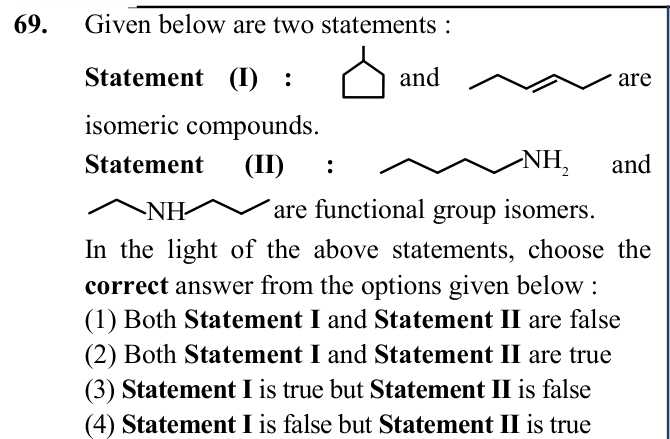
Candidate Response:
(1) (2) (3) (4)
QUESTION 2
CHEMISTRY · Amines
SECTION A · MCQ (+4, -1)
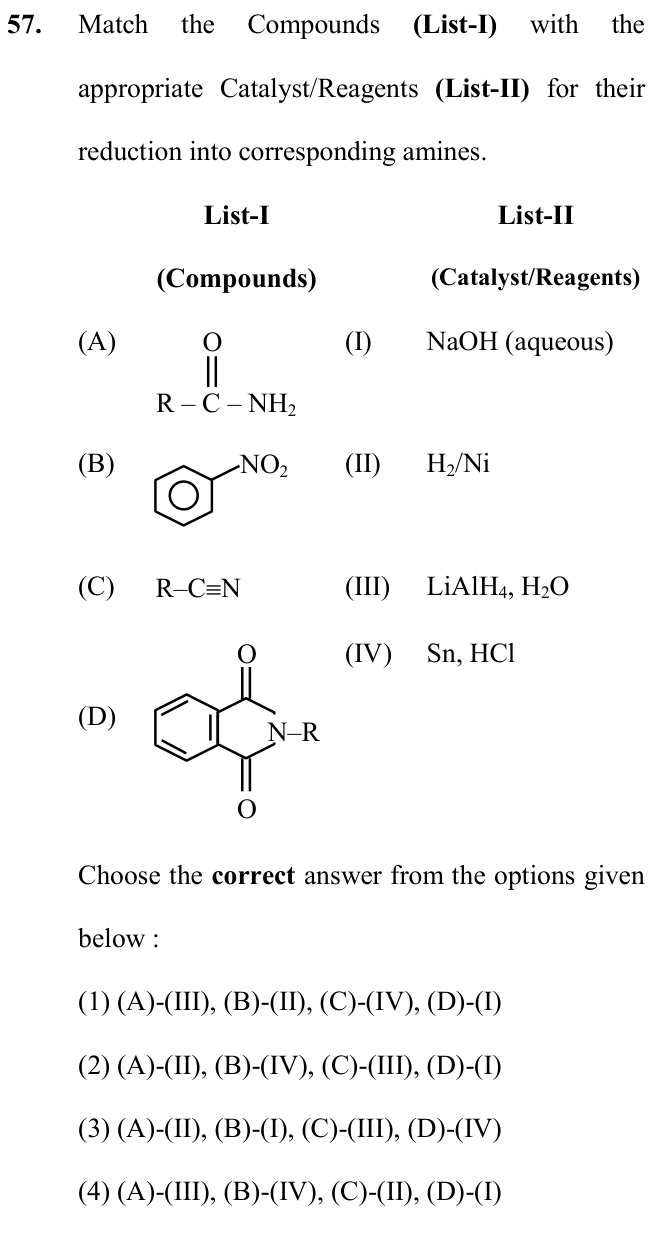
Candidate Response:
(1) (2) (3) (4)
QUESTION 3
CHEMISTRY · Amines
SECTION A · MCQ (+4, -1)
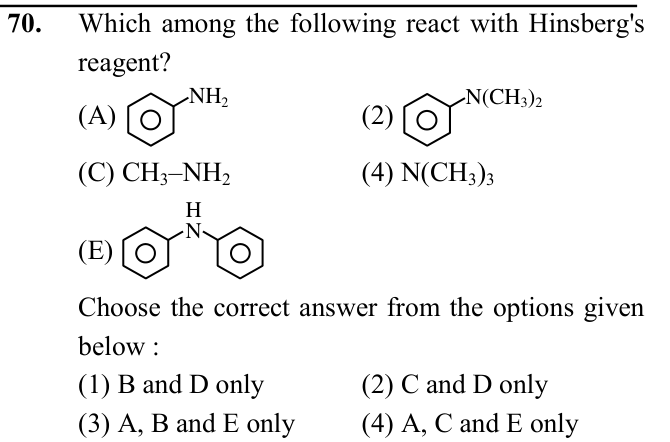
Candidate Response:
(1) (2) (3) (4)
QUESTION 4
CHEMISTRY · Amines
SECTION A · MCQ (+4, -1)
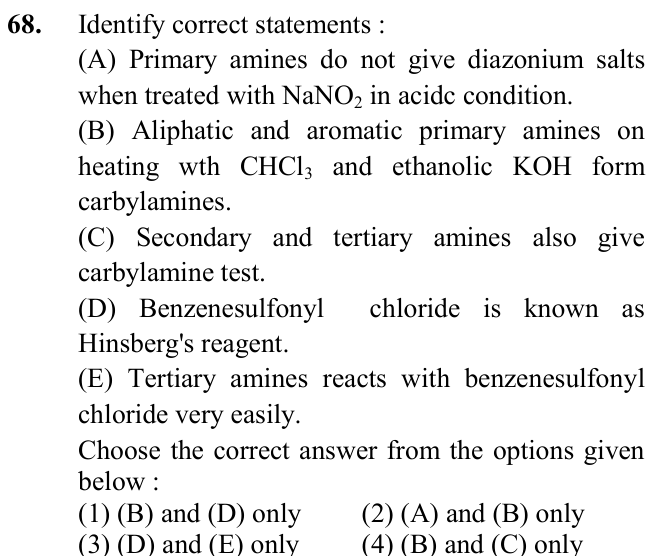
Candidate Response:
(1) (2) (3) (4)
QUESTION 5
CHEMISTRY · Amines
SECTION A · MCQ (+4, -1)
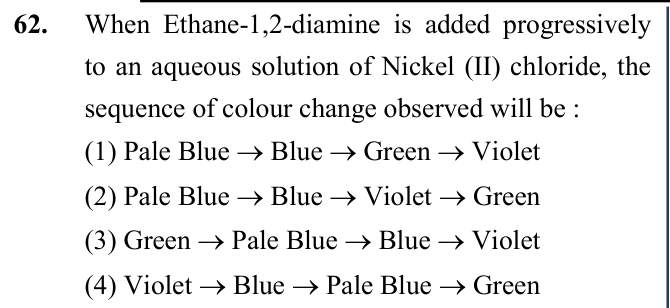
Candidate Response:
(1) (2) (3) (4)
QUESTION 6
CHEMISTRY · Amines
SECTION A · MCQ (+4, -1)
A trivalent amine with three different substituents on nitrogen is chiral in principle, yet cannot be resolved into stable enantiomers because:
(1) rapid pyramidal (umbrella) inversion through a planar sp² transition state interconverts the enantiomers
(2) the amine nitrogen is sp² hybridised and therefore permanently planar
(3) the nitrogen lone pair physically blocks the resolving agent
(4) such chiral amines always contain a plane of symmetry
Candidate Response:
(1) (2) (3) (4)
QUESTION 7
CHEMISTRY · Amines
SECTION A · MCQ (+4, -1)
Benzenediazonium chloride is prepared by treating aniline with NaNO₂ and HCl at which temperature range?
(1) 25–30 °C
(2) 100 °C
(3) 50–60 °C
(4) 0–5 °C
Candidate Response:
(1) (2) (3) (4)
QUESTION 8
CHEMISTRY · Amines
SECTION A · MCQ (+4, -1)
In aqueous solution, the correct order of basic strength of methylamine, dimethylamine and trimethylamine is:
(1) (CH₃)₃N > CH₃NH₂ > (CH₃)₂NH
(2) CH₃NH₂ > (CH₃)₂NH > (CH₃)₃N
(3) (CH₃)₃N > (CH₃)₂NH > CH₃NH₂ (the gas-phase order)
(4) (CH₃)₂NH > CH₃NH₂ > (CH₃)₃N (the 213 rule)
Candidate Response:
(1) (2) (3) (4)
QUESTION 9
CHEMISTRY · Amines
SECTION A · MCQ (+4, -1)
In the gas phase, the basicity of simple alkyl amines follows which order?
(1) primary > secondary > tertiary
(2) secondary > primary > tertiary
(3) secondary > tertiary > primary
(4) tertiary > secondary > primary
Candidate Response:
(1) (2) (3) (4)
QUESTION 10
CHEMISTRY · Amines
SECTION A · MCQ (+4, -1)
Fluorobenzene is best prepared from benzenediazonium chloride by:
(1) warming with aqueous KI
(2) converting to the diazonium fluoroborate (C₆H₅N₂⁺BF₄⁻) and heating it dry (Balz-Schiemann reaction)
(3) Sandmeyer reaction with Cu₂Cl₂
(4) warming with aqueous HF
Candidate Response:
(1) (2) (3) (4)
QUESTION 11
CHEMISTRY · Amines
SECTION A · MCQ (+4, -1)
Aniline (pKb = 9.38) is a much weaker base than methylamine (pKb = 3.38) because:
(1) aniline has more N–H bonds to stabilise its conjugate cation
(2) aniline is actually a tertiary amine
(3) the nitrogen lone pair delocalises into the aromatic ring, lowering electron density on nitrogen
(4) the aromatic ring donates electrons to nitrogen through a +I effect
Candidate Response:
(1) (2) (3) (4)
QUESTION 12
CHEMISTRY · Amines
SECTION A · MCQ (+4, -1)
On reaction with nitrous acid (HNO₂), a secondary amine gives which product?
(1) an alcohol
(2) a yellow oily N-nitroso compound
(3) nitrogen gas
(4) a diazonium salt
Candidate Response:
(1) (2) (3) (4)
QUESTION 13
CHEMISTRY · Amines
SECTION A · MCQ (+4, -1)
On what basis is the degree (1°, 2°, 3°) of an amine assigned?
(1) number of carbon atoms attached to the carbon bearing –OH
(2) number of hydrogen atoms on nitrogen
(3) number of carbon atoms attached to nitrogen
(4) molecular weight
Candidate Response:
(1) (2) (3) (4)
QUESTION 14
CHEMISTRY · Amines
SECTION A · MCQ (+4, -1)
Hofmann bromamide degradation converts an amide into a primary amine having how many carbon atoms relative to the parent amide?
(1) the same number
(2) one more
(3) one less
(4) two less
Candidate Response:
(1) (2) (3) (4)
QUESTION 15
CHEMISTRY · Amines
SECTION A · MCQ (+4, -1)
The carbylamine (isocyanide) test is positive for which class of amines?
(1) All three classes of amines equally
(2) Primary (1°) amines only, both aliphatic and aromatic
(3) Tertiary (3°) amines only
(4) Secondary (2°) amines only
Candidate Response:
(1) (2) (3) (4)
QUESTION 16
CHEMISTRY · Amines
SECTION A · MCQ (+4, -1)
Benzenediazonium chloride couples with phenol to form p-hydroxyazobenzene (an orange dye) at:
(1) strongly acidic pH below 2
(2) pH 4–5, where phenol remains unionised
(3) strongly basic pH above 12
(4) pH 9–10, where phenol ionises to the reactive phenoxide ion
Candidate Response:
(1) (2) (3) (4)
QUESTION 17
CHEMISTRY · Amines
SECTION A · MCQ (+4, -1)
Before nitrating aniline to obtain para-substitution, the –NH₂ group is protected by which reaction?
(1) oxidation
(2) acetylation
(3) hydrolysis
(4) reduction
Candidate Response:
(1) (2) (3) (4)
QUESTION 18
CHEMISTRY · Amines
SECTION A · MCQ (+4, -1)
Diethylamine is treated with nitrous acid (NaNO₂ + HCl, 0–5 °C). The product and observation are:
(1) a yellow oily N-nitrosodiethylamine, insoluble in water
(2) nitrogen gas bubbles with the formation of ethanol
(3) a stable diazonium salt
(4) a colourless soluble trialkylammonium salt
Candidate Response:
(1) (2) (3) (4)
QUESTION 19
CHEMISTRY · Amines
SECTION A · MCQ (+4, -1)
Direct nitration of aniline with concentrated HNO₃ yields a significant amount of which isomeric product?
(1) meta-nitroaniline
(2) para-nitroaniline
(3) no reaction
(4) ortho-nitroaniline
Candidate Response:
(1) (2) (3) (4)
QUESTION 20
CHEMISTRY · Amines
SECTION A · MCQ (+4, -1)
Direct nitration of aniline with HNO₃/H₂SO₄ gives a large amount (~47%) of meta-nitroaniline because:
(1) aniline decomposes and re-forms at the meta position
(2) the acid protonates –NH₂ to the anilinium ion (–NH₃⁺), which is a deactivating meta-director
(3) the amino group's +R effect directs the nitronium ion to the meta position
(4) the –NH₂ group is inherently meta-directing
Candidate Response:
(1) (2) (3) (4)
QUESTION 21
CHEMISTRY · Amines
SECTION A · MCQ (+4, -1)
Aniline does not undergo Friedel-Crafts alkylation or acylation because:
(1) aniline is too volatile to react
(2) its basic –NH₂ forms a coordinate complex with AlCl₃, which deactivates the ring toward electrophilic attack
(3) aniline lacks a benzene ring
(4) the –NH₂ group is an inherently deactivating substituent
Candidate Response:
(1) (2) (3) (4)
QUESTION 22
CHEMISTRY · Amines
SECTION A · MCQ (+4, -1)
The geometry around the sp³ nitrogen atom in ammonia and amines is which of the following?
(1) trigonal pyramidal
(2) square planar
(3) trigonal planar
(4) linear
Candidate Response:
(1) (2) (3) (4)
QUESTION 23
CHEMISTRY · Amines
SECTION A · MCQ (+4, -1)
The carbylamine (isocyanide) test is given by which class of amines?
(1) all classes of amines
(2) secondary amines
(3) primary amines
(4) tertiary amines
Candidate Response:
(1) (2) (3) (4)
QUESTION 24
CHEMISTRY · Amines
SECTION A · MCQ (+4, -1)
Gabriel phthalimide synthesis yields pure primary aliphatic amines without over-alkylation because:
(1) the reaction uses a large excess of alkyl halide to force a single product
(2) the nitrogen is locked inside a cyclic imide and can accept only one alkyl group
(3) phthalimide is so bulky that it blocks all alkylation
(4) the primary amine product immediately precipitates out of solution
Candidate Response:
(1) (2) (3) (4)
QUESTION 25
CHEMISTRY · Amines
SECTION A · MCQ (+4, -1)
Aniline is a much weaker base than ammonia primarily because of which reason?
(1) nitrogen is sp² hybridised
(2) it is insoluble in water
(3) it has a higher molecular mass
(4) the lone pair on nitrogen is delocalised into the benzene ring
Candidate Response:
(1) (2) (3) (4)