
⚡ OFFICIAL NTA ASSESSMENT GENERATOR & WORD (.DOCX) EXPORTER
Amines · Practice Worksheet
JEE Main Chemistry · Curated Assessment Set Print directly or export as a beautifully formatted Microsoft Word document with embedded 180-DPI mathematical prompt clips and step-by-step derivations.
EDUPROD JEE MAIN TEST SERIES · NTA PATTERN
Amines · Practice Worksheet
JEE Main Chemistry · Curated Assessment Set · Assessment Code: JEE-101
Total Marks: 40
Marking: +4 / -1 (Sec A) · +4 / 0 (Sec B)
QUESTION 1
CHEMISTRY · Amines
SECTION A · MCQ (+4, -1)
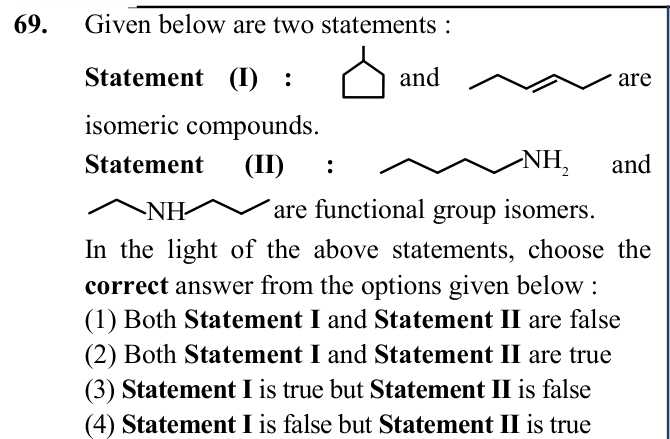
Candidate Response:
(1) (2) (3) (4)
⚡ OFFICIAL KEY: 2
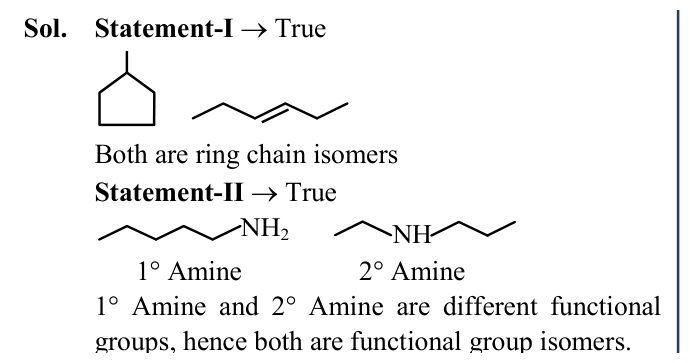
Step-by-Step Derivation
QUESTION 2
CHEMISTRY · Amines
SECTION A · MCQ (+4, -1)
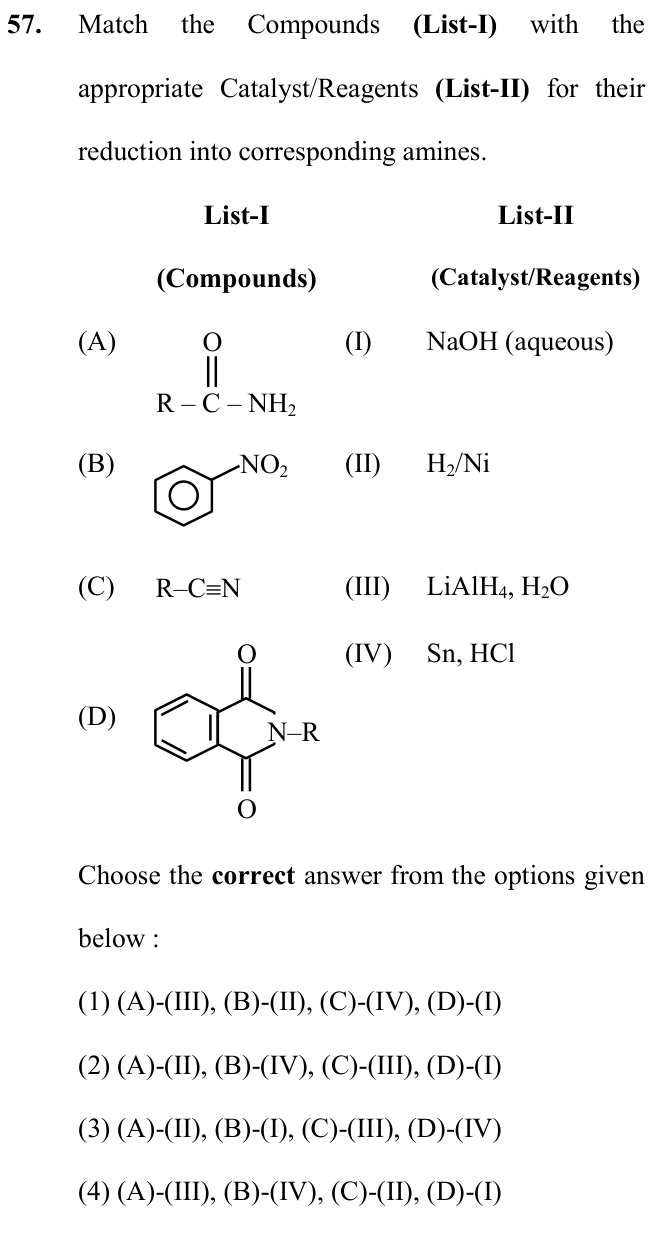
Candidate Response:
(1) (2) (3) (4)
⚡ OFFICIAL KEY: 4
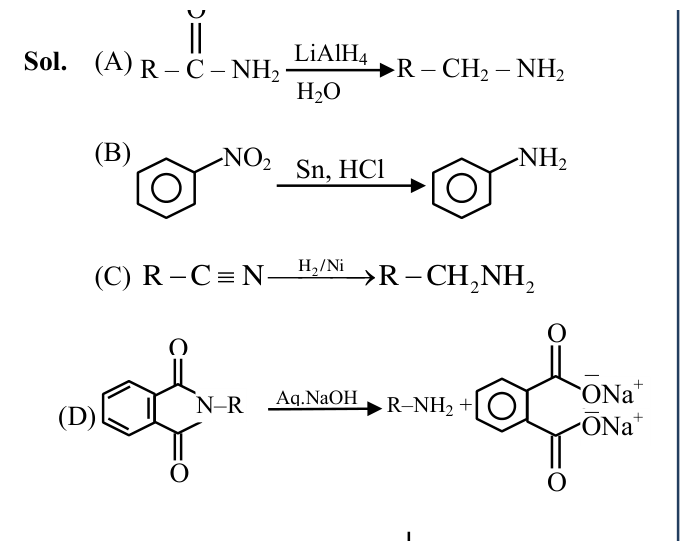
Step-by-Step Derivation
QUESTION 3
CHEMISTRY · Amines
SECTION A · MCQ (+4, -1)
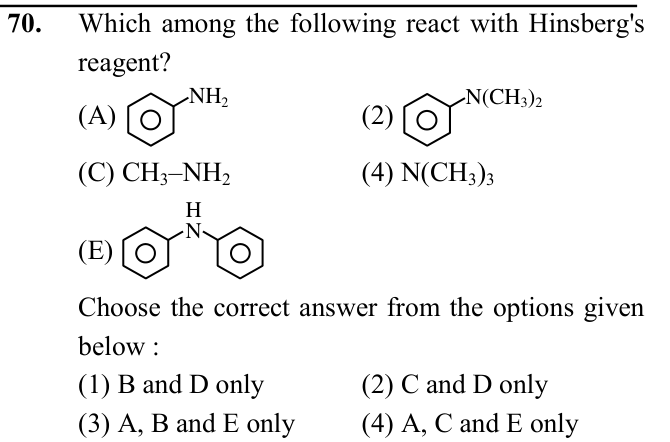
Candidate Response:
(1) (2) (3) (4)
⚡ OFFICIAL KEY: 4
Step-by-Step Derivation
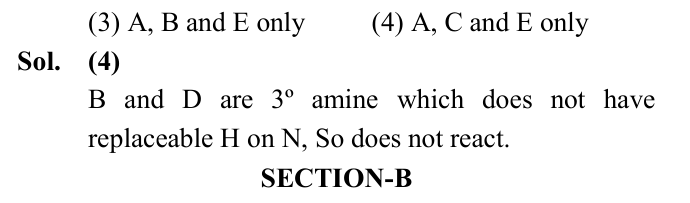
QUESTION 4
CHEMISTRY · Amines
SECTION A · MCQ (+4, -1)
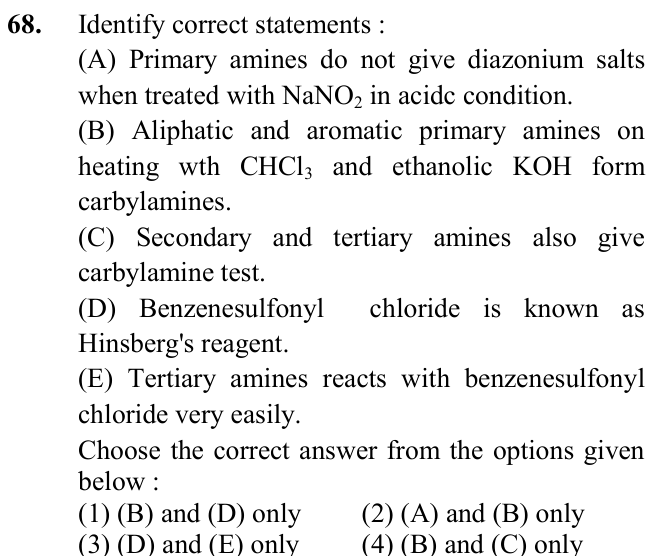
Candidate Response:
(1) (2) (3) (4)
⚡ OFFICIAL KEY: 1
Step-by-Step Derivation
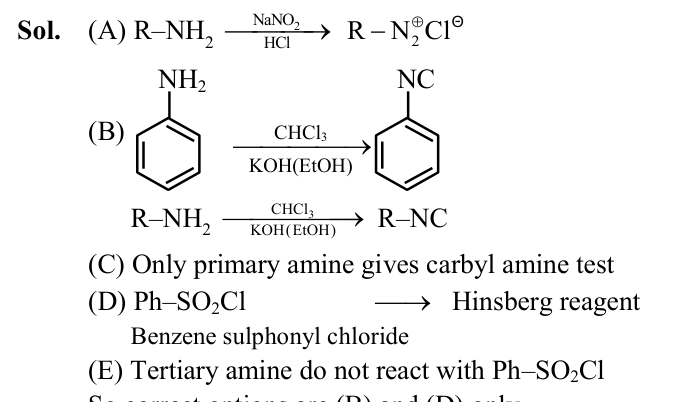
QUESTION 5
CHEMISTRY · Amines
SECTION A · MCQ (+4, -1)
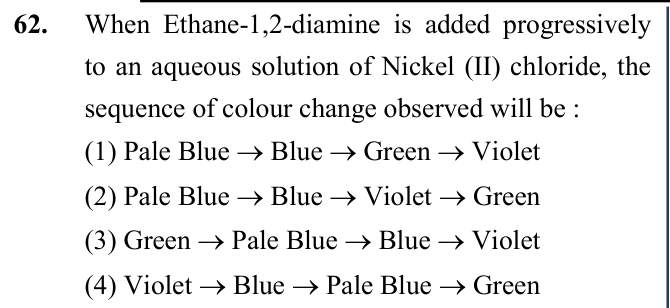
Candidate Response:
(1) (2) (3) (4)
⚡ OFFICIAL KEY: 3
Step-by-Step Derivation
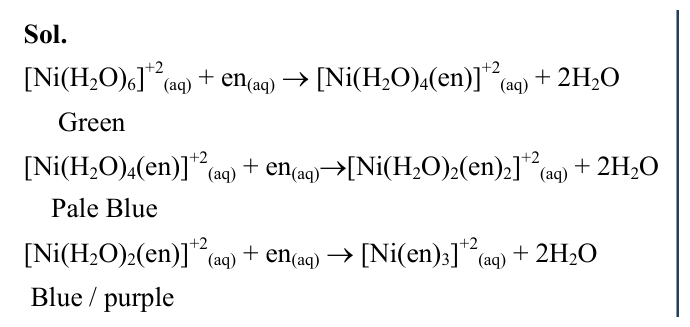
QUESTION 6
CHEMISTRY · Amines
SECTION A · MCQ (+4, -1)
A trivalent amine with three different substituents on nitrogen is chiral in principle, yet cannot be resolved into stable enantiomers because:
(1) rapid pyramidal (umbrella) inversion through a planar sp² transition state interconverts the enantiomers
(2) the amine nitrogen is sp² hybridised and therefore permanently planar
(3) the nitrogen lone pair physically blocks the resolving agent
(4) such chiral amines always contain a plane of symmetry
Candidate Response:
(1) (2) (3) (4)
⚡ OFFICIAL KEY: rapid pyramidal (umbrella) inversion through a planar sp² transition state interconverts the enantiomers
Step-by-Step Derivation
Amine nitrogen is sp³ with a lone pair in one orbital. The lone pair flips through a planar sp² transition state with a very low barrier (~25 kJ/mol), interconverting the two enantiomeric forms about 10¹¹ times per second and causing instant racemisation.
QUESTION 7
CHEMISTRY · Amines
SECTION A · MCQ (+4, -1)
Benzenediazonium chloride is prepared by treating aniline with NaNO₂ and HCl at which temperature range?
(1) 25–30 °C
(2) 100 °C
(3) 50–60 °C
(4) 0–5 °C
Candidate Response:
(1) (2) (3) (4)
⚡ OFFICIAL KEY: 0–5 °C
Step-by-Step Derivation
Diazotisation is carried out at 0–5 °C to keep the diazonium salt stable.
QUESTION 8
CHEMISTRY · Amines
SECTION A · MCQ (+4, -1)
In aqueous solution, the correct order of basic strength of methylamine, dimethylamine and trimethylamine is:
(1) (CH₃)₃N > CH₃NH₂ > (CH₃)₂NH
(2) CH₃NH₂ > (CH₃)₂NH > (CH₃)₃N
(3) (CH₃)₃N > (CH₃)₂NH > CH₃NH₂ (the gas-phase order)
(4) (CH₃)₂NH > CH₃NH₂ > (CH₃)₃N (the 213 rule)
Candidate Response:
(1) (2) (3) (4)
⚡ OFFICIAL KEY: (CH₃)₂NH > CH₃NH₂ > (CH₃)₃N (the 213 rule)
Step-by-Step Derivation
In water the +I inductive effect competes with hydration (favouring more N–H bonds, i.e. 1°) and steric hindrance. For the small methyl groups, hydration dominates slightly over sterics, so the sequence is 2° > 1° > 3° — the 213 rule.
QUESTION 9
CHEMISTRY · Amines
SECTION A · MCQ (+4, -1)
In the gas phase, the basicity of simple alkyl amines follows which order?
(1) primary > secondary > tertiary
(2) secondary > primary > tertiary
(3) secondary > tertiary > primary
(4) tertiary > secondary > primary
Candidate Response:
(1) (2) (3) (4)
⚡ OFFICIAL KEY: tertiary > secondary > primary
Step-by-Step Derivation
In the gas phase only the +I effect operates, so basicity increases with alkyl substitution.
QUESTION 10
CHEMISTRY · Amines
SECTION A · MCQ (+4, -1)
Fluorobenzene is best prepared from benzenediazonium chloride by:
(1) warming with aqueous KI
(2) converting to the diazonium fluoroborate (C₆H₅N₂⁺BF₄⁻) and heating it dry (Balz-Schiemann reaction)
(3) Sandmeyer reaction with Cu₂Cl₂
(4) warming with aqueous HF
Candidate Response:
(1) (2) (3) (4)
⚡ OFFICIAL KEY: converting to the diazonium fluoroborate (C₆H₅N₂⁺BF₄⁻) and heating it dry (Balz-Schiemann reaction)
Step-by-Step Derivation
Fluoride cannot directly replace the diazonium group in aqueous solution. Instead the insoluble diazonium fluoroborate is isolated and decomposed by dry heating: C₆H₅N₂⁺BF₄⁻ → C₆H₅F + BF₃ + N₂ (the Balz-Schiemann reaction).