
⚡ OFFICIAL NTA ASSESSMENT GENERATOR & WORD (.DOCX) EXPORTER
Differential Equations · Practice Worksheet
JEE Main Mathematics · Curated Assessment Set Print directly or export as a beautifully formatted Microsoft Word document with embedded 180-DPI mathematical prompt clips and step-by-step derivations.
EDUPROD JEE MAIN TEST SERIES · NTA PATTERN
Differential Equations · Practice Worksheet
JEE Main Mathematics · Curated Assessment Set · Assessment Code: JEE-101
Total Marks: 100
Marking: +4 / -1 (Sec A) · +4 / 0 (Sec B)
QUESTION 1
MATHEMATICS · Trigonometric Functions
SECTION A · MCQ (+4, -1)
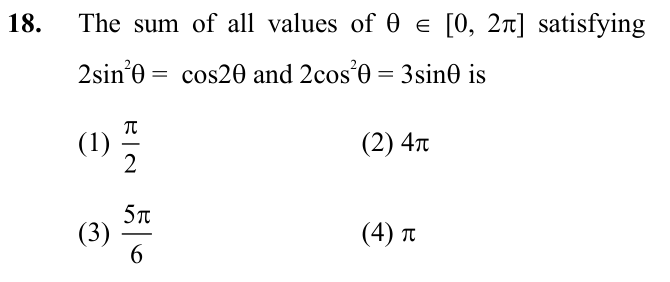
Candidate Response:
(1) (2) (3) (4)
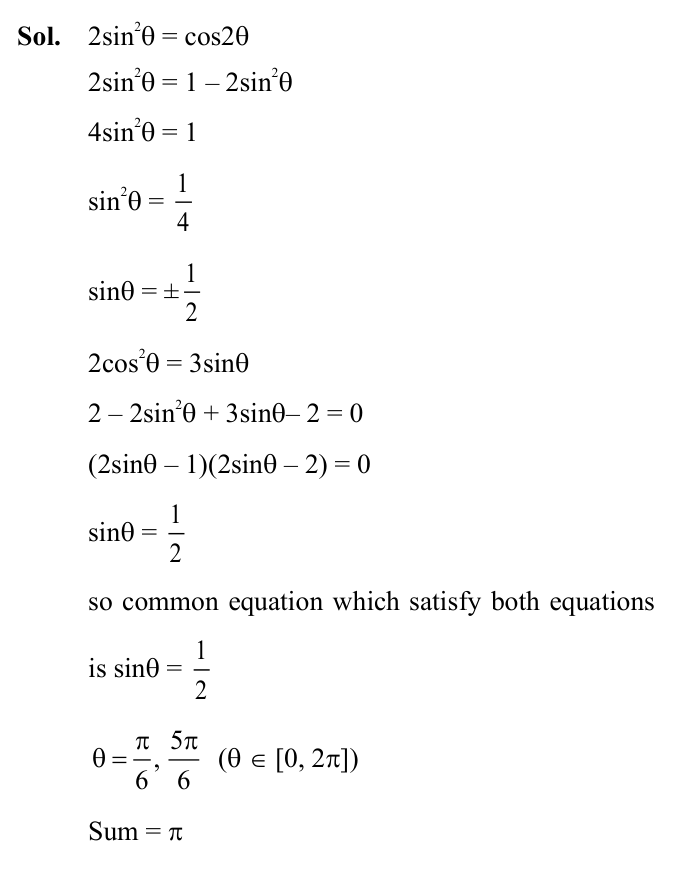
⚡ OFFICIAL KEY: 4
Step-by-Step Derivation
QUESTION 2
MATHEMATICS · Trigonometric Functions
SECTION B · NUMERICAL (+4, 0)
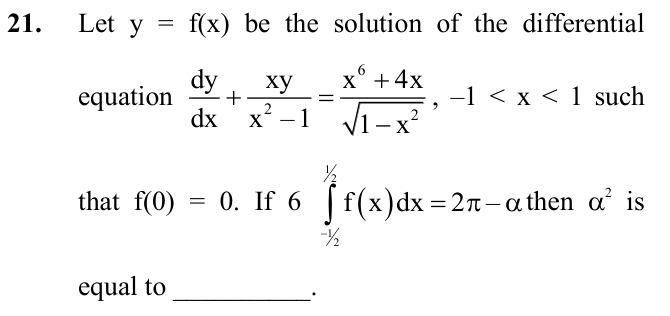
Numerical Value:
[ ]
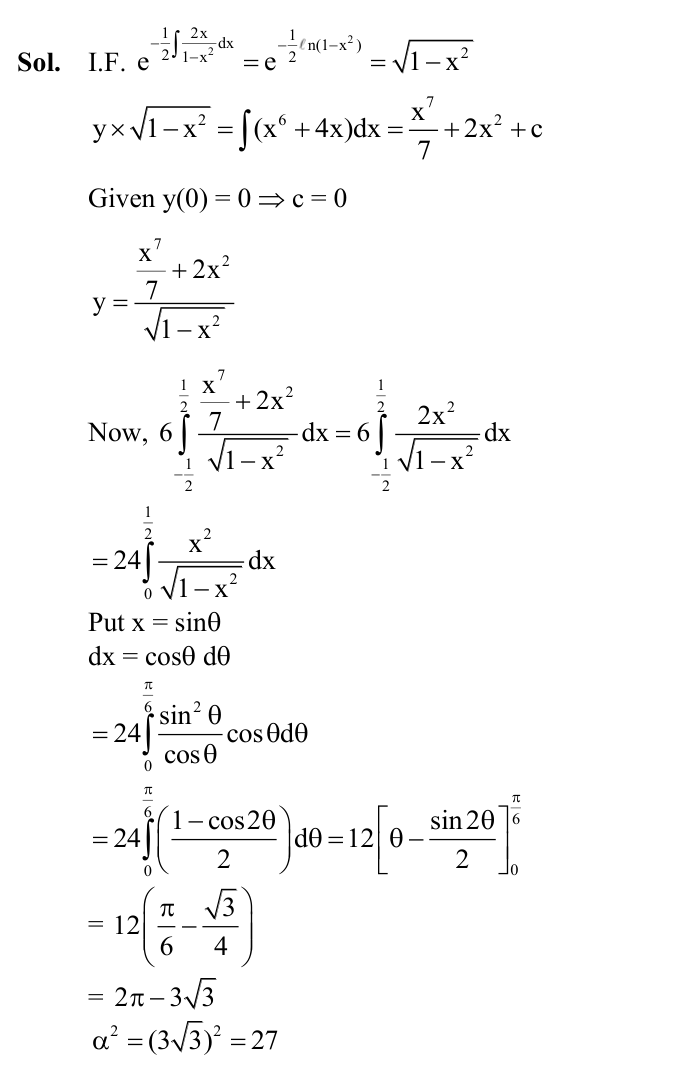
⚡ OFFICIAL KEY: 27
Step-by-Step Derivation
QUESTION 3
MATHEMATICS · Trigonometric Functions
SECTION B · NUMERICAL (+4, 0)
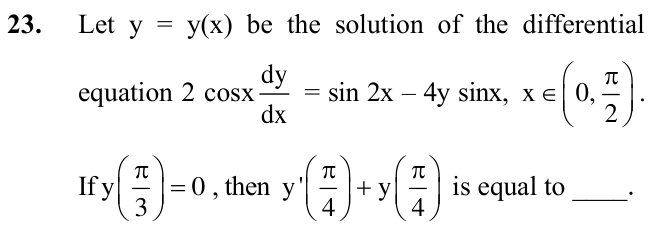
Numerical Value:
[ ]
⚡ OFFICIAL KEY: 1
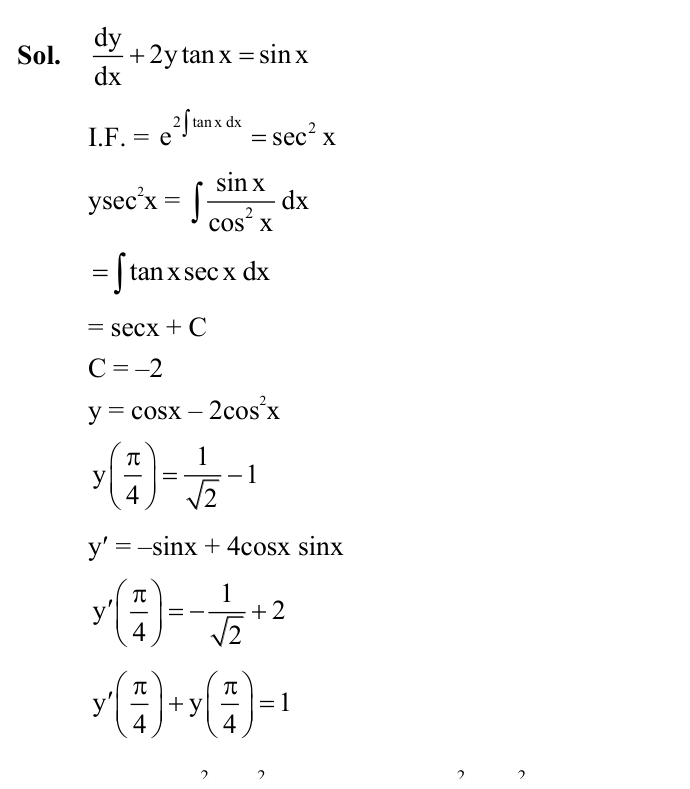
Step-by-Step Derivation
QUESTION 4
MATHEMATICS · Determinants
SECTION A · MCQ (+4, -1)
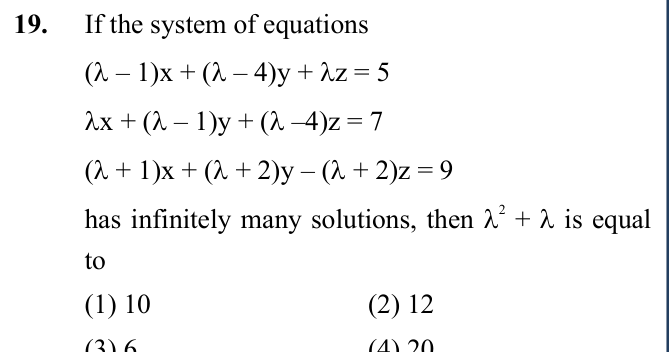
Candidate Response:
(1) (2) (3) (4)
⚡ OFFICIAL KEY: 2
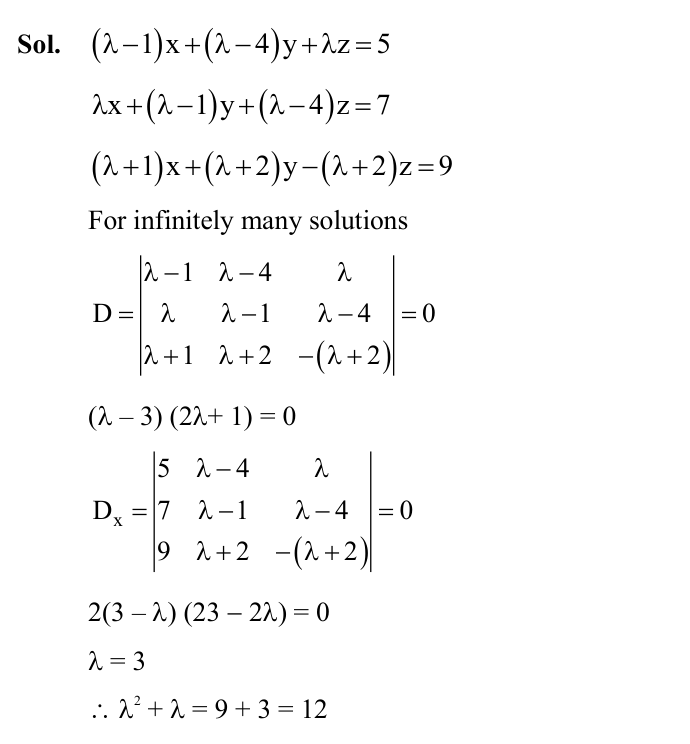
Step-by-Step Derivation
QUESTION 5
MATHEMATICS · Binomial Theorem
SECTION A · MCQ (+4, -1)
Candidate Response:
(1) (2) (3) (4)
⚡ OFFICIAL KEY: 1
Step-by-Step Derivation
QUESTION 6
MATHEMATICS · Integrals
SECTION A · MCQ (+4, -1)
Candidate Response:
(1) (2) (3) (4)
⚡ OFFICIAL KEY: 3
Step-by-Step Derivation
QUESTION 7
MATHEMATICS · Complex Numbers
SECTION A · MCQ (+4, -1)
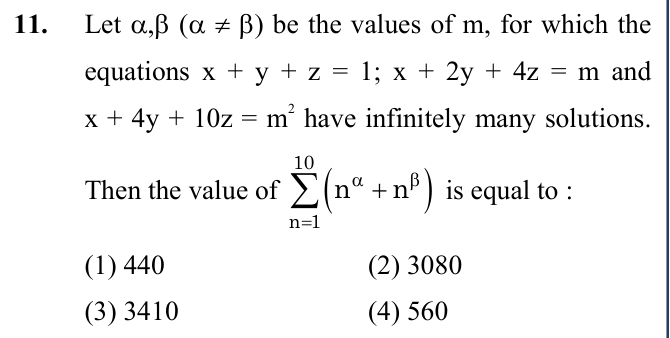
Candidate Response:
(1) (2) (3) (4)
⚡ OFFICIAL KEY: 1
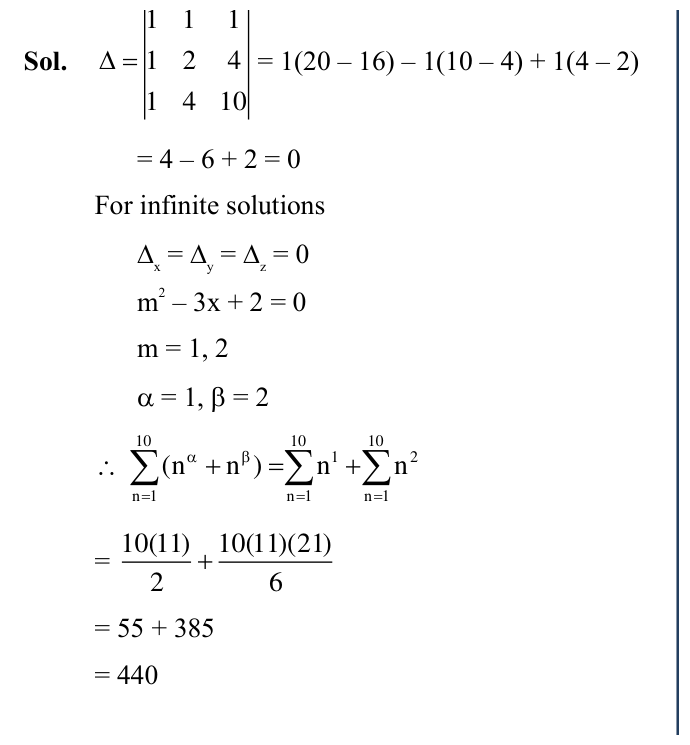
Step-by-Step Derivation
QUESTION 8
MATHEMATICS · Determinants
SECTION A · MCQ (+4, -1)
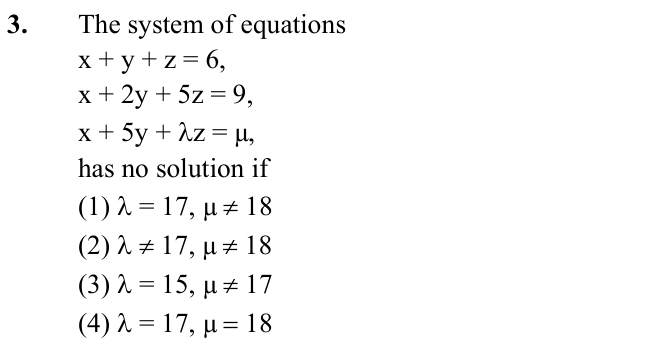
Candidate Response:
(1) (2) (3) (4)
⚡ OFFICIAL KEY: 1
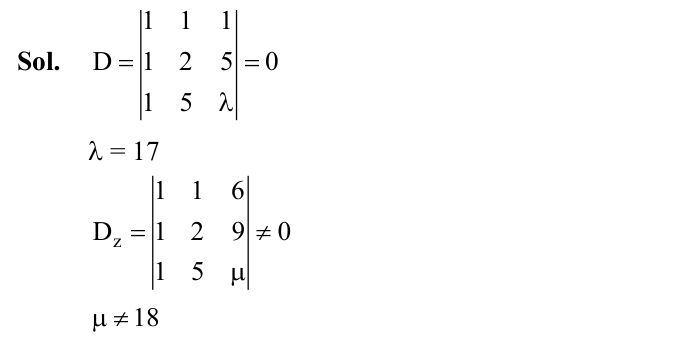
Step-by-Step Derivation
QUESTION 9
MATHEMATICS · Determinants
SECTION A · MCQ (+4, -1)
Candidate Response:
(1) (2) (3) (4)
⚡ OFFICIAL KEY: 4
Step-by-Step Derivation
QUESTION 10
MATHEMATICS · Trigonometric Functions
SECTION A · MCQ (+4, -1)
Candidate Response:
(1) (2) (3) (4)
⚡ OFFICIAL KEY: 4
Step-by-Step Derivation
QUESTION 11
MATHEMATICS · Trigonometric Functions
SECTION A · MCQ (+4, -1)
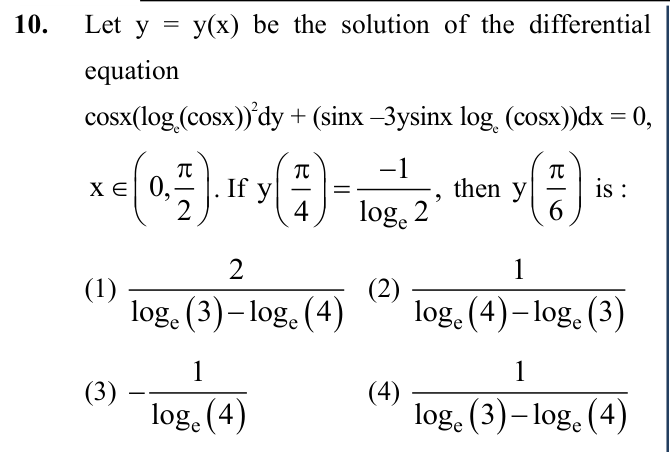
Candidate Response:
(1) (2) (3) (4)
⚡ OFFICIAL KEY: 4
Step-by-Step Derivation
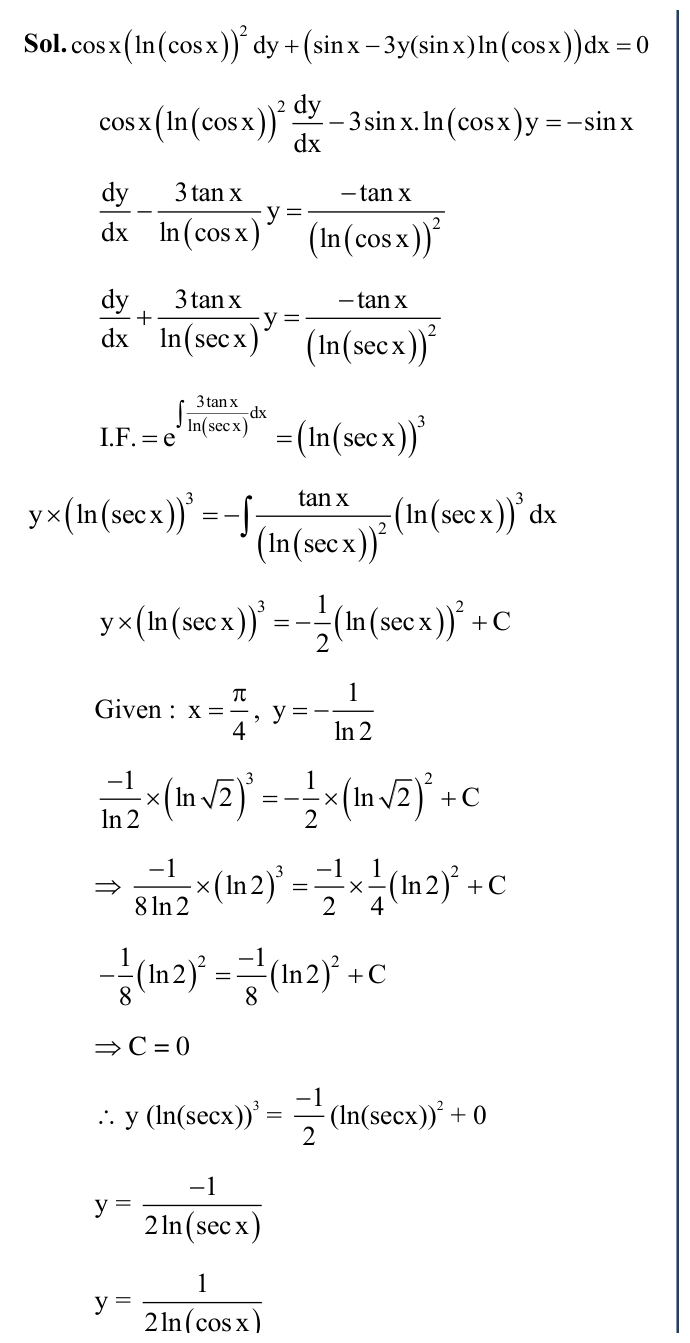
QUESTION 12
MATHEMATICS · Relations and Functions
SECTION A · MCQ (+4, -1)
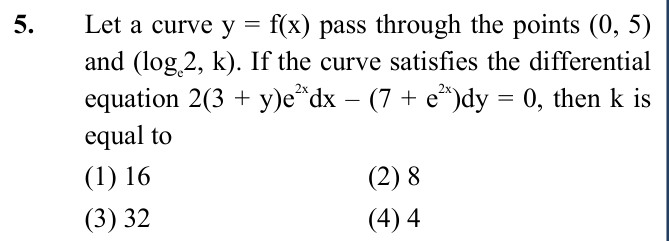
Candidate Response:
(1) (2) (3) (4)
⚡ OFFICIAL KEY: 2
Step-by-Step Derivation

QUESTION 13
MATHEMATICS · Trigonometric Functions
SECTION A · MCQ (+4, -1)
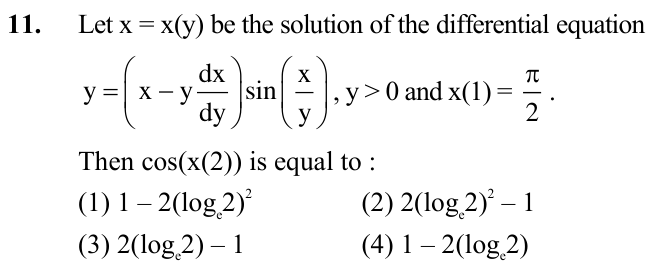
Candidate Response:
(1) (2) (3) (4)
⚡ OFFICIAL KEY: 2
Step-by-Step Derivation
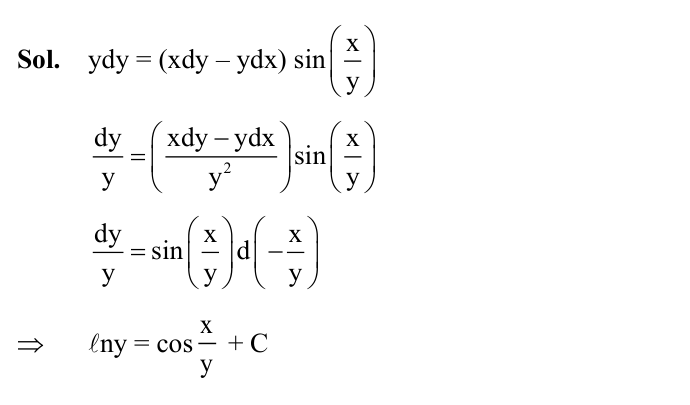
QUESTION 14
MATHEMATICS · Trigonometric Functions
SECTION B · NUMERICAL (+4, 0)
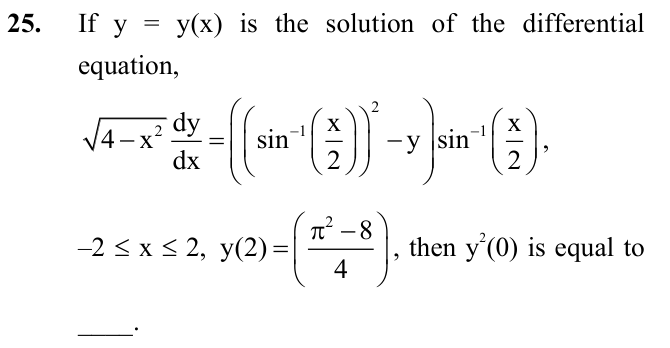
Numerical Value:
[ ]
⚡ OFFICIAL KEY: 4
Step-by-Step Derivation
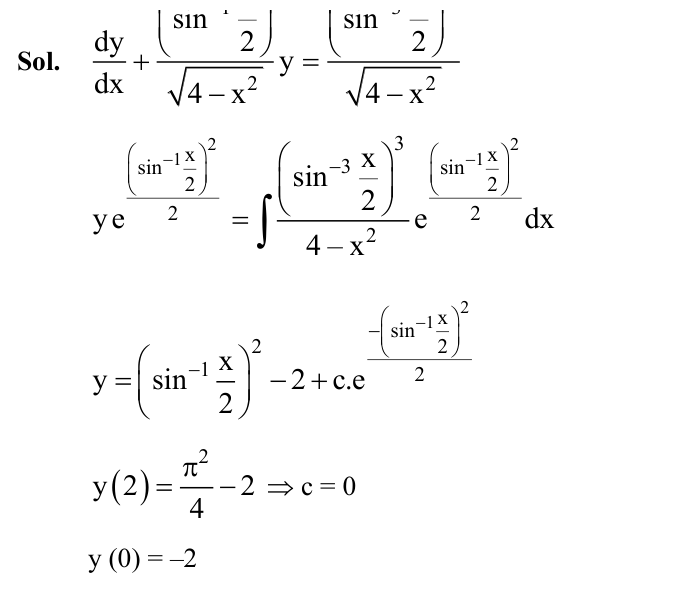
QUESTION 15
MATHEMATICS · Complex Numbers
SECTION A · MCQ (+4, -1)
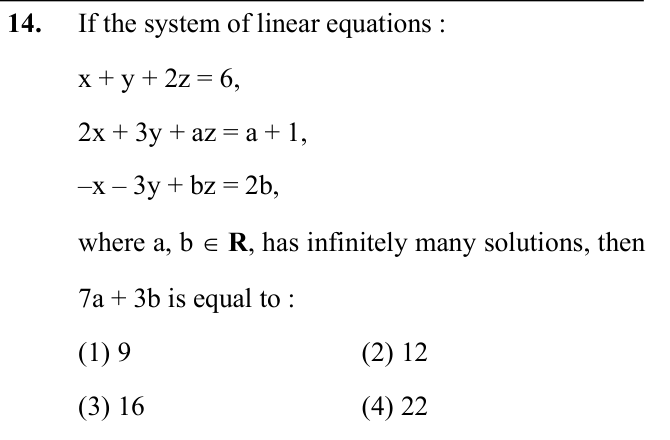
Candidate Response:
(1) (2) (3) (4)
⚡ OFFICIAL KEY: 3
Step-by-Step Derivation
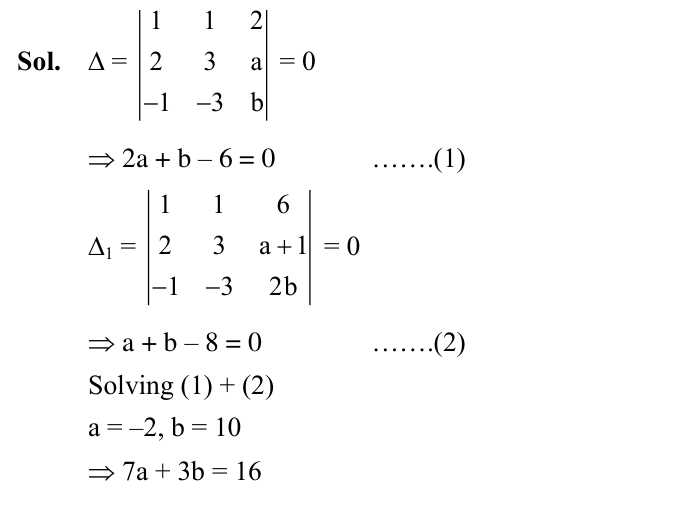
QUESTION 16
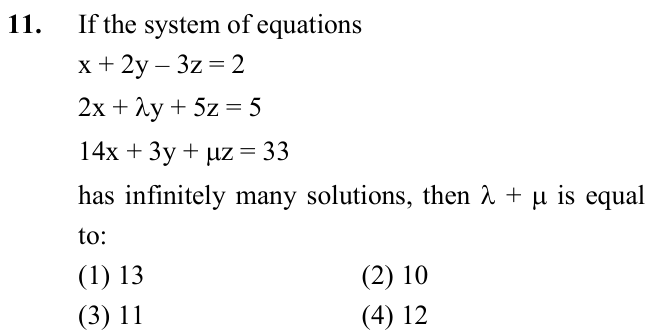
MATHEMATICS · Determinants
SECTION A · MCQ (+4, -1)
Candidate Response:
(1) (2) (3) (4)
⚡ OFFICIAL KEY: 4
Step-by-Step Derivation
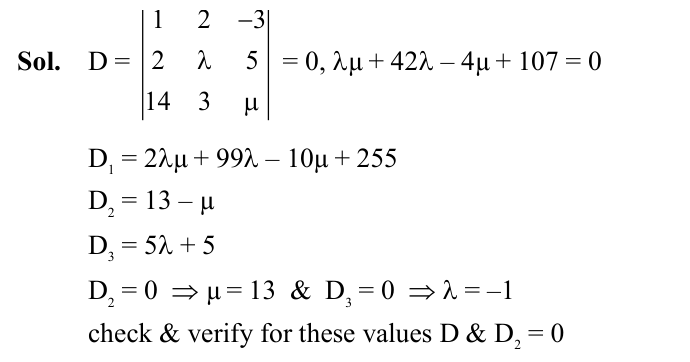
QUESTION 17
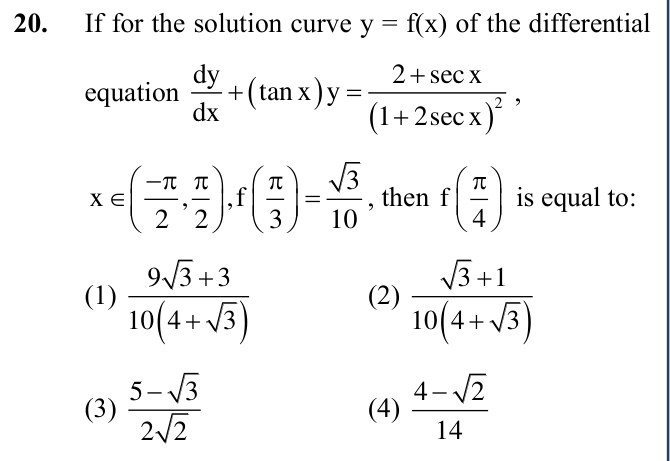
MATHEMATICS · Trigonometric Functions
SECTION A · MCQ (+4, -1)
Candidate Response:
(1) (2) (3) (4)
⚡ OFFICIAL KEY: 4
Step-by-Step Derivation
QUESTION 18
MATHEMATICS · Integrals
SECTION A · MCQ (+4, -1)
Candidate Response:
(1) (2) (3) (4)
⚡ OFFICIAL KEY: 1
Step-by-Step Derivation
QUESTION 19
MATHEMATICS · Conic Sections
SECTION A · MCQ (+4, -1)
Candidate Response:
(1) (2) (3) (4)
⚡ OFFICIAL KEY: 1
Step-by-Step Derivation
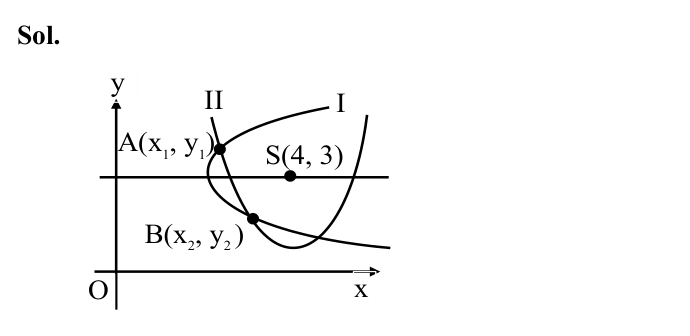
QUESTION 20
MATHEMATICS · Differential Equations
SECTION A · MCQ (+4, -1)
What is the degree of the differential equation [1 + (dy/dx)²]^(1/2) = d²y/dx²?
(1) Undefined
(2) 3
(3) 1
(4) 2
Candidate Response:
(1) (2) (3) (4)
⚡ OFFICIAL KEY: 2
Step-by-Step Derivation
Square both sides to eliminate the radical: 1 + (dy/dx)² = (d²y/dx²)². The highest derivative is d²y/dx², which is raised to power 2. Options 1 and 3 ignore radical clearing; 'undefined' applies only to transcendental functions, not polynomials.
QUESTION 21
MATHEMATICS · Differential Equations
SECTION A · MCQ (+4, -1)
What is the number of arbitrary constants in the general solution of a third-order differential equation?
(1) 3
(2) 1
(3) 4
(4) 2
Candidate Response:
(1) (2) (3) (4)
⚡ OFFICIAL KEY: 3
Step-by-Step Derivation
The general solution of an nth-order differential equation contains exactly n arbitrary constants. For a third-order equation, this means 3 constants. Options 1, 2, and 4 incorrectly assume a mismatch between order and constants.
QUESTION 22
MATHEMATICS · Differential Equations
SECTION A · MCQ (+4, -1)
What is the order of (d^3y/dx^3)^2 + x(dy/dx)^5 = 0?
(1) Order = 3 (since d^3y/dx^3 is the highest derivative).
(2) [-5, 7)
(3) (-∞, Order = 3 (since d^3y/dx^3 is the highest derivative).)
(4) Undefined under standard Differential Equations axioms.
Candidate Response:
(1) (2) (3) (4)
⚡ OFFICIAL KEY: Order = 3 (since d^3y/dx^3 is the highest derivative).
Step-by-Step Derivation
The order reflects the physical degrees of freedom: 1st order represents velocity laws; 2nd order represents Newton's acceleration laws.
QUESTION 23
MATHEMATICS · Differential Equations
SECTION A · MCQ (+4, -1)
What is the integrating factor for the differential equation dy/dx + (3/x)y = x²?
(1) x³
(2) 3x²
(3) e^(3/x)
(4) e^(x³)
Candidate Response:
(1) (2) (3) (4)
⚡ OFFICIAL KEY: x³
Step-by-Step Derivation
The integrating factor is e^(∫(3/x)dx) = e^(3 ln x) = x³. Options A and D incorrectly apply exponent rules, while C forgets to exponentiate the integral result.
QUESTION 24
MATHEMATICS · Differential Equations
SECTION A · MCQ (+4, -1)
Solve dy/dx = 2x/y with y(1) = 2. Which is the particular solution?
(1) y² = 2x² + 2
(2) y² = x² + 2
(3) y² = x² + 1
(4) y² = 2x² + 1
Candidate Response:
(1) (2) (3) (4)
⚡ OFFICIAL KEY: y² = 2x² + 2
Step-by-Step Derivation
Separating variables gives y dy = 2x dx. Integrating both sides: y²/2 = x² + C. Applying y(1)=2: 4/2 = 1 + C → C=1. Multiplying by 2: y² = 2x² + 2. Other options have incorrect constants or coefficients.
QUESTION 25
MATHEMATICS · Differential Equations
SECTION A · MCQ (+4, -1)
Consider the differential equation (x + 2y²) dy/dx = y. After rewriting it in the form dx/dy + P₁(y)x = Q₁(y), what is the integrating factor?
(1) e^(∫(y²) dy)
(2) e^(∫(-1/y) dy)
(3) e^(∫(2y) dy)
(4) e^(∫(1/y) dy)
Candidate Response:
(1) (2) (3) (4)
⚡ OFFICIAL KEY: e^(∫(-1/y) dy)
Step-by-Step Derivation
Rewriting the equation gives dx/dy - (1/y)x = 2y. The integrating factor depends on P₁(y) = -1/y, so it is e^(∫-1/y dy) = 1/y. Other options incorrectly use P(y) from the original dy/dx form or misapply the integral.