
⚡ OFFICIAL NTA ASSESSMENT GENERATOR & WORD (.DOCX) EXPORTER
Differential Equations · Practice Worksheet
JEE Main Mathematics · Curated Assessment Set Print directly or export as a beautifully formatted Microsoft Word document with embedded 180-DPI mathematical prompt clips and step-by-step derivations.
EDUPROD JEE MAIN TEST SERIES · NTA PATTERN
Differential Equations · Practice Worksheet
JEE Main Mathematics · Curated Assessment Set · Assessment Code: JEE-101
Total Marks: 120
Marking: +4 / -1 (Sec A) · +4 / 0 (Sec B)
QUESTION 1
MATHEMATICS · Trigonometric Functions
SECTION A · MCQ (+4, -1)
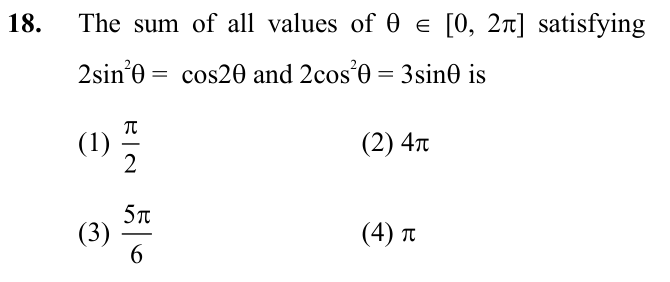
Candidate Response:
(1) (2) (3) (4)
⚡ OFFICIAL KEY: 4
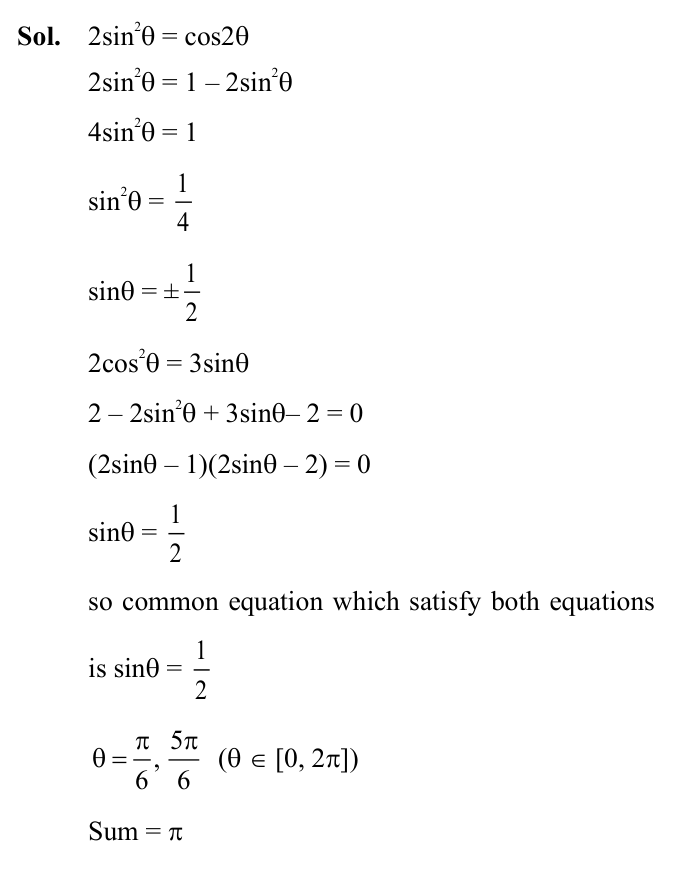
Step-by-Step Derivation
QUESTION 2
MATHEMATICS · Trigonometric Functions
SECTION B · NUMERICAL (+4, 0)
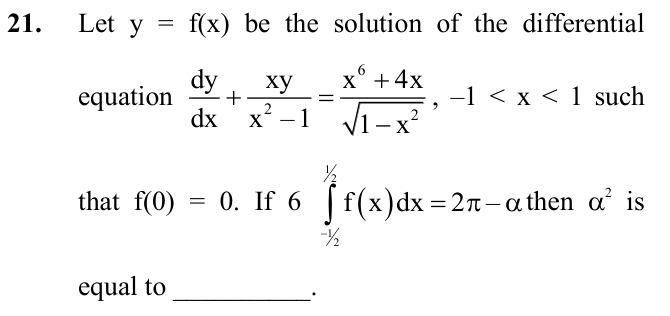
Numerical Value:
[ ]
⚡ OFFICIAL KEY: 27
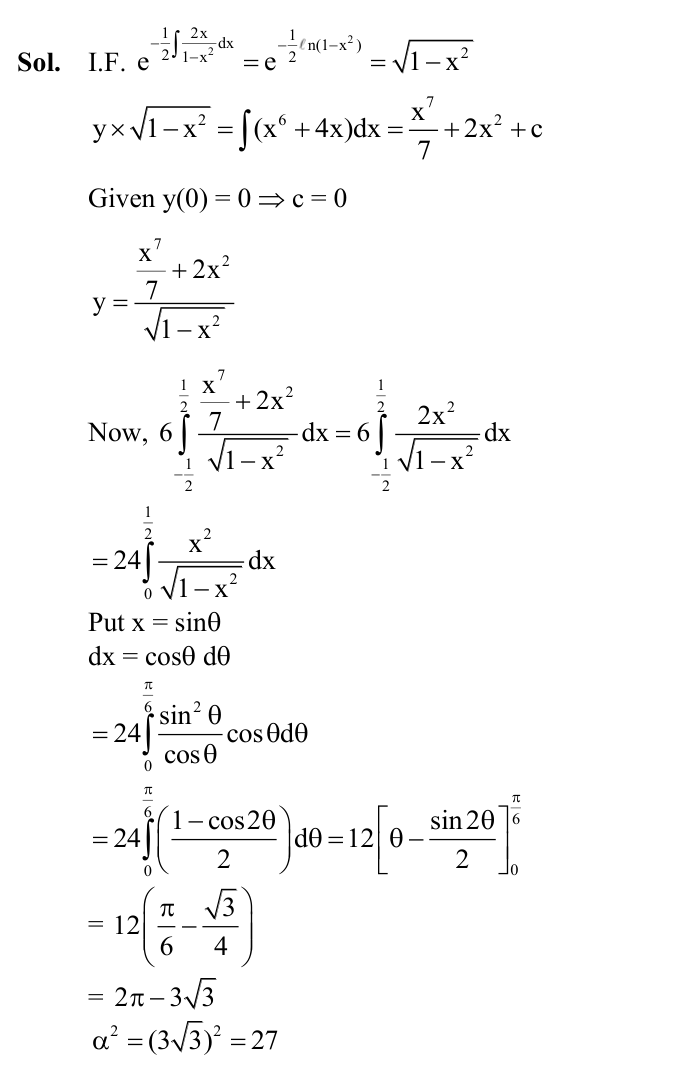
Step-by-Step Derivation
QUESTION 3
MATHEMATICS · Trigonometric Functions
SECTION B · NUMERICAL (+4, 0)
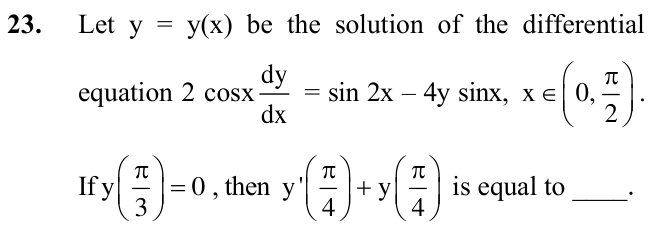
Numerical Value:
[ ]
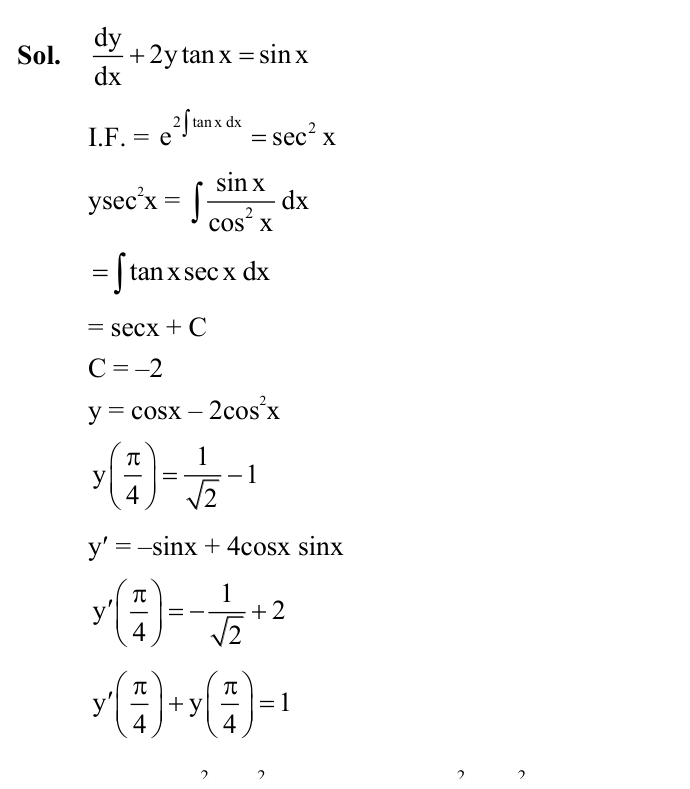
⚡ OFFICIAL KEY: 1
Step-by-Step Derivation
QUESTION 4
MATHEMATICS · Determinants
SECTION A · MCQ (+4, -1)
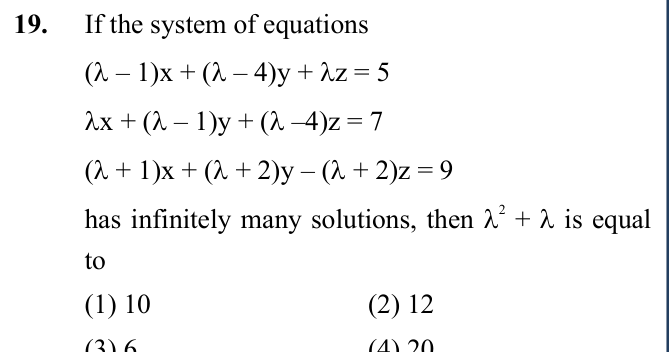
Candidate Response:
(1) (2) (3) (4)
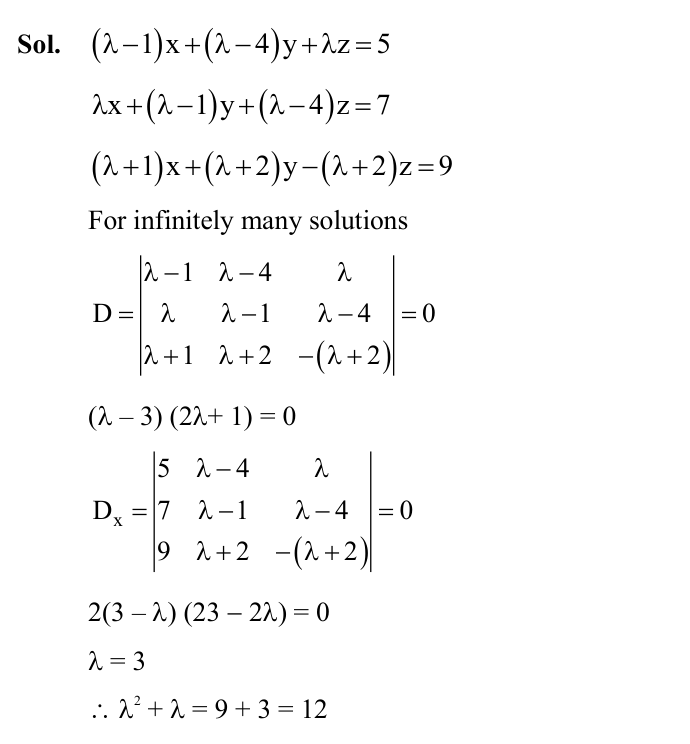
⚡ OFFICIAL KEY: 2
Step-by-Step Derivation
QUESTION 5
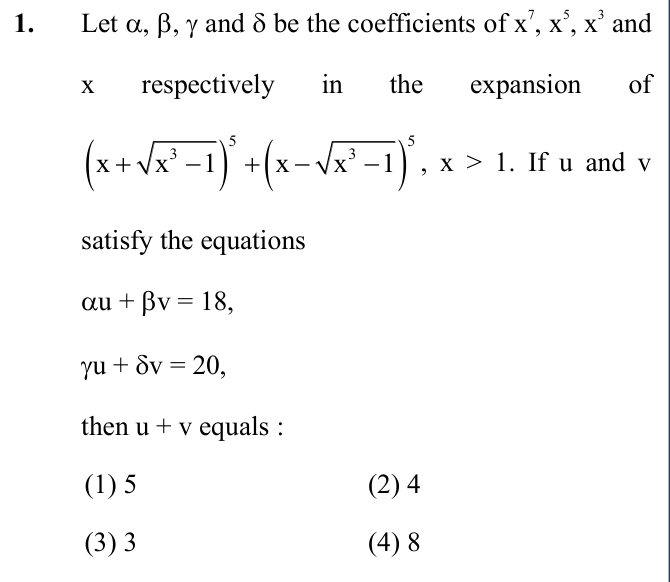
MATHEMATICS · Binomial Theorem
SECTION A · MCQ (+4, -1)
Candidate Response:
(1) (2) (3) (4)
⚡ OFFICIAL KEY: 1
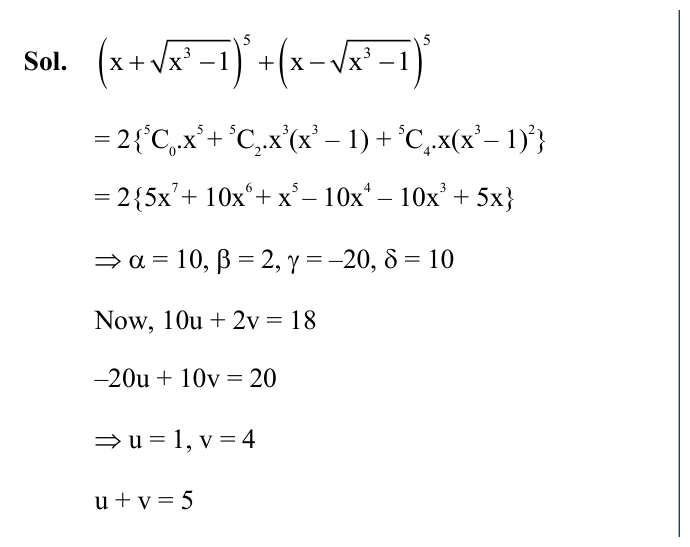
Step-by-Step Derivation
QUESTION 6
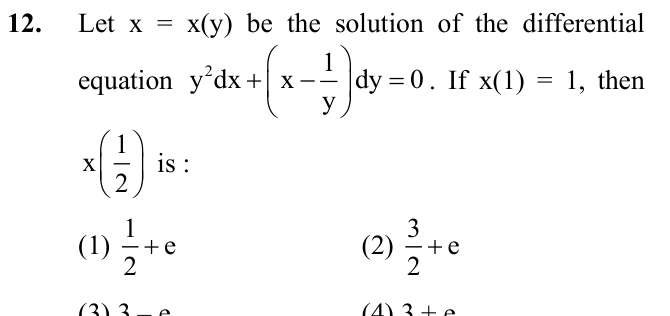
MATHEMATICS · Integrals
SECTION A · MCQ (+4, -1)
Candidate Response:
(1) (2) (3) (4)
⚡ OFFICIAL KEY: 3
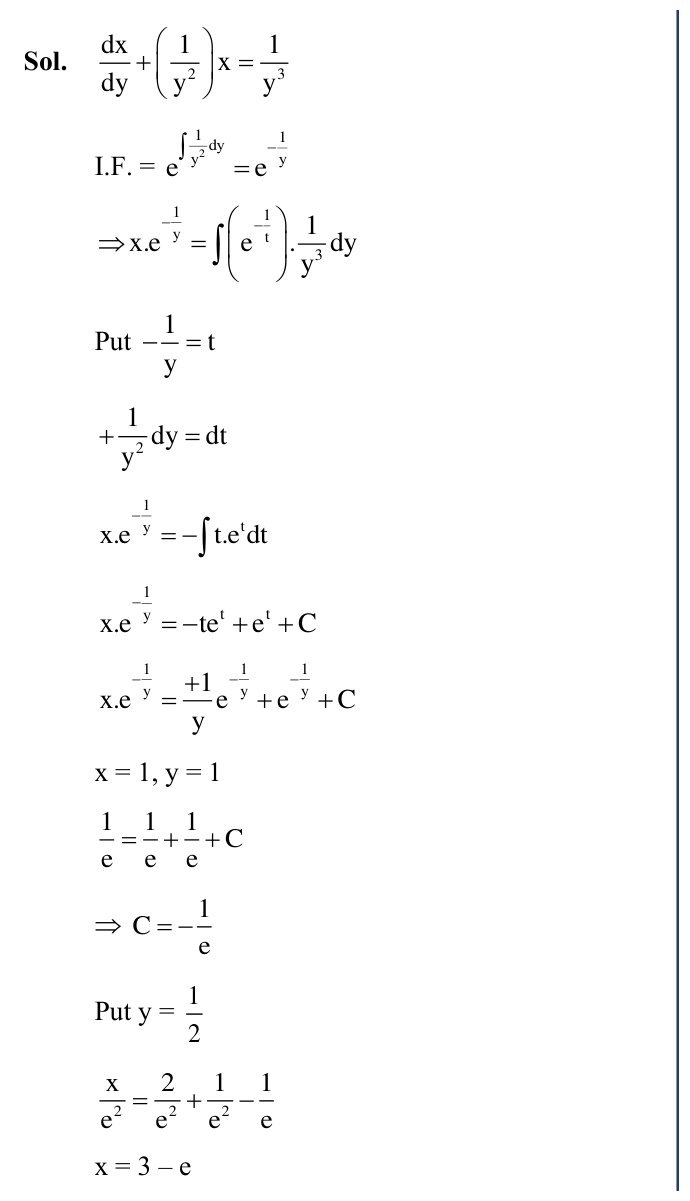
Step-by-Step Derivation
QUESTION 7
MATHEMATICS · Complex Numbers
SECTION A · MCQ (+4, -1)
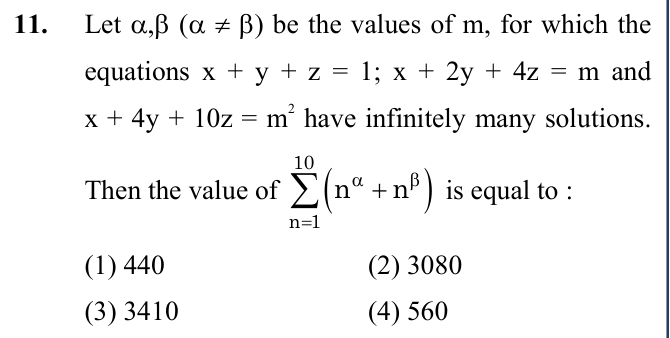
Candidate Response:
(1) (2) (3) (4)
⚡ OFFICIAL KEY: 1
Step-by-Step Derivation
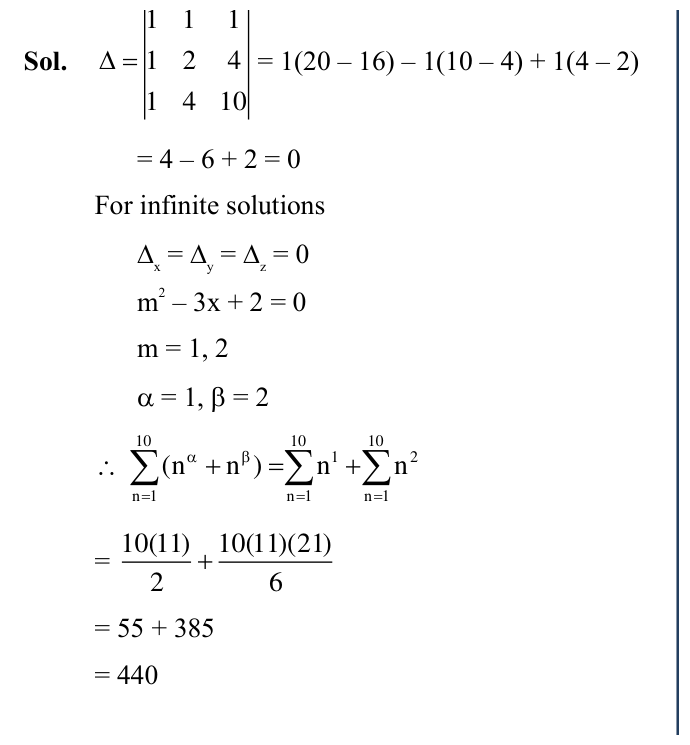
QUESTION 8
MATHEMATICS · Determinants
SECTION A · MCQ (+4, -1)
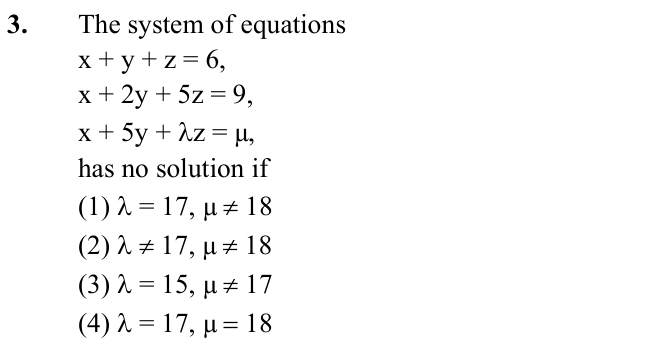
Candidate Response:
(1) (2) (3) (4)
⚡ OFFICIAL KEY: 1
Step-by-Step Derivation
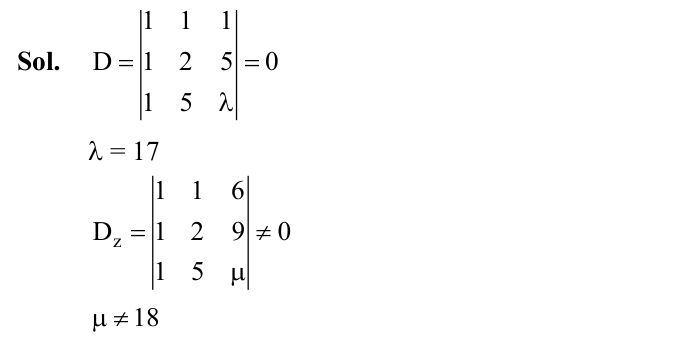
QUESTION 9
MATHEMATICS · Determinants
SECTION A · MCQ (+4, -1)
Candidate Response:
(1) (2) (3) (4)
⚡ OFFICIAL KEY: 4
Step-by-Step Derivation
QUESTION 10
MATHEMATICS · Trigonometric Functions
SECTION A · MCQ (+4, -1)
Candidate Response:
(1) (2) (3) (4)
⚡ OFFICIAL KEY: 4
Step-by-Step Derivation
QUESTION 11
MATHEMATICS · Trigonometric Functions
SECTION A · MCQ (+4, -1)
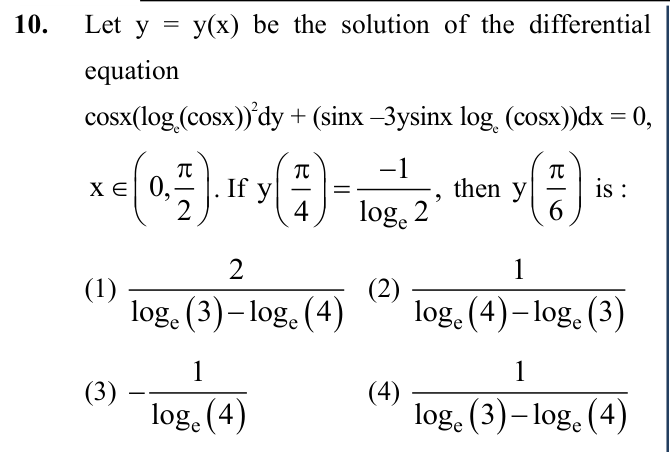
Candidate Response:
(1) (2) (3) (4)
⚡ OFFICIAL KEY: 4
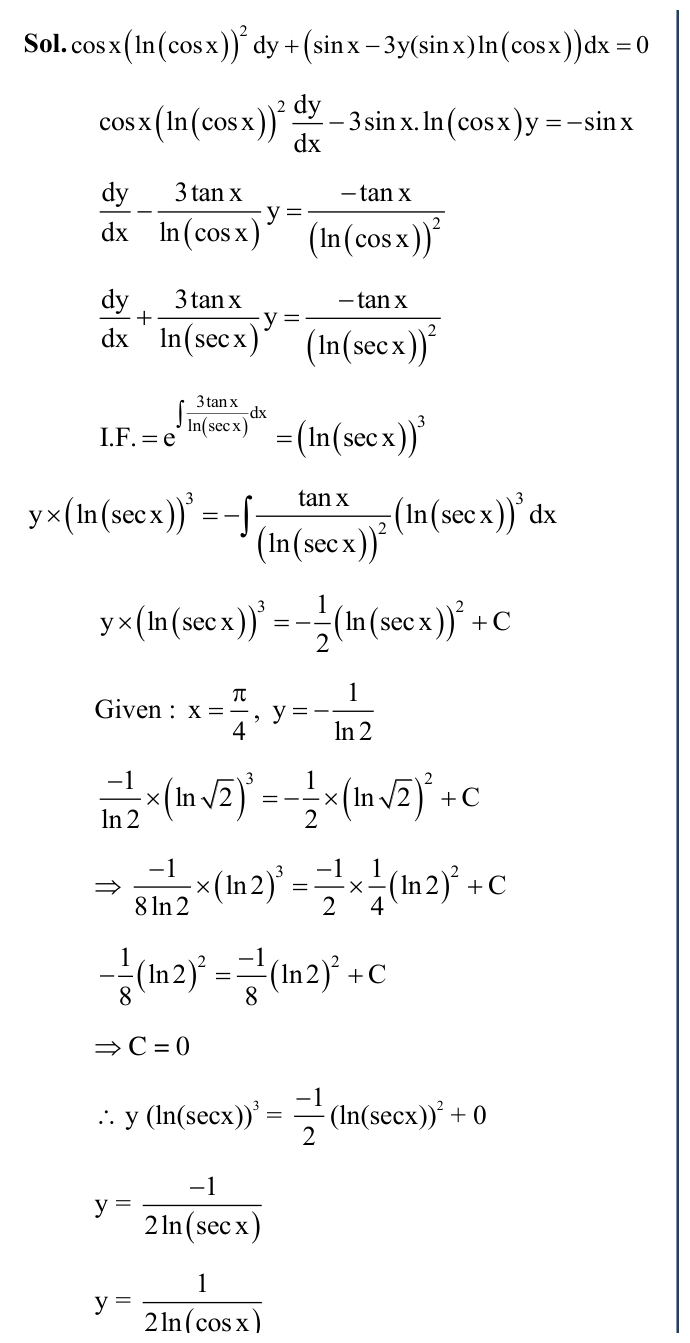
Step-by-Step Derivation
QUESTION 12
MATHEMATICS · Relations and Functions
SECTION A · MCQ (+4, -1)
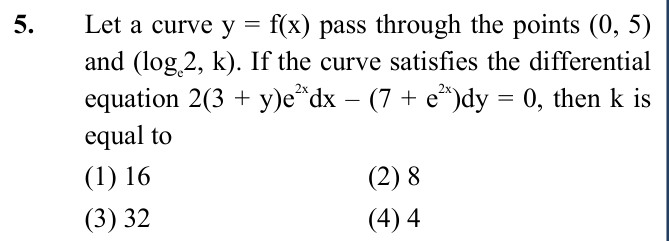
Candidate Response:
(1) (2) (3) (4)
⚡ OFFICIAL KEY: 2
Step-by-Step Derivation

QUESTION 13
MATHEMATICS · Trigonometric Functions
SECTION A · MCQ (+4, -1)
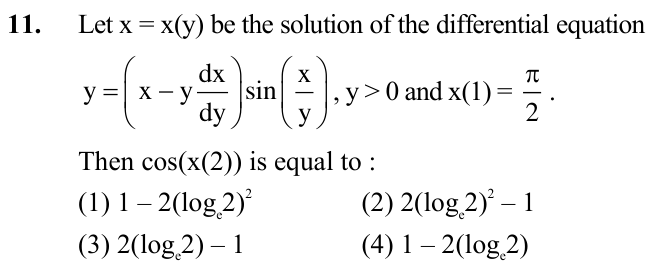
Candidate Response:
(1) (2) (3) (4)
⚡ OFFICIAL KEY: 2
Step-by-Step Derivation
QUESTION 14
MATHEMATICS · Trigonometric Functions
SECTION B · NUMERICAL (+4, 0)
Numerical Value:
[ ]
⚡ OFFICIAL KEY: 4
Step-by-Step Derivation
QUESTION 15
MATHEMATICS · Complex Numbers
SECTION A · MCQ (+4, -1)
Candidate Response:
(1) (2) (3) (4)
⚡ OFFICIAL KEY: 3
Step-by-Step Derivation
QUESTION 16
MATHEMATICS · Determinants
SECTION A · MCQ (+4, -1)
Candidate Response:
(1) (2) (3) (4)
⚡ OFFICIAL KEY: 4
Step-by-Step Derivation
QUESTION 17
MATHEMATICS · Trigonometric Functions
SECTION A · MCQ (+4, -1)
Candidate Response:
(1) (2) (3) (4)
⚡ OFFICIAL KEY: 4
Step-by-Step Derivation
QUESTION 18
MATHEMATICS · Integrals
SECTION A · MCQ (+4, -1)
Candidate Response:
(1) (2) (3) (4)
⚡ OFFICIAL KEY: 1
Step-by-Step Derivation
QUESTION 19
MATHEMATICS · Conic Sections
SECTION A · MCQ (+4, -1)
Candidate Response:
(1) (2) (3) (4)
⚡ OFFICIAL KEY: 1
Step-by-Step Derivation
QUESTION 20
MATHEMATICS · Differential Equations
SECTION A · MCQ (+4, -1)
What is the degree of the differential equation [1 + (dy/dx)²]^(1/2) = d²y/dx²?
(1) Undefined
(2) 3
(3) 1
(4) 2
Candidate Response:
(1) (2) (3) (4)
⚡ OFFICIAL KEY: 2
Step-by-Step Derivation
Square both sides to eliminate the radical: 1 + (dy/dx)² = (d²y/dx²)². The highest derivative is d²y/dx², which is raised to power 2. Options 1 and 3 ignore radical clearing; 'undefined' applies only to transcendental functions, not polynomials.
QUESTION 21
MATHEMATICS · Differential Equations
SECTION A · MCQ (+4, -1)
What is the number of arbitrary constants in the general solution of a third-order differential equation?
(1) 3
(2) 1
(3) 4
(4) 2
Candidate Response:
(1) (2) (3) (4)
⚡ OFFICIAL KEY: 3
Step-by-Step Derivation
The general solution of an nth-order differential equation contains exactly n arbitrary constants. For a third-order equation, this means 3 constants. Options 1, 2, and 4 incorrectly assume a mismatch between order and constants.
QUESTION 22
MATHEMATICS · Differential Equations
SECTION A · MCQ (+4, -1)
What is the order of (d^3y/dx^3)^2 + x(dy/dx)^5 = 0?
(1) Order = 3 (since d^3y/dx^3 is the highest derivative).
(2) [-5, 7)
(3) (-∞, Order = 3 (since d^3y/dx^3 is the highest derivative).)
(4) Undefined under standard Differential Equations axioms.
Candidate Response:
(1) (2) (3) (4)
⚡ OFFICIAL KEY: Order = 3 (since d^3y/dx^3 is the highest derivative).
Step-by-Step Derivation
The order reflects the physical degrees of freedom: 1st order represents velocity laws; 2nd order represents Newton's acceleration laws.
QUESTION 23
MATHEMATICS · Differential Equations
SECTION A · MCQ (+4, -1)
What is the integrating factor for the differential equation dy/dx + (3/x)y = x²?
(1) x³
(2) 3x²
(3) e^(3/x)
(4) e^(x³)
Candidate Response:
(1) (2) (3) (4)
⚡ OFFICIAL KEY: x³
Step-by-Step Derivation
The integrating factor is e^(∫(3/x)dx) = e^(3 ln x) = x³. Options A and D incorrectly apply exponent rules, while C forgets to exponentiate the integral result.
QUESTION 24
MATHEMATICS · Differential Equations
SECTION A · MCQ (+4, -1)
Solve dy/dx = 2x/y with y(1) = 2. Which is the particular solution?
(1) y² = 2x² + 2
(2) y² = x² + 2
(3) y² = x² + 1
(4) y² = 2x² + 1
Candidate Response:
(1) (2) (3) (4)
⚡ OFFICIAL KEY: y² = 2x² + 2
Step-by-Step Derivation
Separating variables gives y dy = 2x dx. Integrating both sides: y²/2 = x² + C. Applying y(1)=2: 4/2 = 1 + C → C=1. Multiplying by 2: y² = 2x² + 2. Other options have incorrect constants or coefficients.
QUESTION 25
MATHEMATICS · Differential Equations
SECTION A · MCQ (+4, -1)
Consider the differential equation (x + 2y²) dy/dx = y. After rewriting it in the form dx/dy + P₁(y)x = Q₁(y), what is the integrating factor?
(1) e^(∫(y²) dy)
(2) e^(∫(-1/y) dy)
(3) e^(∫(2y) dy)
(4) e^(∫(1/y) dy)
Candidate Response:
(1) (2) (3) (4)
⚡ OFFICIAL KEY: e^(∫(-1/y) dy)
Step-by-Step Derivation
Rewriting the equation gives dx/dy - (1/y)x = 2y. The integrating factor depends on P₁(y) = -1/y, so it is e^(∫-1/y dy) = 1/y. Other options incorrectly use P(y) from the original dy/dx form or misapply the integral.
QUESTION 26
MATHEMATICS · Differential Equations
SECTION A · MCQ (+4, -1)
What is the differential equation of the family of parabolas with vertex at the origin and axis along the x-axis?
(1) y = x² y'
(2) y = 2x y'
(3) y = 4x y'
(4) y = x y'
Candidate Response:
(1) (2) (3) (4)
⚡ OFFICIAL KEY: y = 2x y'
Step-by-Step Derivation
Differentiating y² = 4ax gives 2y y' = 4a. Solving for a = y²/(4x) and substituting into the original equation leads to y = 2x y'. Other options arise from miscalculating the derivative or misidentifying the parabola's axis.
QUESTION 27
MATHEMATICS · Differential Equations
SECTION A · MCQ (+4, -1)
If y dy = x dx and y(0) = 3, what is the particular solution?
(1) Undefined under standard Differential Equations axioms.
(2) y^2/2 = x^2/2 + C => y^2 - x^2 = 2C. At (0, 3): 9 - 0 = 2C => y^2 - x^2 = 9.
(3) [-5, 7)
(4) y^2/2 = x^2/2 + C => y^2 + x^2 = 2C. At (0, 3): 9 + 0 = 2C => y^2 + x^2 = 9.
Candidate Response:
(1) (2) (3) (4)
⚡ OFFICIAL KEY: y^2/2 = x^2/2 + C => y^2 - x^2 = 2C. At (0, 3): 9 - 0 = 2C => y^2 - x^2 = 9.
Step-by-Step Derivation
Initial conditions fix the single curve passing through the specified coordinate in the plane.
QUESTION 28
MATHEMATICS · Differential Equations
SECTION A · MCQ (+4, -1)
The general solution of a first-order differential equation contains one arbitrary constant. When initial conditions are applied to obtain a particular solution, how many arbitrary constants remain?
(1) 1
(2) 2
(3) 0
(4) Equal to the order of the equation
Candidate Response:
(1) (2) (3) (4)
⚡ OFFICIAL KEY: 0
Step-by-Step Derivation
A particular solution is derived by assigning specific values to the arbitrary constants in the general solution. This process eliminates all arbitrary constants, leaving zero in the particular solution. The other options incorrectly assume the number of constants depends on the order or retains them in the particular solution.
QUESTION 29
MATHEMATICS · Differential Equations
SECTION A · MCQ (+4, -1)
Consider the differential equation dy/dx = (y/x) + tan(y/x). After substituting y = vx, which of the following equations is obtained?
(1) v + x dv/dx = tan(v)
(2) v + x dv/dx = v + tan(v)
(3) x dv/dx = tan(v)
(4) x dv/dx = v + tan(v)
Candidate Response:
(1) (2) (3) (4)
⚡ OFFICIAL KEY: v + x dv/dx = v + tan(v)
Step-by-Step Derivation
The substitution y = vx gives dy/dx = v + x dv/dx. Substituting into the equation retains the v term. Other options omit the v term or misapply the product rule.
QUESTION 30
MATHEMATICS · Differential Equations
SECTION A · MCQ (+4, -1)
What differential equation represents y = A e^(2x) + B e^(-2x)?
(1) y'' + 4y = 0 (since Sum = 0, Product = +4).
(2) [-5, 7)
(3) Undefined under standard Differential Equations axioms.
(4) y'' - 4y = 0 (since Sum = 0, Product = -4).
Candidate Response:
(1) (2) (3) (4)
⚡ OFFICIAL KEY: y'' - 4y = 0 (since Sum = 0, Product = -4).
Step-by-Step Derivation
e^(mx) terms are eigenfunctions of the derivative operator D: (D - m1)(D - m2) y = 0.