
⚡ OFFICIAL NTA ASSESSMENT GENERATOR & WORD (.DOCX) EXPORTER
Oscillations · Practice Worksheet
JEE Main Physics · Curated Assessment Set Print directly or export as a beautifully formatted Microsoft Word document with embedded 180-DPI mathematical prompt clips and step-by-step derivations.
EDUPROD JEE MAIN TEST SERIES · NTA PATTERN
Oscillations · Practice Worksheet
JEE Main Physics · Curated Assessment Set · Assessment Code: JEE-101
Total Marks: 80
Marking: +4 / -1 (Sec A) · +4 / 0 (Sec B)
QUESTION 1
PHYSICS · Oscillations
SECTION A · MCQ (+4, -1)
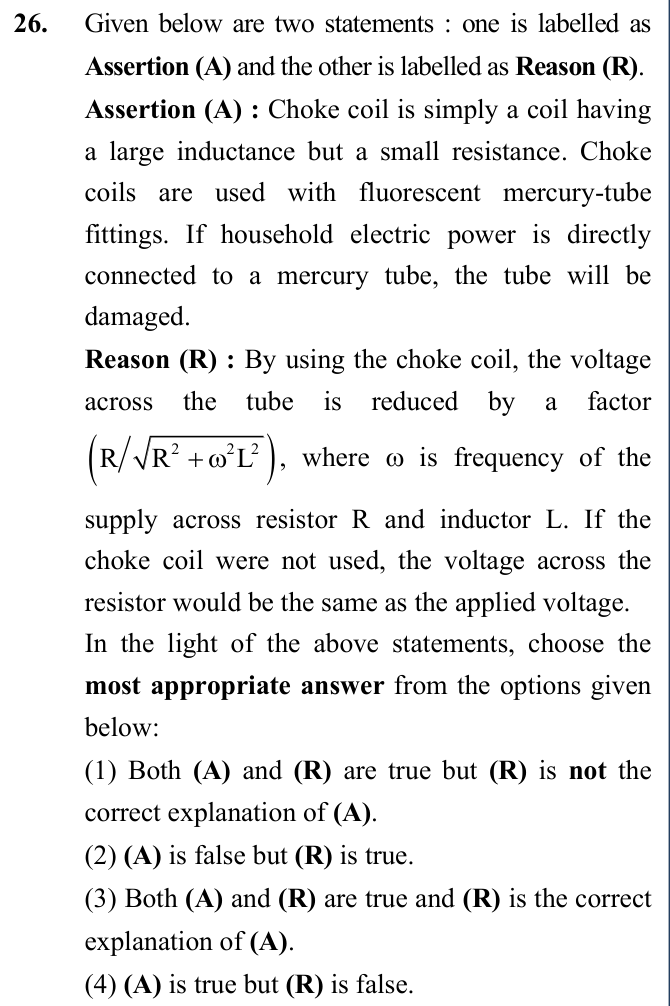
Candidate Response:
(1) (2) (3) (4)
QUESTION 2
PHYSICS · Oscillations
SECTION A · MCQ (+4, -1)
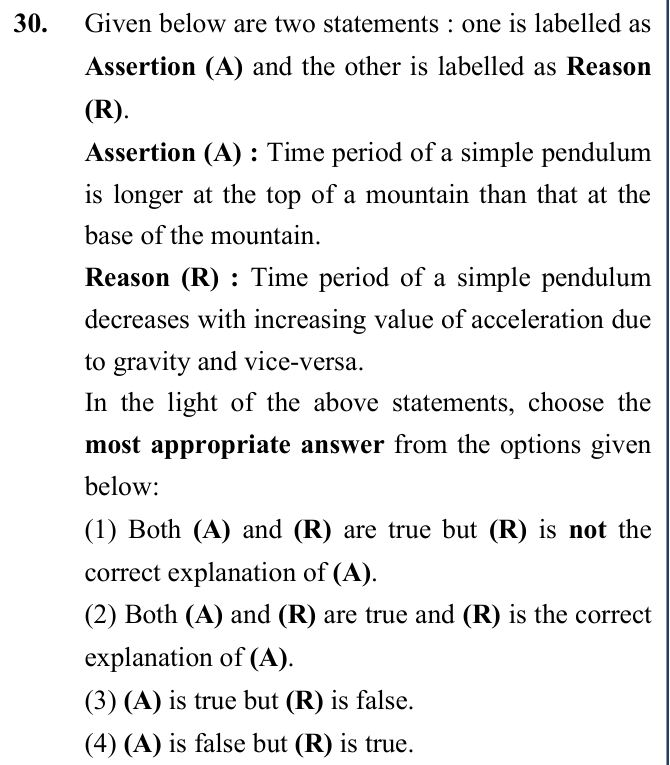
Candidate Response:
(1) (2) (3) (4)
QUESTION 3
PHYSICS · Oscillations
SECTION A · MCQ (+4, -1)
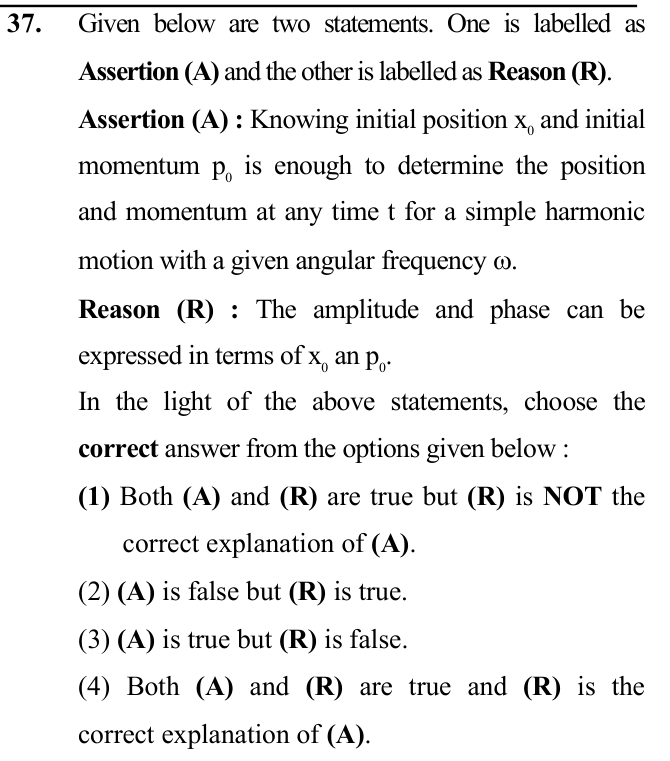
Candidate Response:
(1) (2) (3) (4)
QUESTION 4
PHYSICS · Oscillations
SECTION A · MCQ (+4, -1)
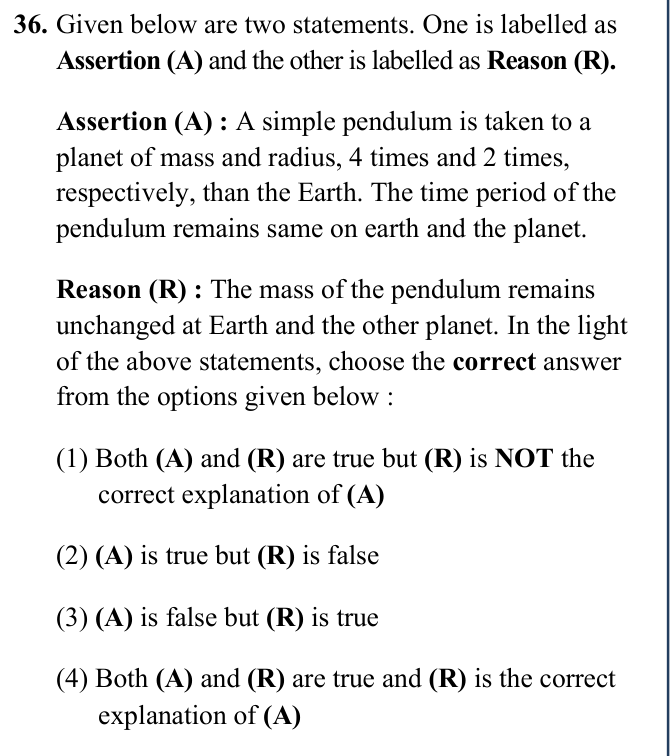
Candidate Response:
(1) (2) (3) (4)
QUESTION 5
PHYSICS · Oscillations
SECTION A · MCQ (+4, -1)
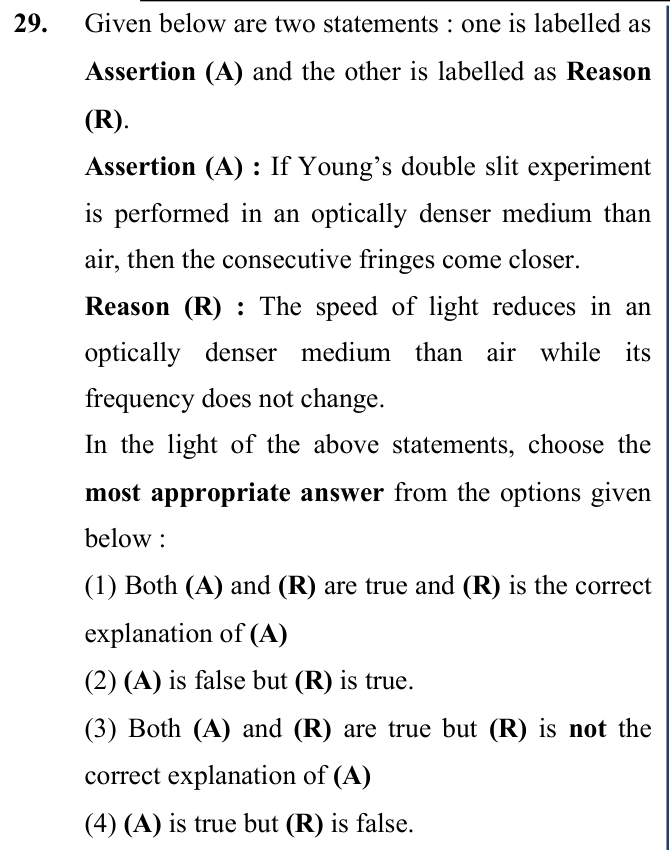
Candidate Response:
(1) (2) (3) (4)
QUESTION 6
PHYSICS · Oscillations
SECTION A · MCQ (+4, -1)
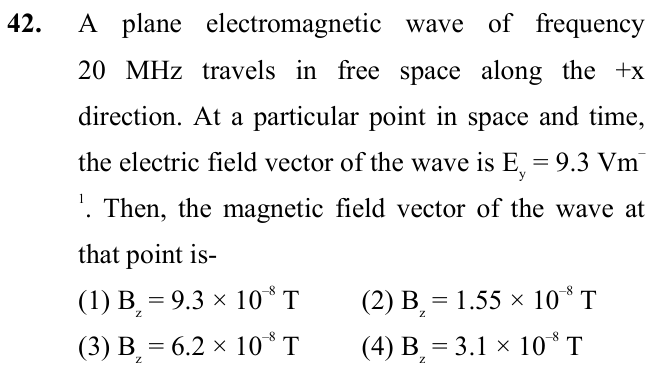
Candidate Response:
(1) (2) (3) (4)
QUESTION 7
PHYSICS · Oscillations
SECTION A · MCQ (+4, -1)
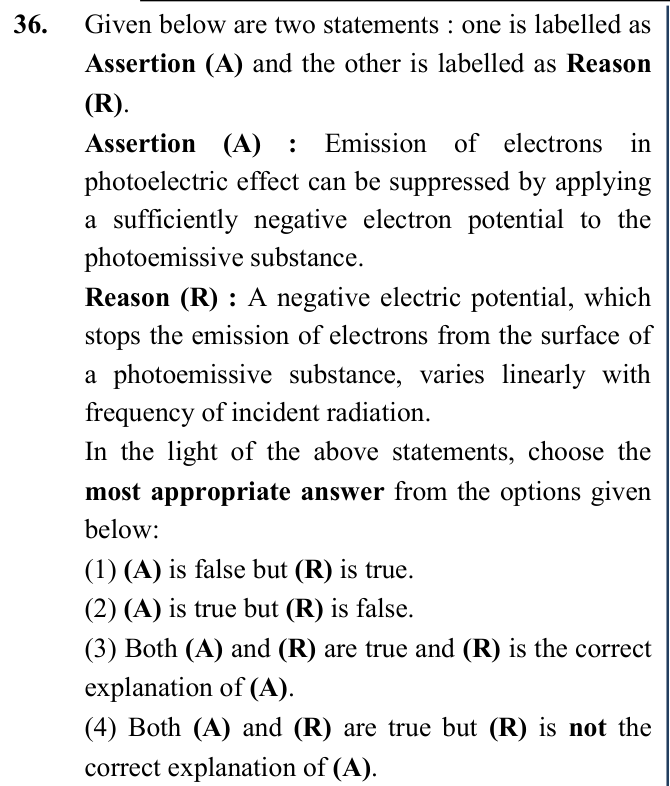
Candidate Response:
(1) (2) (3) (4)
QUESTION 8
PHYSICS · Oscillations
SECTION A · MCQ (+4, -1)
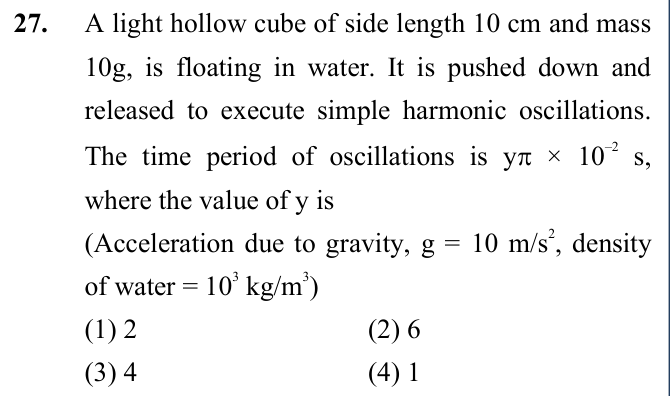
Candidate Response:
(1) (2) (3) (4)
QUESTION 9
PHYSICS · Oscillations
SECTION A · MCQ (+4, -1)
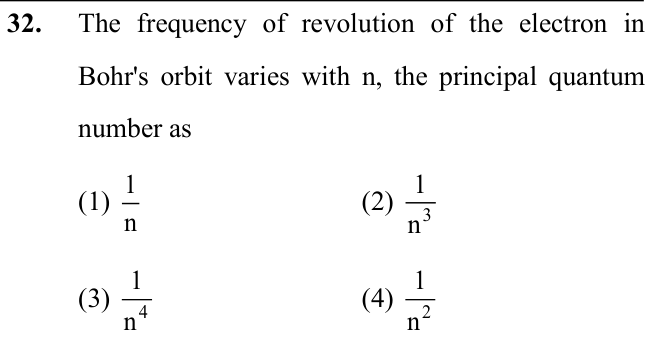
Candidate Response:
(1) (2) (3) (4)
QUESTION 10
PHYSICS · Oscillations
SECTION A · MCQ (+4, -1)
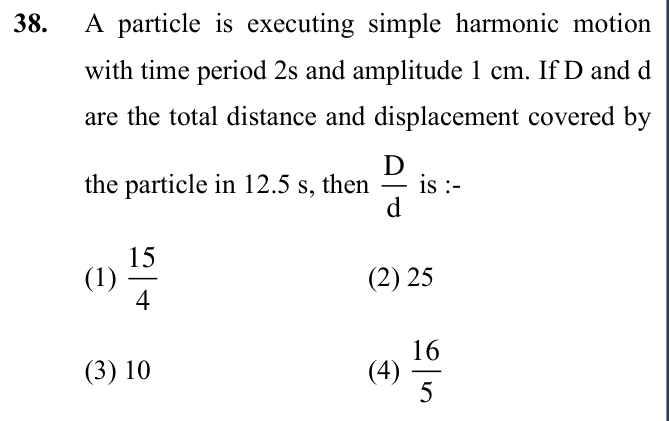
Candidate Response:
(1) (2) (3) (4)
QUESTION 11
PHYSICS · Oscillations
SECTION A · MCQ (+4, -1)
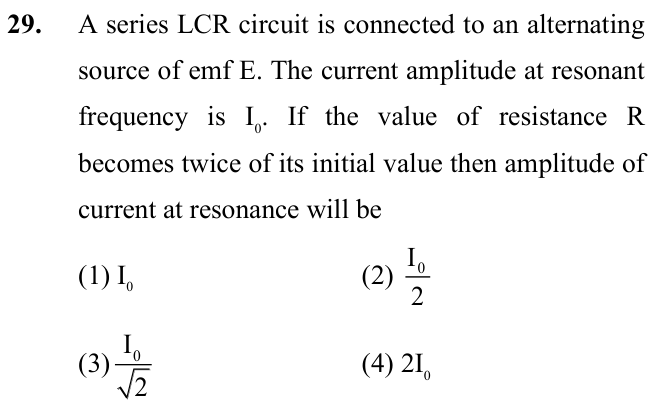
Candidate Response:
(1) (2) (3) (4)
QUESTION 12
PHYSICS · Oscillations
SECTION B · NUMERICAL (+4, 0)
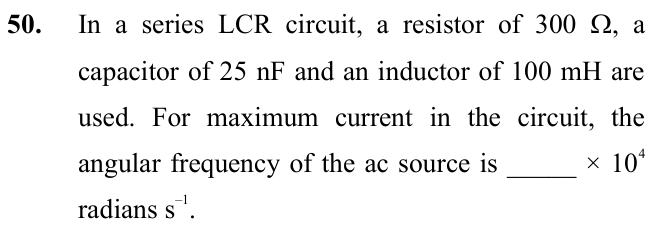
Numerical Value:
[ ]
QUESTION 13
PHYSICS · Oscillations
SECTION A · MCQ (+4, -1)
A particle in SHM has maximum speed v_max and maximum acceleration a_max. The angular frequency ω and amplitude A are given by
(1) ω = a_max/v_max and A = v_max²/a_max
(2) ω = a_max/v_max and A = a_max²/v_max
(3) ω = a_max·v_max and A = v_max/a_max
(4) ω = v_max/a_max and A = a_max/v_max
Candidate Response:
(1) (2) (3) (4)
QUESTION 14
PHYSICS · Oscillations
SECTION A · MCQ (+4, -1)
Two springs of force constants k₁ and k₂ are connected in series to a block. The equivalent spring constant k_eq is
(1) k_eq = k₁ + k₂
(2) k_eq = (k₁ + k₂)/2
(3) k_eq = k₁k₂/(k₁ + k₂) only if k₁ = k₂
(4) 1/k_eq = 1/k₁ + 1/k₂
Candidate Response:
(1) (2) (3) (4)
QUESTION 15
PHYSICS · Oscillations
SECTION A · MCQ (+4, -1)
A particle performs SHM and is released from rest at x = +A at t = 0. Which equation correctly describes its displacement?
(1) x = A cos(ωt)
(2) x = A sin(ωt)
(3) x = A cos(ωt + π/2)
(4) x = -A cos(ωt)
Candidate Response:
(1) (2) (3) (4)
QUESTION 16
PHYSICS · Oscillations
SECTION A · MCQ (+4, -1)
If a pendulum completes 10 oscillations in 5 seconds, its frequency is
(1) 10 Hz
(2) 5 Hz
(3) 2 Hz
(4) 0.5 Hz
Candidate Response:
(1) (2) (3) (4)
QUESTION 17
PHYSICS · Oscillations
SECTION A · MCQ (+4, -1)
Which statement correctly distinguishes oscillatory motion from merely periodic motion?
(1) Oscillatory motion and periodic motion are two completely unrelated classifications.
(2) Uniform circular motion is an example of oscillatory motion.
(3) Every periodic motion is necessarily oscillatory.
(4) All oscillatory motions are periodic, but not every periodic motion is oscillatory.
Candidate Response:
(1) (2) (3) (4)
QUESTION 18
PHYSICS · Oscillations
SECTION A · MCQ (+4, -1)
If a particle executes one complete oscillation in time T, which relation correctly links its frequency ν and angular frequency ω?
(1) ω = ν/2π
(2) ω = ν = 1/T
(3) ω = 2πν = 2π/T
(4) ω = 2π/T and ν = T
Candidate Response:
(1) (2) (3) (4)
QUESTION 19
PHYSICS · Oscillations
SECTION A · MCQ (+4, -1)
The potential energy of a particle moving along the x-axis is U(x). For the particle to be in stable equilibrium at a point x₀, which condition must hold?
(1) dU/dx > 0 at x = x₀
(2) d²U/dx² = 0 at x = x₀
(3) dU/dx = 0 and d²U/dx² > 0 at x = x₀
(4) dU/dx = 0 and d²U/dx² < 0 at x = x₀
Candidate Response:
(1) (2) (3) (4)
QUESTION 20
PHYSICS · Oscillations
SECTION A · MCQ (+4, -1)
The time period of a periodic motion whose frequency is 5 Hz is
(1) 2 s
(2) 0.5 s
(3) 5 s
(4) 0.2 s
Candidate Response:
(1) (2) (3) (4)