
⚡ OFFICIAL NTA ASSESSMENT GENERATOR & WORD (.DOCX) EXPORTER
Oscillations · Practice Worksheet
JEE Main Physics · Curated Assessment Set Print directly or export as a beautifully formatted Microsoft Word document with embedded 180-DPI mathematical prompt clips and step-by-step derivations.
EDUPROD JEE MAIN TEST SERIES · NTA PATTERN
Oscillations · Practice Worksheet
JEE Main Physics · Curated Assessment Set · Assessment Code: JEE-101
Total Marks: 60
Marking: +4 / -1 (Sec A) · +4 / 0 (Sec B)
QUESTION 1
PHYSICS · Oscillations
SECTION A · MCQ (+4, -1)
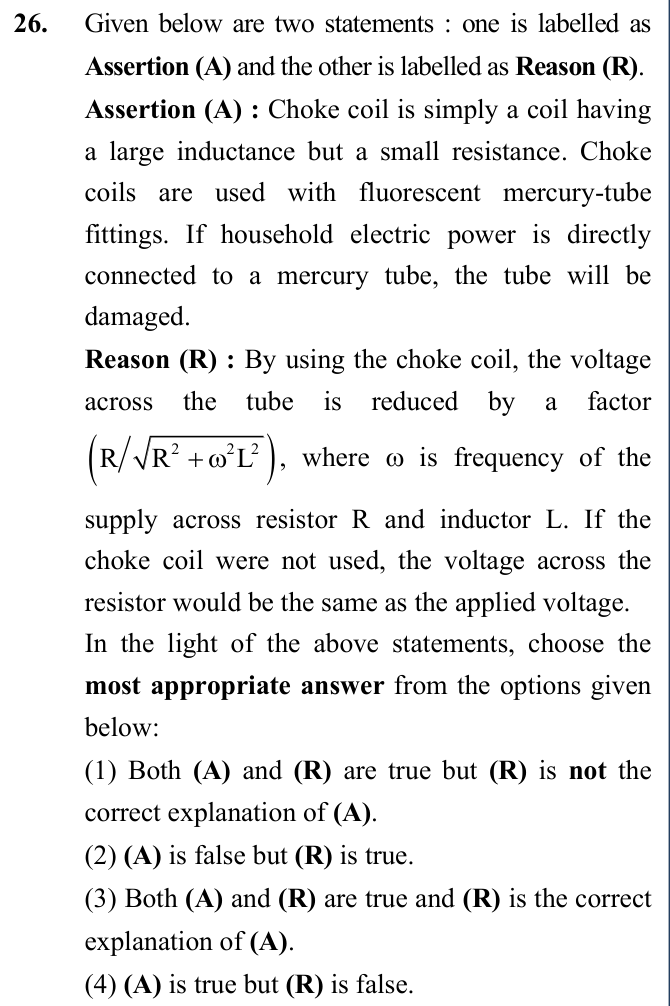
Candidate Response:
(1) (2) (3) (4)
⚡ OFFICIAL KEY: 3
Step-by-Step Derivation

QUESTION 2
PHYSICS · Oscillations
SECTION A · MCQ (+4, -1)
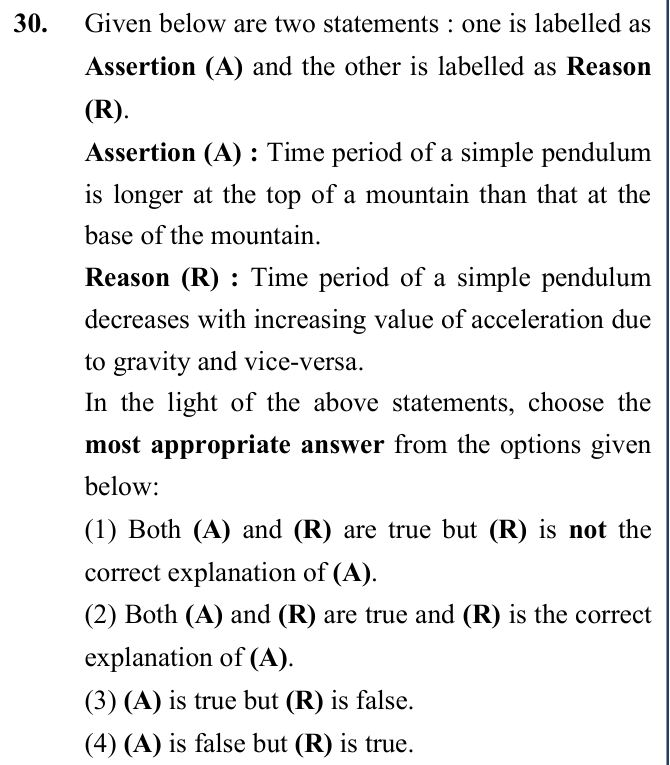
Candidate Response:
(1) (2) (3) (4)
⚡ OFFICIAL KEY: 2
Step-by-Step Derivation
QUESTION 3
PHYSICS · Oscillations
SECTION A · MCQ (+4, -1)
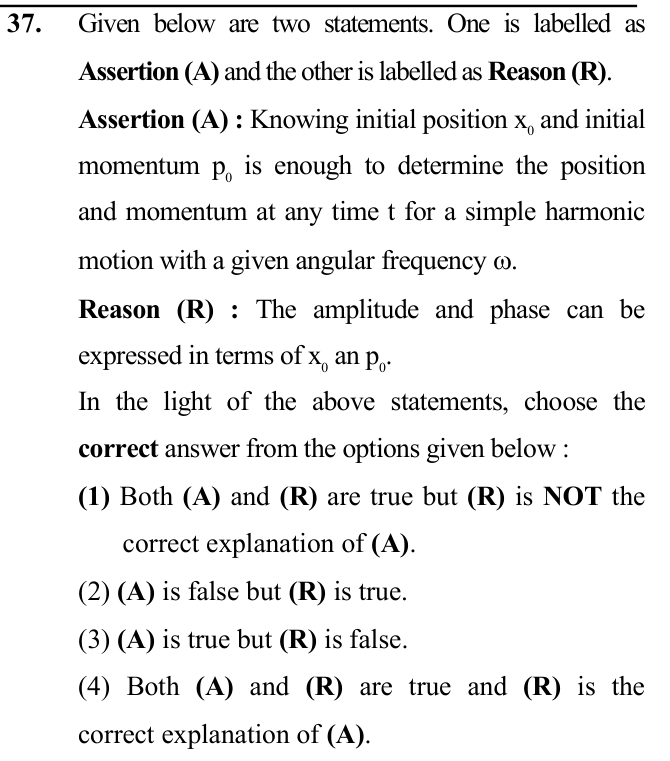
Candidate Response:
(1) (2) (3) (4)
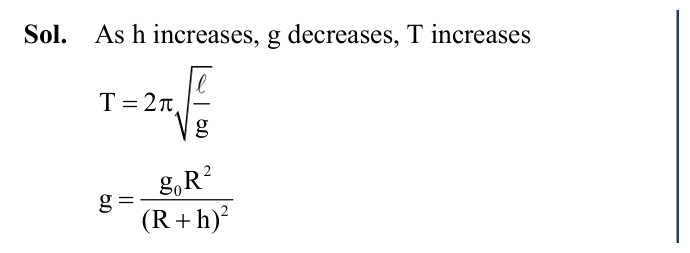
⚡ OFFICIAL KEY: 4
Step-by-Step Derivation
QUESTION 4
PHYSICS · Oscillations
SECTION A · MCQ (+4, -1)
Candidate Response:
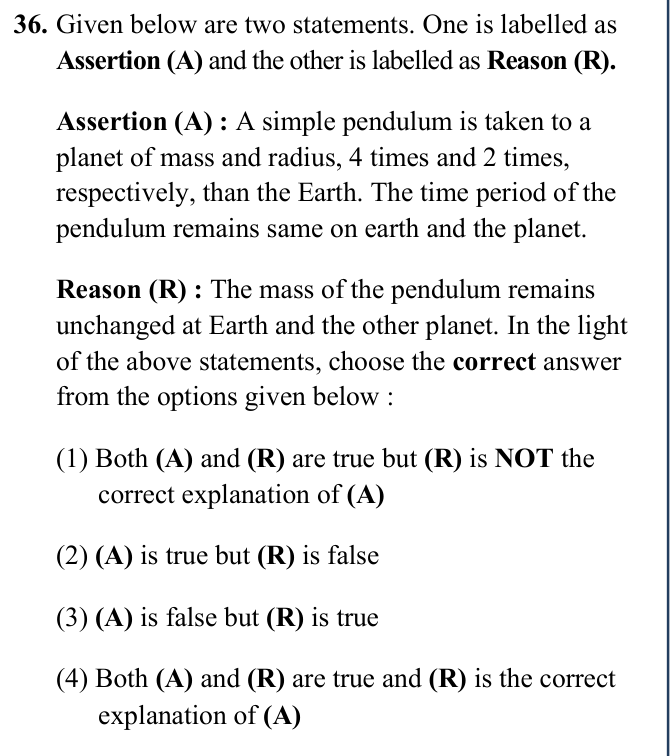
(1) (2) (3) (4)
⚡ OFFICIAL KEY: 1
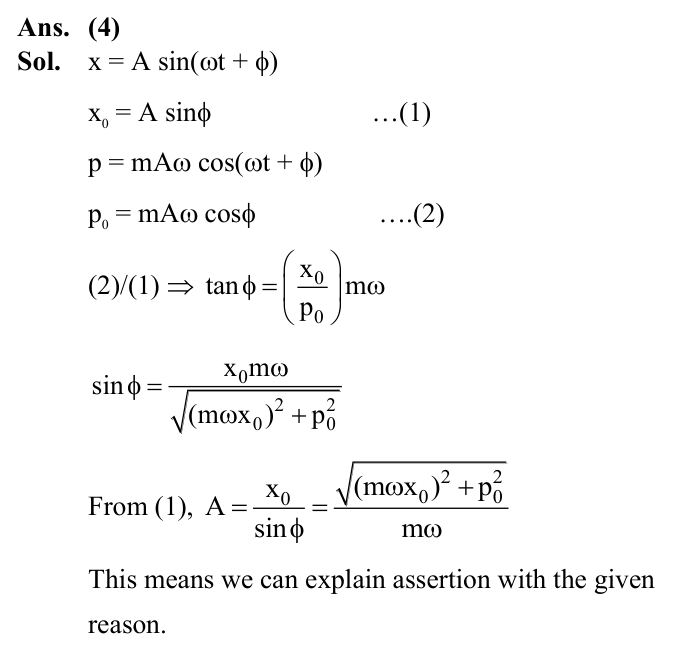
Step-by-Step Derivation
QUESTION 5
PHYSICS · Oscillations
SECTION A · MCQ (+4, -1)
Candidate Response:
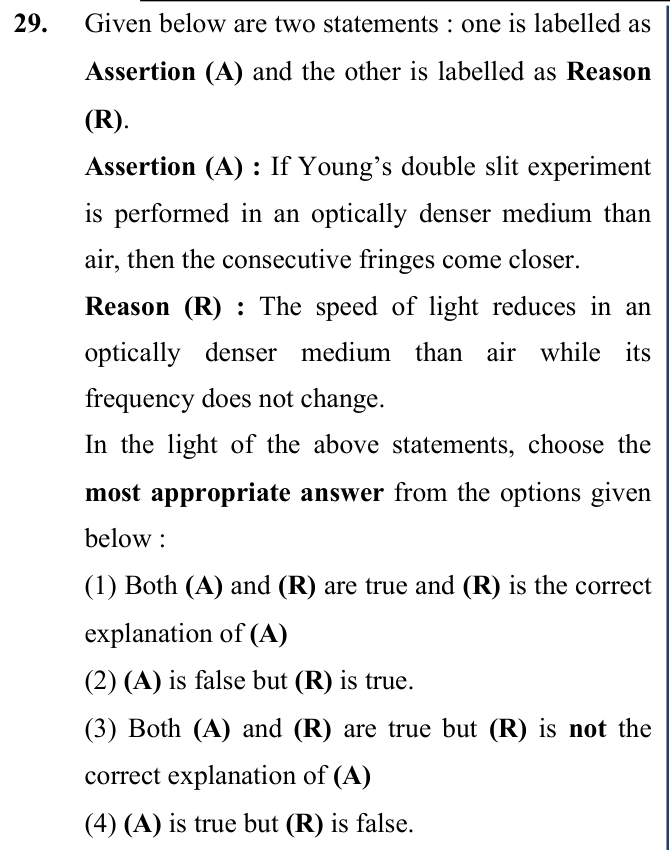
(1) (2) (3) (4)
⚡ OFFICIAL KEY: 1
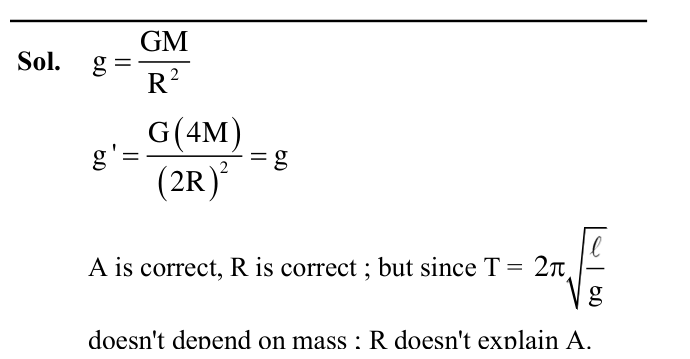
Step-by-Step Derivation
QUESTION 6
PHYSICS · Oscillations
SECTION A · MCQ (+4, -1)
Candidate Response:
(1) (2) (3) (4)
⚡ OFFICIAL KEY: 4
Step-by-Step Derivation

QUESTION 7
PHYSICS · Oscillations
SECTION A · MCQ (+4, -1)
Candidate Response:
(1) (2) (3) (4)
⚡ OFFICIAL KEY: 4
Step-by-Step Derivation

QUESTION 8
PHYSICS · Oscillations
SECTION A · MCQ (+4, -1)
Candidate Response:
(1) (2) (3) (4)
⚡ OFFICIAL KEY: 1
Step-by-Step Derivation
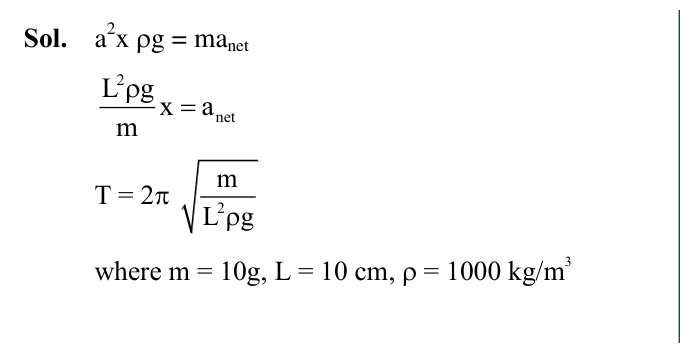
QUESTION 9
PHYSICS · Oscillations
SECTION A · MCQ (+4, -1)
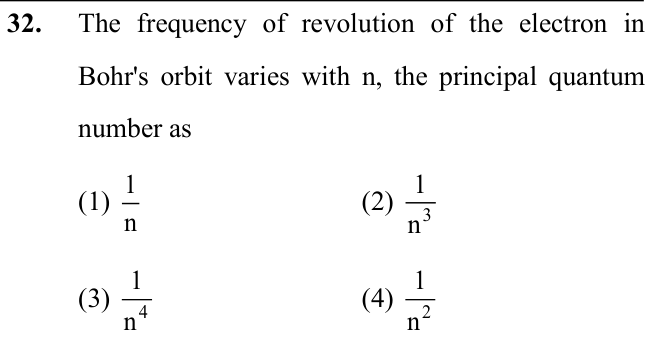
Candidate Response:
(1) (2) (3) (4)
⚡ OFFICIAL KEY: 2
Step-by-Step Derivation

QUESTION 10
PHYSICS · Oscillations
SECTION A · MCQ (+4, -1)
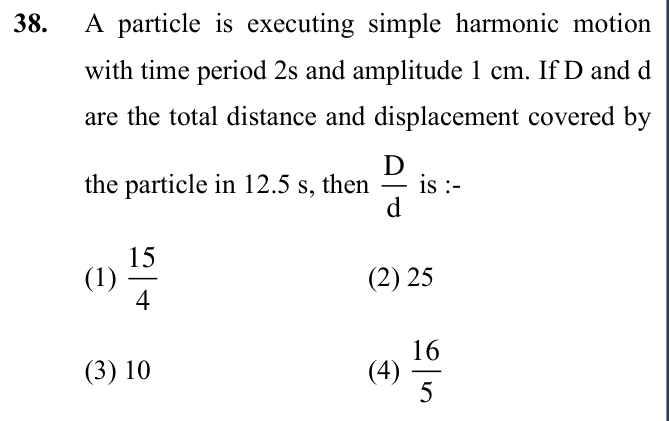
Candidate Response:
(1) (2) (3) (4)
⚡ OFFICIAL KEY: 2
Step-by-Step Derivation
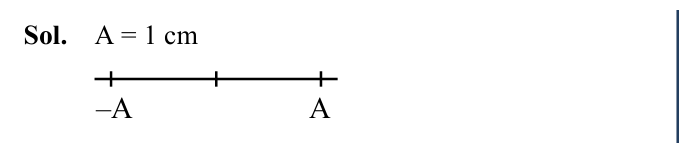
QUESTION 11
PHYSICS · Oscillations
SECTION A · MCQ (+4, -1)
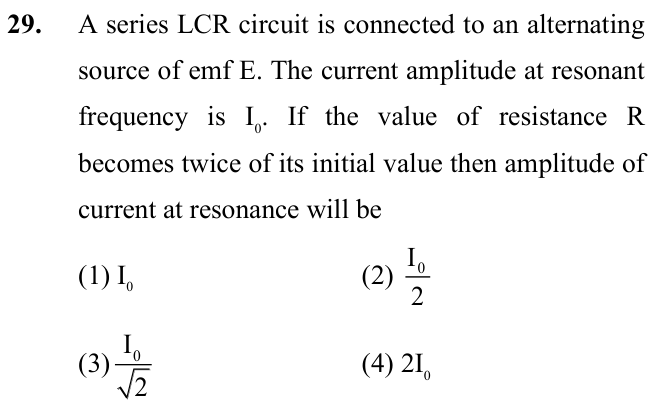
Candidate Response:
(1) (2) (3) (4)
⚡ OFFICIAL KEY: 2
Step-by-Step Derivation
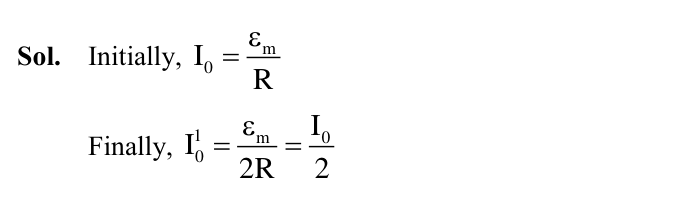
QUESTION 12
PHYSICS · Oscillations
SECTION B · NUMERICAL (+4, 0)
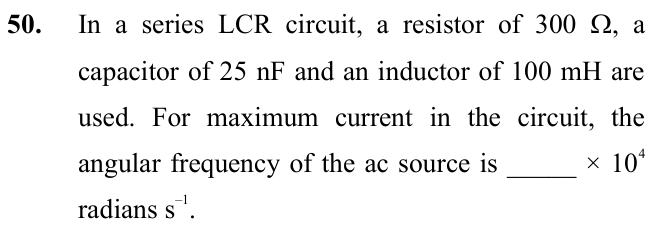
Numerical Value:
[ ]
⚡ OFFICIAL KEY: 2
Step-by-Step Derivation
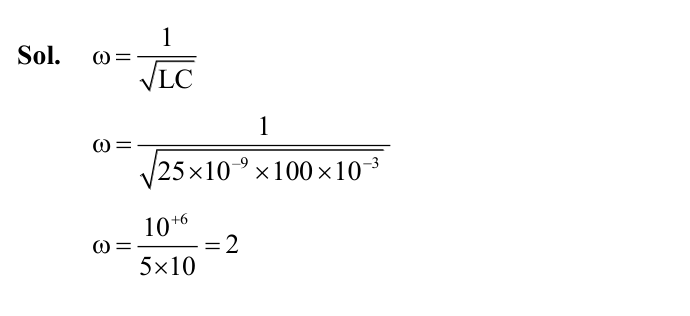
QUESTION 13
PHYSICS · Oscillations
SECTION A · MCQ (+4, -1)
A particle in SHM has maximum speed v_max and maximum acceleration a_max. The angular frequency ω and amplitude A are given by
(1) ω = a_max/v_max and A = v_max²/a_max
(2) ω = a_max/v_max and A = a_max²/v_max
(3) ω = a_max·v_max and A = v_max/a_max
(4) ω = v_max/a_max and A = a_max/v_max
Candidate Response:
(1) (2) (3) (4)
⚡ OFFICIAL KEY: ω = a_max/v_max and A = v_max²/a_max
Step-by-Step Derivation
Since v_max = ωA and a_max = ω²A, dividing gives ω = a_max/v_max, and then A = v_max²/a_max.
QUESTION 14
PHYSICS · Oscillations
SECTION A · MCQ (+4, -1)
Two springs of force constants k₁ and k₂ are connected in series to a block. The equivalent spring constant k_eq is
(1) k_eq = k₁ + k₂
(2) k_eq = (k₁ + k₂)/2
(3) k_eq = k₁k₂/(k₁ + k₂) only if k₁ = k₂
(4) 1/k_eq = 1/k₁ + 1/k₂
Candidate Response:
(1) (2) (3) (4)
⚡ OFFICIAL KEY: 1/k_eq = 1/k₁ + 1/k₂
Step-by-Step Derivation
Springs in series share the same force and their extensions add, so 1/k_eq = 1/k₁ + 1/k₂ (equivalently k_eq = k₁k₂/(k₁ + k₂)). The period then follows T = 2π√(m/k_eq).
QUESTION 15
PHYSICS · Oscillations
SECTION A · MCQ (+4, -1)
A particle performs SHM and is released from rest at x = +A at t = 0. Which equation correctly describes its displacement?
(1) x = A cos(ωt)
(2) x = A sin(ωt)
(3) x = A cos(ωt + π/2)
(4) x = -A cos(ωt)
Candidate Response:
(1) (2) (3) (4)
⚡ OFFICIAL KEY: x = A cos(ωt)
Step-by-Step Derivation
Starting at x = +A with zero velocity at t = 0 means the initial phase φ₀ = 0 in x = A cos(ωt + φ₀), giving x = A cos(ωt).