
⚡ OFFICIAL NTA ASSESSMENT GENERATOR & WORD (.DOCX) EXPORTER
Waves · Practice Worksheet
JEE Main Physics · Curated Assessment Set Print directly or export as a beautifully formatted Microsoft Word document with embedded 180-DPI mathematical prompt clips and step-by-step derivations.
EDUPROD JEE MAIN TEST SERIES · NTA PATTERN
Waves · Practice Worksheet
JEE Main Physics · Curated Assessment Set · Assessment Code: JEE-101
Total Marks: 40
Marking: +4 / -1 (Sec A) · +4 / 0 (Sec B)
QUESTION 1
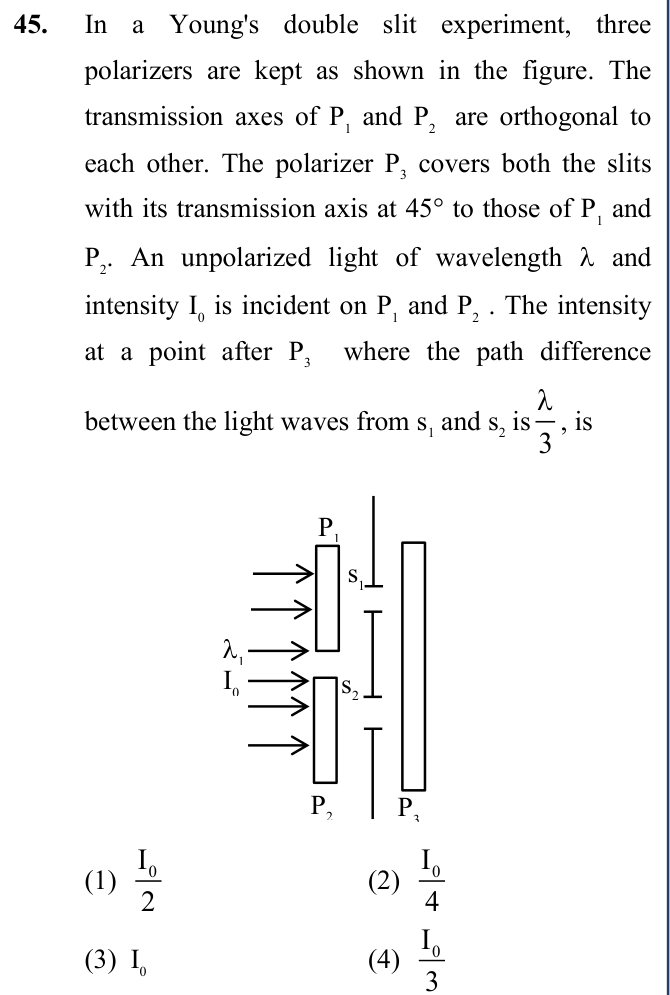
PHYSICS · Wave Optics
SECTION A · MCQ (+4, -1)
Candidate Response:
(1) (2) (3) (4)
⚡ OFFICIAL KEY: 3
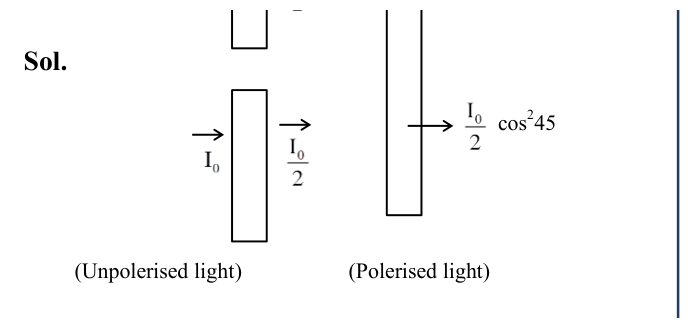
Step-by-Step Derivation
QUESTION 2
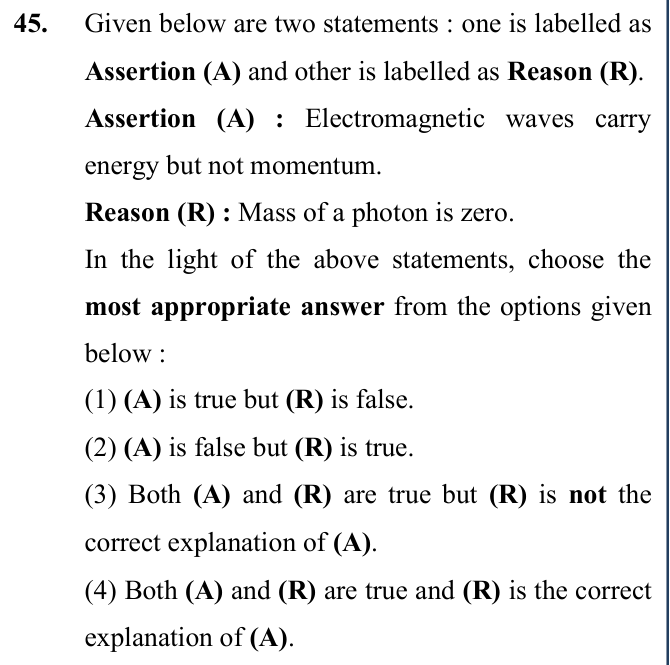
PHYSICS · Laws of Motion
SECTION A · MCQ (+4, -1)
Candidate Response:
(1) (2) (3) (4)
⚡ OFFICIAL KEY: 2
Step-by-Step Derivation

QUESTION 3
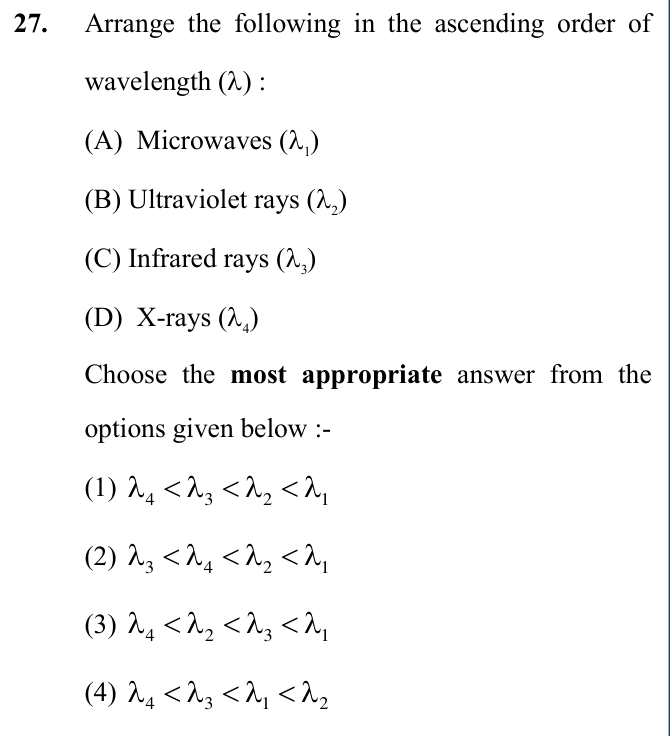
PHYSICS · Units and Measurements
SECTION A · MCQ (+4, -1)
Candidate Response:
(1) (2) (3) (4)
⚡ OFFICIAL KEY: 3
Step-by-Step Derivation
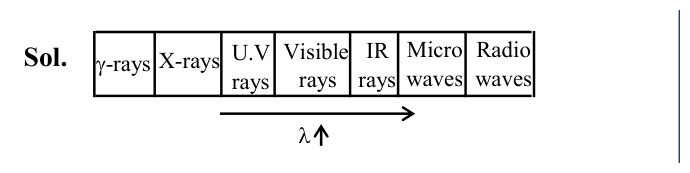
QUESTION 4
PHYSICS · Waves
SECTION A · MCQ (+4, -1)
Two tuning forks of frequencies 256 Hz and 260 Hz are sounded together. The number of beats heard per second is:
(1) 4
(2) 2
(3) 516
(4) 256
Candidate Response:
(1) (2) (3) (4)
⚡ OFFICIAL KEY: 4
Step-by-Step Derivation
Beat frequency is the absolute difference of the two frequencies: f_beat = |260 - 256| = 4 Hz, i.e., 4 beats per second.
QUESTION 5
PHYSICS · Waves
SECTION A · MCQ (+4, -1)
A travelling wave has a wavelength of 2 m and a time period of 0.5 s; its speed is
(1) 4 m/s
(2) 0.25 m/s
(3) 2 m/s
(4) 1 m/s
Candidate Response:
(1) (2) (3) (4)
⚡ OFFICIAL KEY: 4 m/s
Step-by-Step Derivation
Wave speed v = λ/T = 2/0.5 = 4 m/s.
QUESTION 6
PHYSICS · Waves
SECTION A · MCQ (+4, -1)
Two coherent waves of intensities I₁ and I₂ interfere with phase difference φ. The resultant intensity is:
(1) I₁ + I₂
(2) I₁ + I₂ + 2√(I₁I₂) cos φ
(3) √(I₁² + I₂²)
(4) I₁ + I₂ - 2√(I₁I₂) cos φ
Candidate Response:
(1) (2) (3) (4)
⚡ OFFICIAL KEY: I₁ + I₂ + 2√(I₁I₂) cos φ
Step-by-Step Derivation
The resultant amplitude squared for two waves with phase difference φ gives I = I₁ + I₂ + 2√(I₁I₂) cos φ, the interference term being 2√(I₁I₂) cos φ.
QUESTION 7
PHYSICS · Waves
SECTION A · MCQ (+4, -1)
A wave has a frequency of 50 Hz and a wavelength of 0.4 m; its speed is
(1) 12.5 m/s
(2) 200 m/s
(3) 2 m/s
(4) 20 m/s
Candidate Response:
(1) (2) (3) (4)
⚡ OFFICIAL KEY: 20 m/s
Step-by-Step Derivation
Wave speed v = fλ = 50 × 0.4 = 20 m/s.
QUESTION 8
PHYSICS · Waves
SECTION A · MCQ (+4, -1)
A wave of frequency 500 Hz travels from air into water, where its speed increases. Which quantity remains unchanged as the wave enters the water?
(1) Wavelength
(2) Amplitude
(3) Frequency
(4) Speed
Candidate Response:
(1) (2) (3) (4)
⚡ OFFICIAL KEY: Frequency
Step-by-Step Derivation
The frequency of a wave is determined by its source and remains constant when the wave crosses a boundary into another medium. Since v = νλ, an increase in speed at constant frequency means the wavelength increases proportionally.
QUESTION 9
PHYSICS · Waves
SECTION A · MCQ (+4, -1)
A wave transports energy from one place to another without any net transfer of
(1) Energy
(2) Both energy and matter
(3) Charge
(4) Matter
Candidate Response:
(1) (2) (3) (4)
⚡ OFFICIAL KEY: Matter
Step-by-Step Derivation
Waves transfer energy but not matter; medium particles only oscillate about their positions.
QUESTION 10
PHYSICS · Waves
SECTION A · MCQ (+4, -1)
When a wave is reflected from a rigid (fixed) boundary, the reflected wave undergoes a phase change of:
(1) 0 (no phase change)
(2) π (180°), i.e., the pulse is inverted
(3) 2π (360°)
(4) π/2 (90°)
Candidate Response:
(1) (2) (3) (4)
⚡ OFFICIAL KEY: π (180°), i.e., the pulse is inverted
Step-by-Step Derivation
A rigid boundary cannot move, so the reflected wave is inverted (a crest reflects as a trough), corresponding to a phase change of π. At a free (open) boundary there is no phase reversal.