
⚡ OFFICIAL NTA ASSESSMENT GENERATOR & WORD (.DOCX) EXPORTER
Organic Chemistry - Some Basic Principles and Techniques · Practice Worksheet
JEE Main Chemistry · Curated Assessment Set Print directly or export as a beautifully formatted Microsoft Word document with embedded 180-DPI mathematical prompt clips and step-by-step derivations.
EDUPROD JEE MAIN TEST SERIES · NTA PATTERN
Organic Chemistry - Some Basic Principles and Techniques · Practice Worksheet
JEE Main Chemistry · Curated Assessment Set · Assessment Code: JEE-101
Total Marks: 60
Marking: +4 / -1 (Sec A) · +4 / 0 (Sec B)
QUESTION 1
CHEMISTRY · Organic Chemistry: Basic Principles
SECTION A · MCQ (+4, -1)
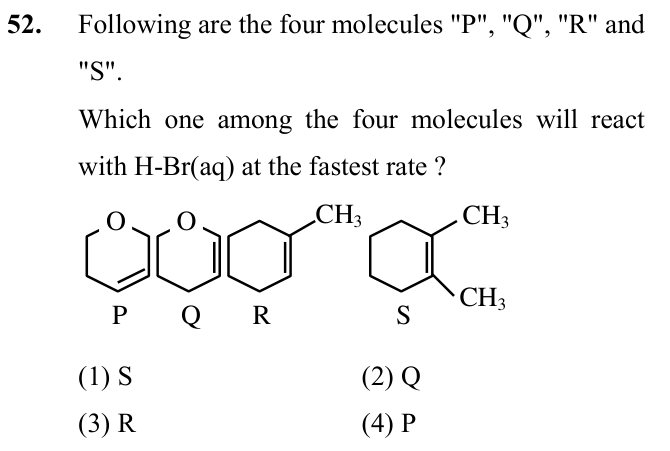
Candidate Response:
(1) (2) (3) (4)
QUESTION 2
CHEMISTRY · Organic Chemistry: Basic Principles
SECTION A · MCQ (+4, -1)
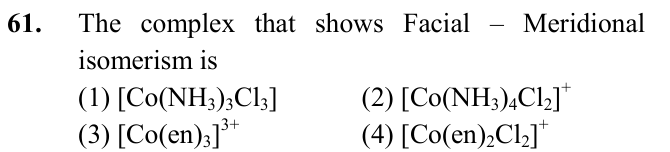
Candidate Response:
(1) (2) (3) (4)
QUESTION 3
CHEMISTRY · Organic Chemistry: Basic Principles
SECTION A · MCQ (+4, -1)
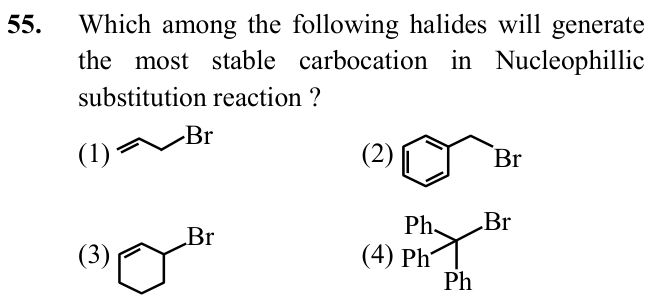
Candidate Response:
(1) (2) (3) (4)
QUESTION 4
CHEMISTRY · Organic Chemistry: Basic Principles
SECTION A · MCQ (+4, -1)
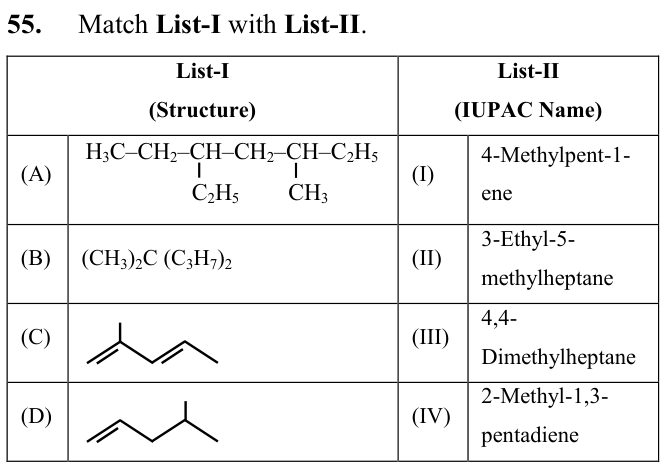
Candidate Response:
(1) (2) (3) (4)
QUESTION 5
CHEMISTRY · Organic Chemistry: Basic Principles
SECTION A · MCQ (+4, -1)
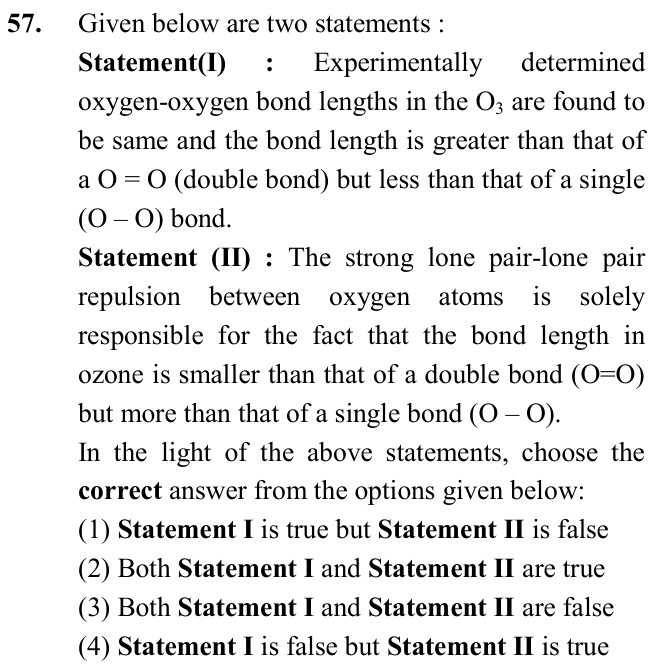
Candidate Response:
(1) (2) (3) (4)
QUESTION 6
CHEMISTRY · Organic Chemistry: Basic Principles
SECTION A · MCQ (+4, -1)
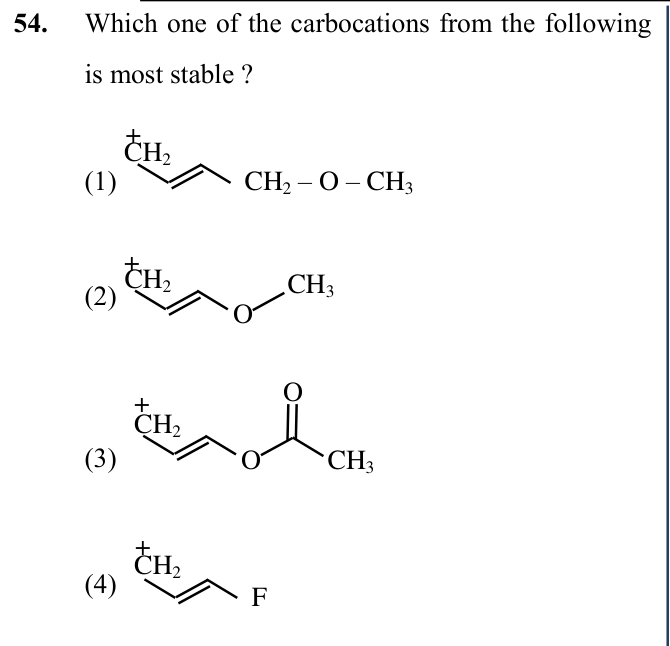
Candidate Response:
(1) (2) (3) (4)
QUESTION 7
CHEMISTRY · Organic Chemistry: Basic Principles
SECTION A · MCQ (+4, -1)
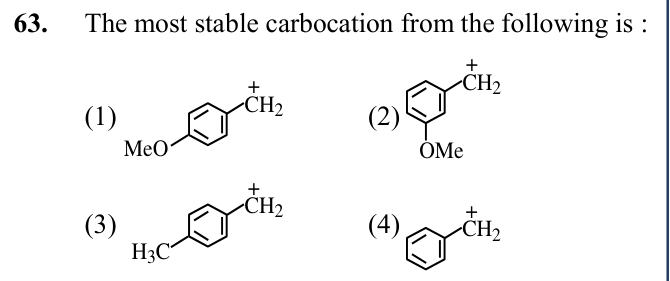
Candidate Response:
(1) (2) (3) (4)
QUESTION 8
CHEMISTRY · Organic Chemistry: Basic Principles
SECTION A · MCQ (+4, -1)
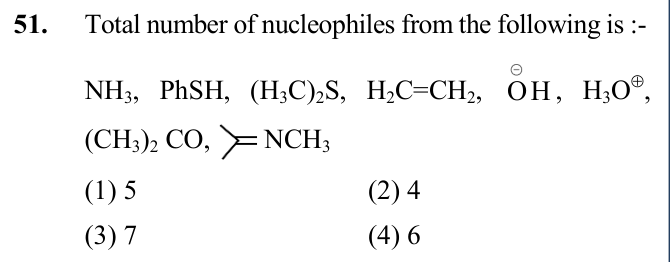
Candidate Response:
(1) (2) (3) (4)
QUESTION 9
CHEMISTRY · Organic Chemistry: Basic Principles
SECTION A · MCQ (+4, -1)
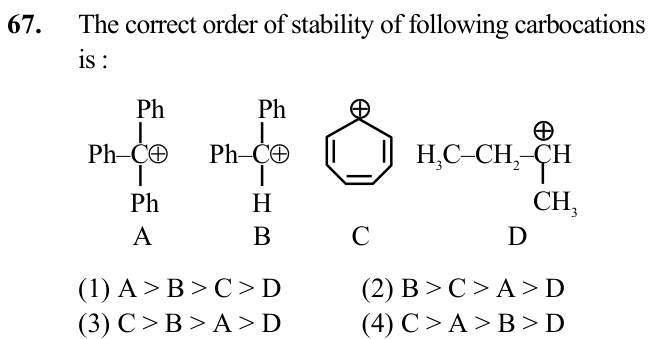
Candidate Response:
(1) (2) (3) (4)
QUESTION 10
CHEMISTRY · Organic Chemistry - Some Basic Principles and Techniques
SECTION A · MCQ (+4, -1)
The reaction of methane with chlorine in the presence of sunlight proceeds via which type of bond cleavage?
(1) Heterolytic cleavage
(2) Both homolytic and heterolytic
(3) Homolytic cleavage
(4) No bond cleavage occurs
Candidate Response:
(1) (2) (3) (4)
QUESTION 11
CHEMISTRY · Organic Chemistry - Some Basic Principles and Techniques
SECTION A · MCQ (+4, -1)
The inductive effect is a permanent effect that operates through which type of bonds?
(1) Hydrogen bonds
(2) Π bonds only
(3) Σ bonds
(4) Van der Waals forces
Candidate Response:
(1) (2) (3) (4)
QUESTION 12
CHEMISTRY · Organic Chemistry - Some Basic Principles and Techniques
SECTION A · MCQ (+4, -1)
Propan-1-ol (CH₃CH₂CH₂OH) and propan-2-ol (CH₃CH(OH)CH₃) are:
(1) Functional isomers
(2) Position isomers
(3) Chain isomers
(4) Metamers
Candidate Response:
(1) (2) (3) (4)
QUESTION 13
CHEMISTRY · Organic Chemistry - Some Basic Principles and Techniques
SECTION A · MCQ (+4, -1)
Which is more acidic: trichloroacetic acid (CCl₃COOH) or acetic acid (CH₃COOH)?
(1) Acetic acid, because chlorine is electron-donating
(2) Acetic acid, because it has fewer substituents
(3) Trichloroacetic acid, due to the -I effect of three chlorine atoms
(4) Both are equally acidic
Candidate Response:
(1) (2) (3) (4)
QUESTION 14
CHEMISTRY · Organic Chemistry - Some Basic Principles and Techniques
SECTION A · MCQ (+4, -1)
Can trimethylacetaldehyde, (CH₃)₃C–CHO, exhibit keto-enol tautomerism?
(1) Yes, because it has a carbonyl group
(2) No, because it has no double bond
(3) No, because its α-carbon has no α-hydrogen
(4) Yes, because it has methyl groups
Candidate Response:
(1) (2) (3) (4)
QUESTION 15
CHEMISTRY · Organic Chemistry - Some Basic Principles and Techniques
SECTION A · MCQ (+4, -1)
In the Kjeldahl method, the nitrogen of an organic compound is estimated in which form?
(1) Ammonia (NH₃)
(2) Nitric acid
(3) Ammonium molybdate
(4) Nitrogen gas (N₂)
Candidate Response:
(1) (2) (3) (4)