
⚡ OFFICIAL NTA ASSESSMENT GENERATOR & WORD (.DOCX) EXPORTER
Organic Chemistry - Some Basic Principles and Techniques · Practice Worksheet
JEE Main Chemistry · Curated Assessment Set Print directly or export as a beautifully formatted Microsoft Word document with embedded 180-DPI mathematical prompt clips and step-by-step derivations.
EDUPROD JEE MAIN TEST SERIES · NTA PATTERN
Organic Chemistry - Some Basic Principles and Techniques · Practice Worksheet
JEE Main Chemistry · Curated Assessment Set · Assessment Code: JEE-101
Total Marks: 120
Marking: +4 / -1 (Sec A) · +4 / 0 (Sec B)
QUESTION 1
CHEMISTRY · Organic Chemistry: Basic Principles
SECTION A · MCQ (+4, -1)
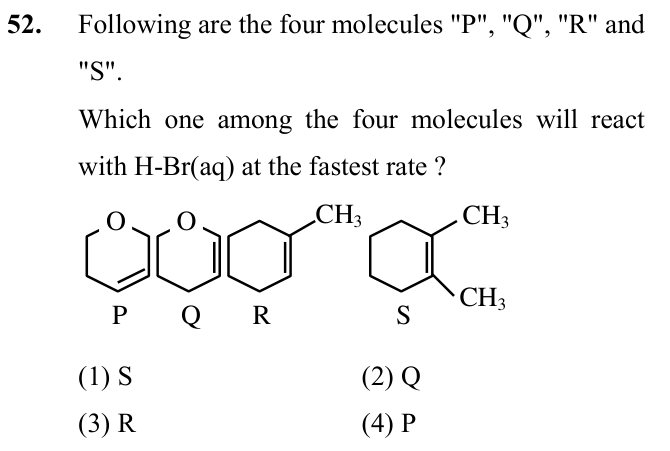
Candidate Response:
(1) (2) (3) (4)
⚡ OFFICIAL KEY: 2
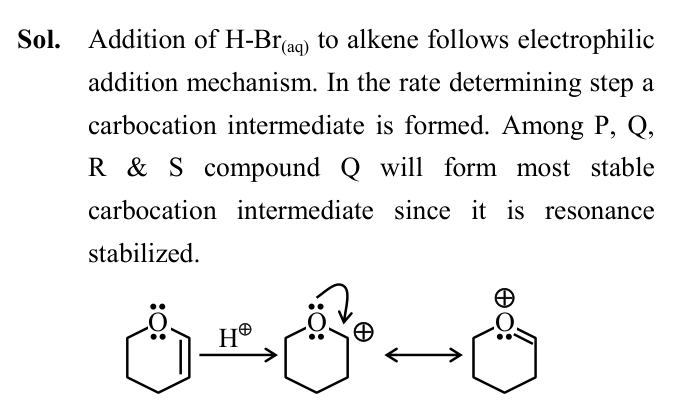
Step-by-Step Derivation
QUESTION 2
CHEMISTRY · Organic Chemistry: Basic Principles
SECTION A · MCQ (+4, -1)
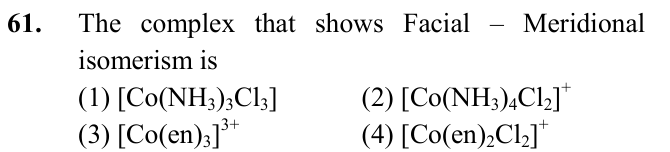
Candidate Response:
(1) (2) (3) (4)
⚡ OFFICIAL KEY: 1
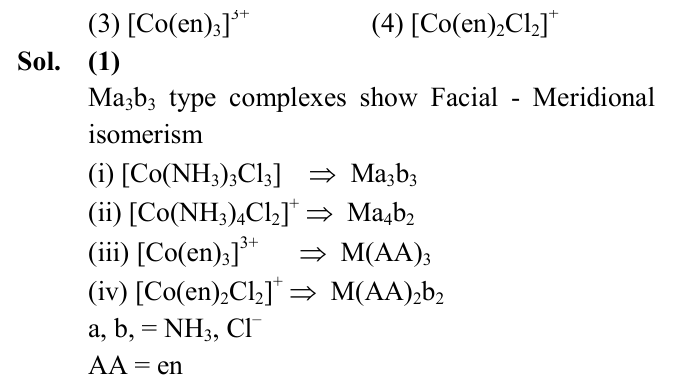
Step-by-Step Derivation
QUESTION 3
CHEMISTRY · Organic Chemistry: Basic Principles
SECTION A · MCQ (+4, -1)
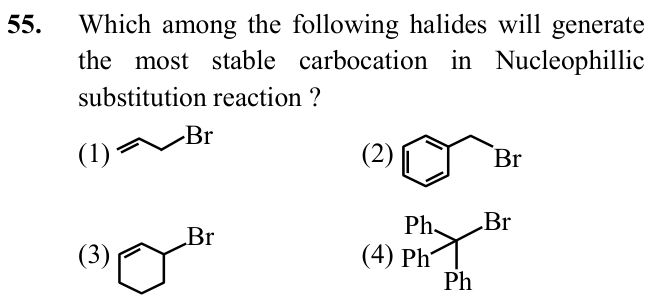
Candidate Response:
(1) (2) (3) (4)
⚡ OFFICIAL KEY: 4
Step-by-Step Derivation
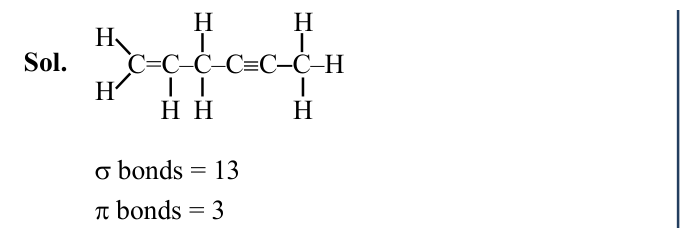
QUESTION 4
CHEMISTRY · Organic Chemistry: Basic Principles
SECTION A · MCQ (+4, -1)
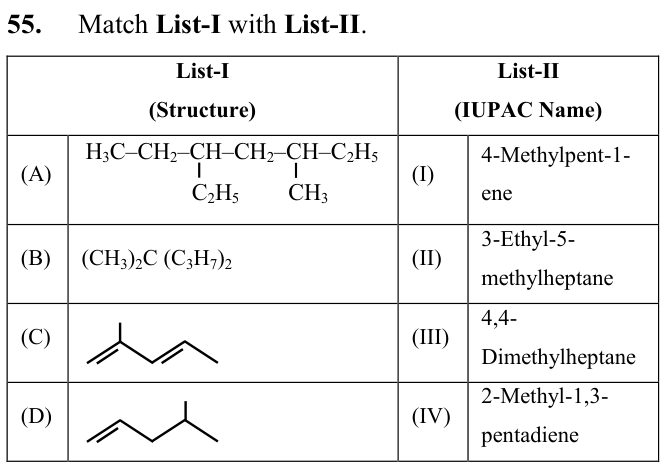
Candidate Response:
(1) (2) (3) (4)
⚡ OFFICIAL KEY: 3
Step-by-Step Derivation
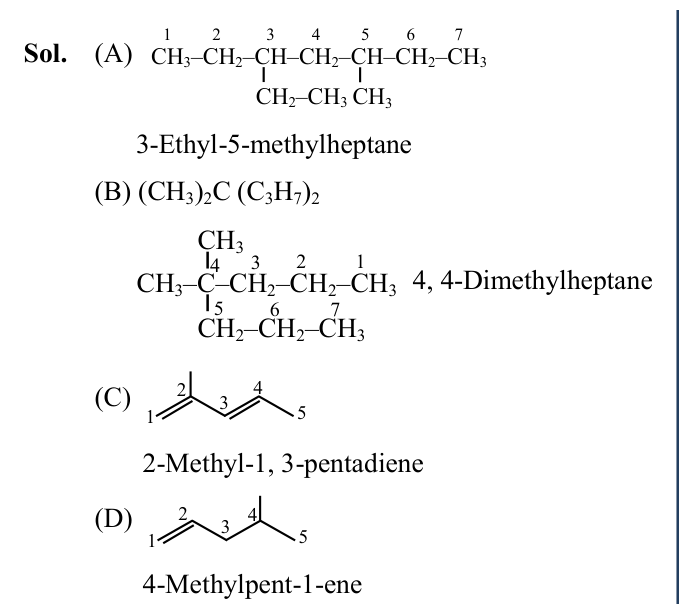
QUESTION 5
CHEMISTRY · Organic Chemistry: Basic Principles
SECTION A · MCQ (+4, -1)
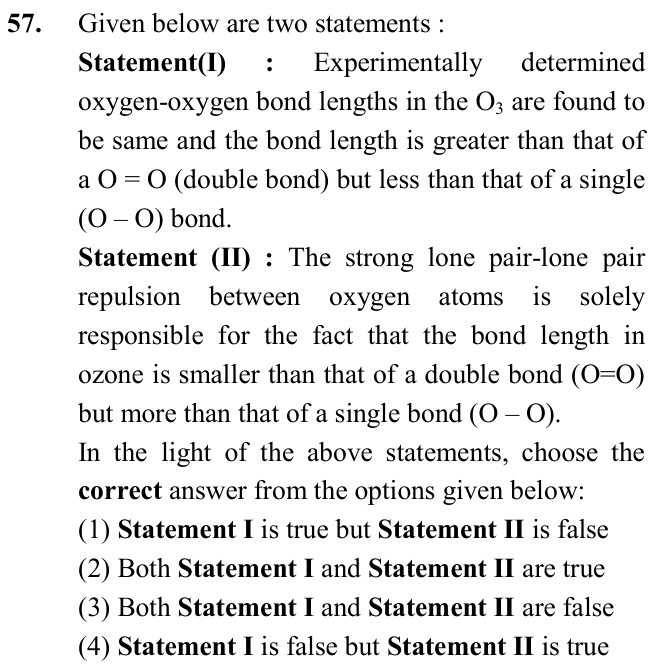
Candidate Response:
(1) (2) (3) (4)
⚡ OFFICIAL KEY: 1
Step-by-Step Derivation

QUESTION 6
CHEMISTRY · Organic Chemistry: Basic Principles
SECTION A · MCQ (+4, -1)
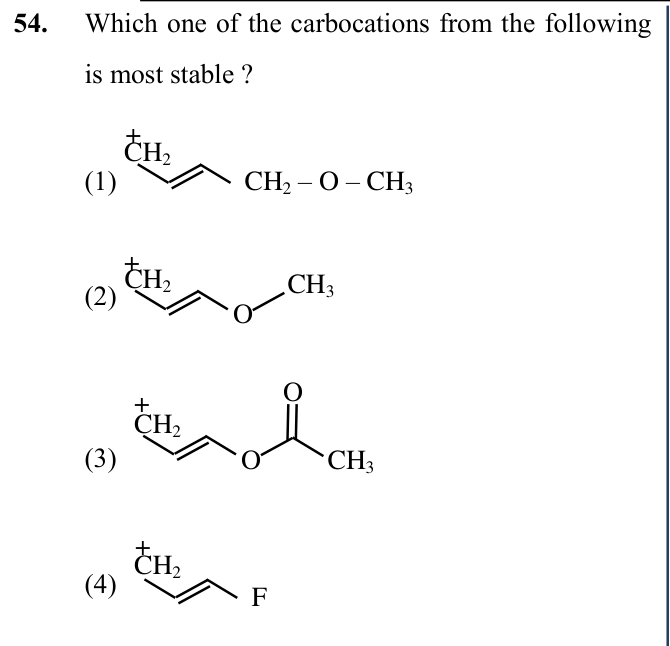
Candidate Response:
(1) (2) (3) (4)
⚡ OFFICIAL KEY: 2
Step-by-Step Derivation
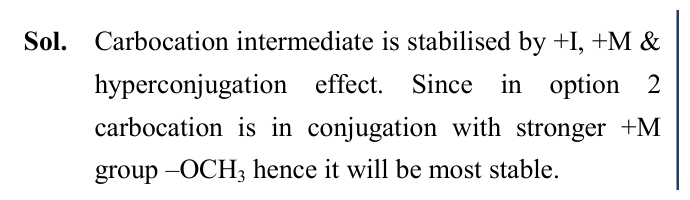
QUESTION 7
CHEMISTRY · Organic Chemistry: Basic Principles
SECTION A · MCQ (+4, -1)
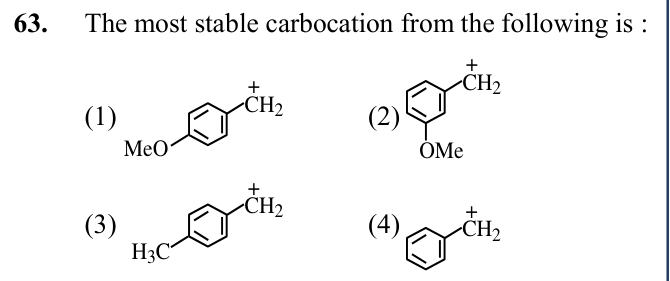
Candidate Response:
(1) (2) (3) (4)
⚡ OFFICIAL KEY: 1
Step-by-Step Derivation
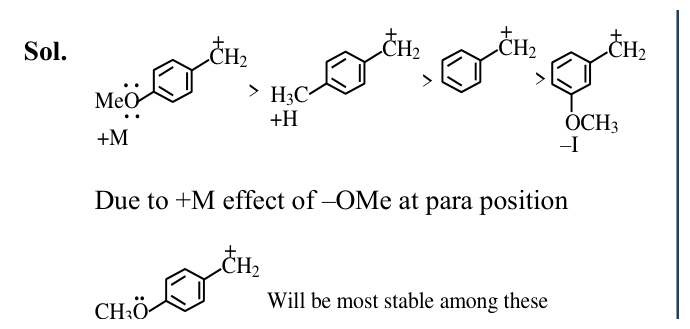
QUESTION 8
CHEMISTRY · Organic Chemistry: Basic Principles
SECTION A · MCQ (+4, -1)
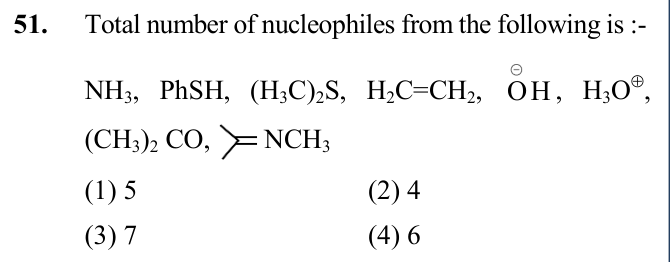
Candidate Response:
(1) (2) (3) (4)
⚡ OFFICIAL KEY: 1
Step-by-Step Derivation

QUESTION 9
CHEMISTRY · Organic Chemistry: Basic Principles
SECTION A · MCQ (+4, -1)
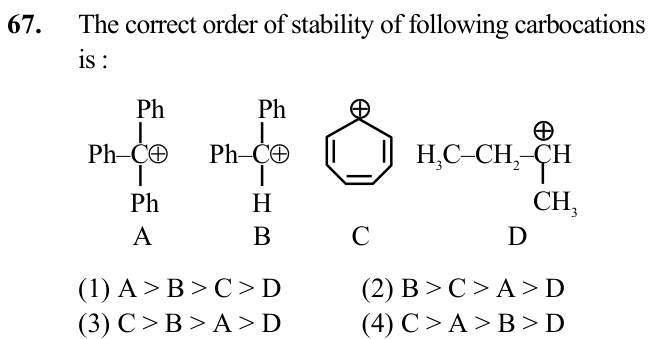
Candidate Response:
(1) (2) (3) (4)
⚡ OFFICIAL KEY: 4
Step-by-Step Derivation
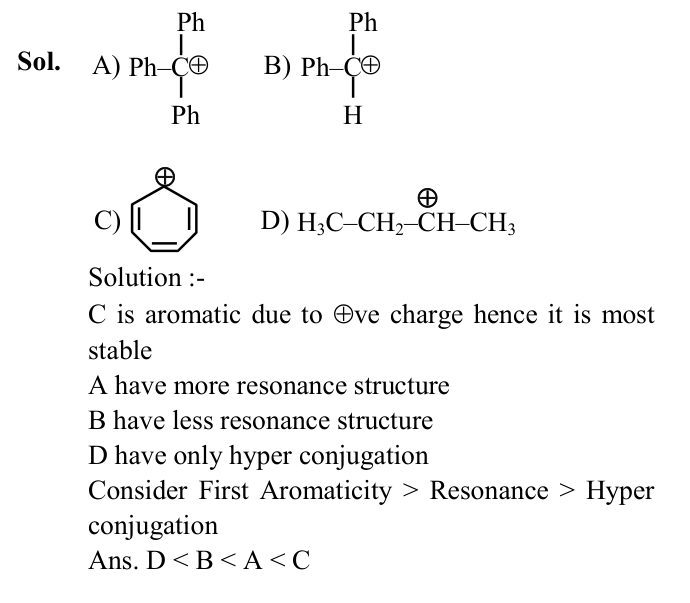
QUESTION 10
CHEMISTRY · Organic Chemistry - Some Basic Principles and Techniques
SECTION A · MCQ (+4, -1)
The reaction of methane with chlorine in the presence of sunlight proceeds via which type of bond cleavage?
(1) Heterolytic cleavage
(2) Both homolytic and heterolytic
(3) Homolytic cleavage
(4) No bond cleavage occurs
Candidate Response:
(1) (2) (3) (4)
⚡ OFFICIAL KEY: Homolytic cleavage
Step-by-Step Derivation
UV light (hν) induces homolysis of the Cl–Cl bond into two chlorine radicals (Cl•), initiating a free-radical substitution.
QUESTION 11
CHEMISTRY · Organic Chemistry - Some Basic Principles and Techniques
SECTION A · MCQ (+4, -1)
The inductive effect is a permanent effect that operates through which type of bonds?
(1) Hydrogen bonds
(2) Π bonds only
(3) Σ bonds
(4) Van der Waals forces
Candidate Response:
(1) (2) (3) (4)
⚡ OFFICIAL KEY: Σ bonds
Step-by-Step Derivation
The inductive effect is transmitted through σ bonds.
QUESTION 12
CHEMISTRY · Organic Chemistry - Some Basic Principles and Techniques
SECTION A · MCQ (+4, -1)
Propan-1-ol (CH₃CH₂CH₂OH) and propan-2-ol (CH₃CH(OH)CH₃) are:
(1) Functional isomers
(2) Position isomers
(3) Chain isomers
(4) Metamers
Candidate Response:
(1) (2) (3) (4)
⚡ OFFICIAL KEY: Position isomers
Step-by-Step Derivation
Both share the same parent chain (propane) and the same functional group (-OH), differing only in the position of the hydroxyl group (C1 vs C2).
QUESTION 13
CHEMISTRY · Organic Chemistry - Some Basic Principles and Techniques
SECTION A · MCQ (+4, -1)
Which is more acidic: trichloroacetic acid (CCl₃COOH) or acetic acid (CH₃COOH)?
(1) Acetic acid, because chlorine is electron-donating
(2) Acetic acid, because it has fewer substituents
(3) Trichloroacetic acid, due to the -I effect of three chlorine atoms
(4) Both are equally acidic
Candidate Response:
(1) (2) (3) (4)
⚡ OFFICIAL KEY: Trichloroacetic acid, due to the -I effect of three chlorine atoms
Step-by-Step Derivation
The three electronegative Cl atoms exert a strong -I effect that disperses the negative charge of the trichloroacetate anion, stabilising it and greatly increasing acidity (pKa 0.65 vs 4.76).
QUESTION 14
CHEMISTRY · Organic Chemistry - Some Basic Principles and Techniques
SECTION A · MCQ (+4, -1)
Can trimethylacetaldehyde, (CH₃)₃C–CHO, exhibit keto-enol tautomerism?
(1) Yes, because it has a carbonyl group
(2) No, because it has no double bond
(3) No, because its α-carbon has no α-hydrogen
(4) Yes, because it has methyl groups
Candidate Response:
(1) (2) (3) (4)
⚡ OFFICIAL KEY: No, because its α-carbon has no α-hydrogen
Step-by-Step Derivation
Tautomerization requires an α-hydrogen on the sp³ carbon adjacent to the carbonyl. In (CH₃)₃C–CHO the α-carbon is bonded to three methyl groups (quaternary), so there is no α-hydrogen to migrate.
QUESTION 15
CHEMISTRY · Organic Chemistry - Some Basic Principles and Techniques
SECTION A · MCQ (+4, -1)
In the Kjeldahl method, the nitrogen of an organic compound is estimated in which form?
(1) Ammonia (NH₃)
(2) Nitric acid
(3) Ammonium molybdate
(4) Nitrogen gas (N₂)
Candidate Response:
(1) (2) (3) (4)
⚡ OFFICIAL KEY: Ammonia (NH₃)
Step-by-Step Derivation
Kjeldahl's method converts nitrogen to ammonia for estimation.
QUESTION 16
CHEMISTRY · Organic Chemistry - Some Basic Principles and Techniques
SECTION A · MCQ (+4, -1)
How many secondary (2°) hydrogen atoms are present in 2-methylbutane?
(1) 4
(2) 2
(3) 6
(4) 3
Candidate Response:
(1) (2) (3) (4)
⚡ OFFICIAL KEY: 2
Step-by-Step Derivation
2-methylbutane is CH₃–CH(CH₃)–CH₂–CH₃. Only the –CH₂– group is a secondary carbon (bonded to two other carbons), and it carries exactly 2 secondary hydrogens.
QUESTION 17
CHEMISTRY · Organic Chemistry - Some Basic Principles and Techniques
SECTION A · MCQ (+4, -1)
A nucleophile is defined as a species that does what?
(1) Donates an electron pair
(2) Always carries a positive charge
(3) Accepts a proton
(4) Accepts an electron pair
Candidate Response:
(1) (2) (3) (4)
⚡ OFFICIAL KEY: Donates an electron pair
Step-by-Step Derivation
A nucleophile is an electron-pair donor.
QUESTION 18
CHEMISTRY · Organic Chemistry - Some Basic Principles and Techniques
SECTION A · MCQ (+4, -1)
What is the percentage s-character in an sp³ hybrid orbital?
(1) 75%
(2) 25%
(3) 50%
(4) 33.3%
Candidate Response:
(1) (2) (3) (4)
⚡ OFFICIAL KEY: 25%
Step-by-Step Derivation
An sp³ orbital has one s and three p orbitals, giving 25% s-character.
QUESTION 19
CHEMISTRY · Organic Chemistry - Some Basic Principles and Techniques
SECTION A · MCQ (+4, -1)
Why is the allyl carbocation (CH₂=CH–CH₂⁺) more stable than the n-propyl carbocation (CH₃CH₂CH₂⁺)?
(1) The allyl cation has more α-hydrogens
(2) The allyl cation's charge is delocalised by resonance
(3) The n-propyl cation is more substituted
(4) The allyl cation is smaller
Candidate Response:
(1) (2) (3) (4)
⚡ OFFICIAL KEY: The allyl cation's charge is delocalised by resonance
Step-by-Step Derivation
In the allyl cation the positive charge is delocalised over two terminal carbons by resonance, whereas the n-propyl cation is stabilised only by weaker +I and hyperconjugation effects.
QUESTION 20
CHEMISTRY · Organic Chemistry - Some Basic Principles and Techniques
SECTION A · MCQ (+4, -1)
Isomers that differ only in the position of the same functional group on the carbon chain are called what?
(1) Metamers
(2) Position isomers
(3) Chain isomers
(4) Functional isomers
Candidate Response:
(1) (2) (3) (4)
⚡ OFFICIAL KEY: Position isomers
Step-by-Step Derivation
Different position of the same functional group gives position isomers.
QUESTION 21
CHEMISTRY · Organic Chemistry - Some Basic Principles and Techniques
SECTION A · MCQ (+4, -1)
Steam distillation is used to purify organic compounds that are what?
(1) Unstable toward water
(2) Readily soluble in water
(3) Immiscible with water and steam-volatile
(4) Non-volatile solids
Candidate Response:
(1) (2) (3) (4)
⚡ OFFICIAL KEY: Immiscible with water and steam-volatile
Step-by-Step Derivation
Steam distillation suits steam-volatile compounds immiscible with water.
QUESTION 22
CHEMISTRY · Organic Chemistry - Some Basic Principles and Techniques
SECTION A · MCQ (+4, -1)
Arrange the following alkenes in order of increasing stability: ethene, propene, but-2-ene, 2,3-dimethylbut-2-ene.
(1) Ethene < Propene < But-2-ene < 2,3-Dimethylbut-2-ene
(2) Ethene < Propene < 2,3-Dimethylbut-2-ene < But-2-ene
(3) 2,3-Dimethylbut-2-ene < But-2-ene < Propene < Ethene
(4) Propene < Ethene < But-2-ene < 2,3-Dimethylbut-2-ene
Candidate Response:
(1) (2) (3) (4)
⚡ OFFICIAL KEY: Ethene < Propene < But-2-ene < 2,3-Dimethylbut-2-ene
Step-by-Step Derivation
Stability rises with the number of α-hydrogens available for hyperconjugation: ethene (0), propene (3), but-2-ene (6), 2,3-dimethylbut-2-ene (12).
QUESTION 23
CHEMISTRY · Organic Chemistry - Some Basic Principles and Techniques
SECTION A · MCQ (+4, -1)
Can the Kjeldahl method be used to estimate nitrogen in nitrobenzene or pyridine?
(1) No, because their nitrogen is not converted to ammonium sulfate
(2) No, because they contain no nitrogen
(3) Yes, but only at high temperature
(4) Yes, because Kjeldahl works for all nitrogen compounds
Candidate Response:
(1) (2) (3) (4)
⚡ OFFICIAL KEY: No, because their nitrogen is not converted to ammonium sulfate
Step-by-Step Derivation
In nitrobenzene (-NO₂) and pyridine (ring nitrogen), the nitrogen is not quantitatively reduced to (NH₄)₂SO₄ during H₂SO₄ digestion, so the Kjeldahl method fails.
QUESTION 24
CHEMISTRY · Organic Chemistry - Some Basic Principles and Techniques
SECTION A · MCQ (+4, -1)
Which distillation method is best for purifying aniline from an aniline–water mixture?
(1) Fractional distillation
(2) Steam distillation
(3) Simple distillation
(4) Vacuum distillation
Candidate Response:
(1) (2) (3) (4)
⚡ OFFICIAL KEY: Steam distillation
Step-by-Step Derivation
Aniline is steam-volatile and immiscible with water, so the mixture boils at ~98.5 °C (below both pure boiling points) when P_water + P_aniline = 1 atm.
QUESTION 25
CHEMISTRY · Organic Chemistry - Some Basic Principles and Techniques
SECTION A · MCQ (+4, -1)
What is the correct IUPAC name for HC≡C–CH₂–CH=CH₂?
(1) Pent-4-en-1-yne
(2) Pent-1-en-4-yne
(3) Pent-1-yn-4-ene
(4) Pent-1,4-enyne
Candidate Response:
(1) (2) (3) (4)
⚡ OFFICIAL KEY: Pent-1-en-4-yne
Step-by-Step Derivation
The five-carbon chain carries a double and a triple bond at opposite terminals. Since both locant sets tie (1,4 from either end), the double bond receives the lower locant, giving pent-1-en-4-yne.
QUESTION 26
CHEMISTRY · Organic Chemistry - Some Basic Principles and Techniques
SECTION A · MCQ (+4, -1)
Which carbanion is more stable, (CH₃)₃C⁻ or Cl₃C⁻?
(1) (CH₃)₃C⁻, because methyl groups are electron-donating
(2) Cl₃C⁻, due to the -I effect and d-orbital resonance of chlorine
(3) Both are equally stable
(4) (CH₃)₃C⁻, because it is tertiary
Candidate Response:
(1) (2) (3) (4)
⚡ OFFICIAL KEY: Cl₃C⁻, due to the -I effect and d-orbital resonance of chlorine
Step-by-Step Derivation
The three Cl atoms withdraw electron density (-I) and their vacant 3d-orbitals delocalise the negative charge by resonance, stabilising Cl₃C⁻. In contrast, three methyl groups pump electron density (+I) into the already negative (CH₃)₃C⁻, destabilising it.
QUESTION 27
CHEMISTRY · Organic Chemistry - Some Basic Principles and Techniques
SECTION A · MCQ (+4, -1)
Sulfur trioxide (SO₃) acts as:
(1) An electrophile
(2) Both an electrophile and a nucleophile
(3) A nucleophile
(4) Neither
Candidate Response:
(1) (2) (3) (4)
⚡ OFFICIAL KEY: An electrophile
Step-by-Step Derivation
The central sulfur is bonded to three electronegative oxygens that withdraw electron density, leaving sulfur electron-deficient with accessible d-orbitals, so it accepts electron pairs (electrophile).
QUESTION 28
CHEMISTRY · Organic Chemistry - Some Basic Principles and Techniques
SECTION A · MCQ (+4, -1)
In IUPAC nomenclature, which functional group has the highest priority as the principal suffix?
(1) Ketone (>C=O)
(2) Carboxylic acid (−COOH)
(3) Alcohol (−OH)
(4) Alkene (C=C)
Candidate Response:
(1) (2) (3) (4)
⚡ OFFICIAL KEY: Carboxylic acid (−COOH)
Step-by-Step Derivation
Carboxylic acids rank highest in the functional group priority order.
QUESTION 29
CHEMISTRY · Organic Chemistry - Some Basic Principles and Techniques
SECTION A · MCQ (+4, -1)
For IUPAC naming, the parent carbon chain selected is the one that is what?
(1) Longest continuous carbon chain
(2) Always drawn horizontally
(3) The one with the fewest carbons
(4) Most branched but shorter
Candidate Response:
(1) (2) (3) (4)
⚡ OFFICIAL KEY: Longest continuous carbon chain
Step-by-Step Derivation
The parent chain is the longest continuous carbon chain.
QUESTION 30
CHEMISTRY · Organic Chemistry - Some Basic Principles and Techniques
SECTION A · MCQ (+4, -1)
Homolytic bond cleavage produces which species?
(1) Only neutral atoms
(2) Ions
(3) Free radicals
(4) Polar molecules
Candidate Response:
(1) (2) (3) (4)
⚡ OFFICIAL KEY: Free radicals
Step-by-Step Derivation
Homolytic cleavage splits the electron pair equally, forming free radicals.