
⚡ OFFICIAL NTA ASSESSMENT GENERATOR & WORD (.DOCX) EXPORTER
Electrochemistry · Practice Worksheet
JEE Main Chemistry · Curated Assessment Set Print directly or export as a beautifully formatted Microsoft Word document with embedded 180-DPI mathematical prompt clips and step-by-step derivations.
EDUPROD JEE MAIN TEST SERIES · NTA PATTERN
Electrochemistry · Practice Worksheet
JEE Main Chemistry · Curated Assessment Set · Assessment Code: JEE-101
Total Marks: 100
Marking: +4 / -1 (Sec A) · +4 / 0 (Sec B)
QUESTION 1
CHEMISTRY · Electrochemistry
SECTION A · MCQ (+4, -1)
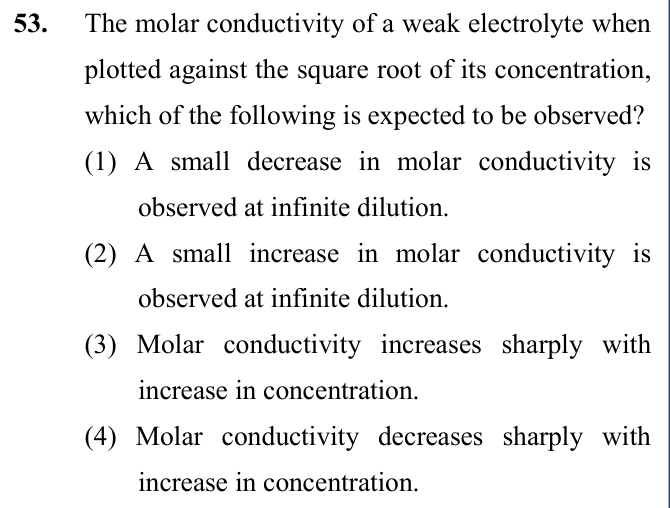
Candidate Response:
(1) (2) (3) (4)
⚡ OFFICIAL KEY: 4
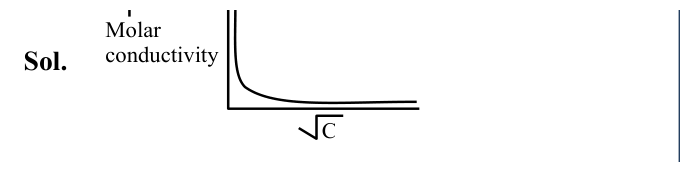
Step-by-Step Derivation
QUESTION 2
CHEMISTRY · Electrochemistry
SECTION A · MCQ (+4, -1)
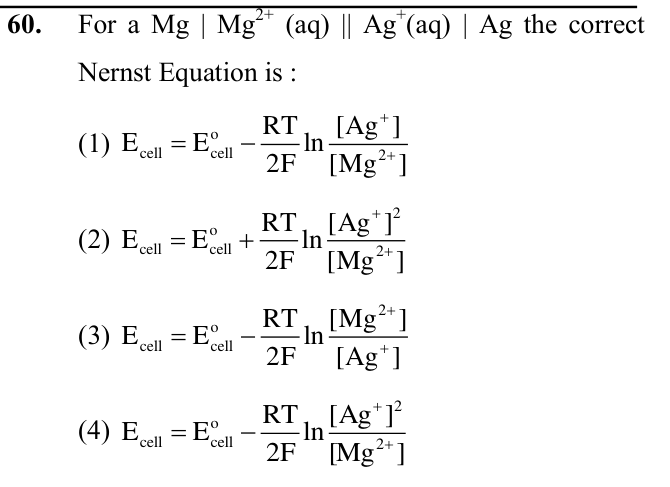
Candidate Response:
(1) (2) (3) (4)
⚡ OFFICIAL KEY: 2
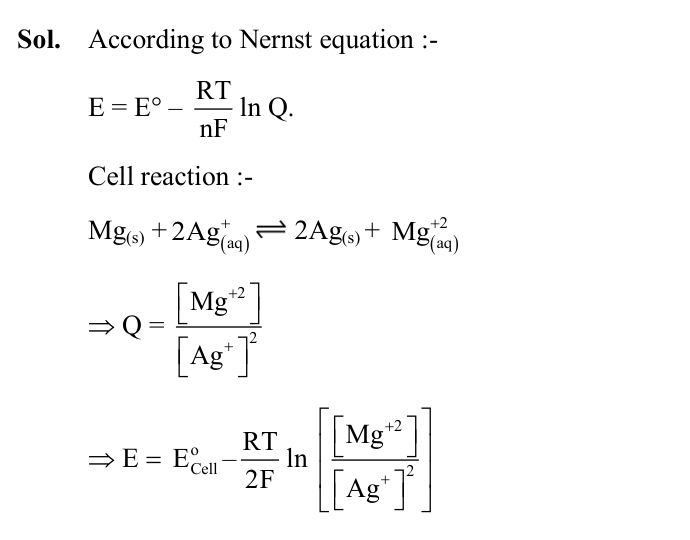
Step-by-Step Derivation
QUESTION 3
CHEMISTRY · Electrochemistry
SECTION A · MCQ (+4, -1)
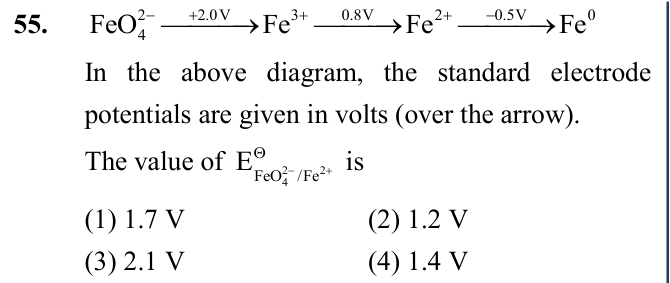
Candidate Response:
(1) (2) (3) (4)
⚡ OFFICIAL KEY: 1
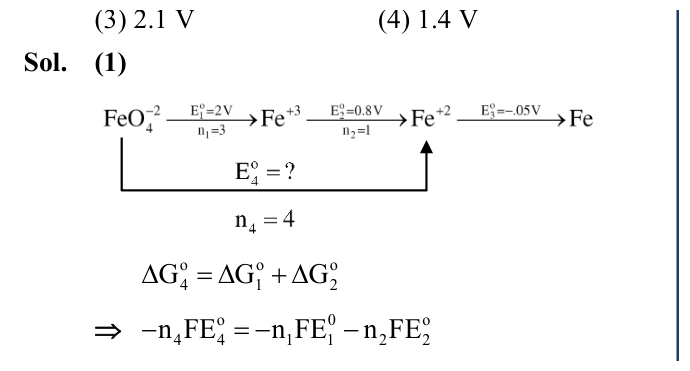
Step-by-Step Derivation
QUESTION 4
CHEMISTRY · Electrochemistry
SECTION B · NUMERICAL (+4, 0)
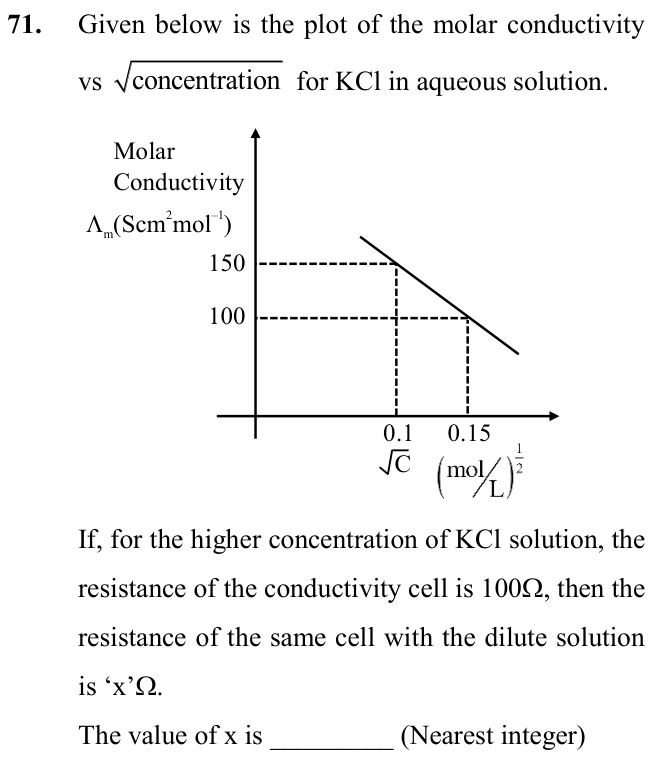
Numerical Value:
[ ]
⚡ OFFICIAL KEY: 150
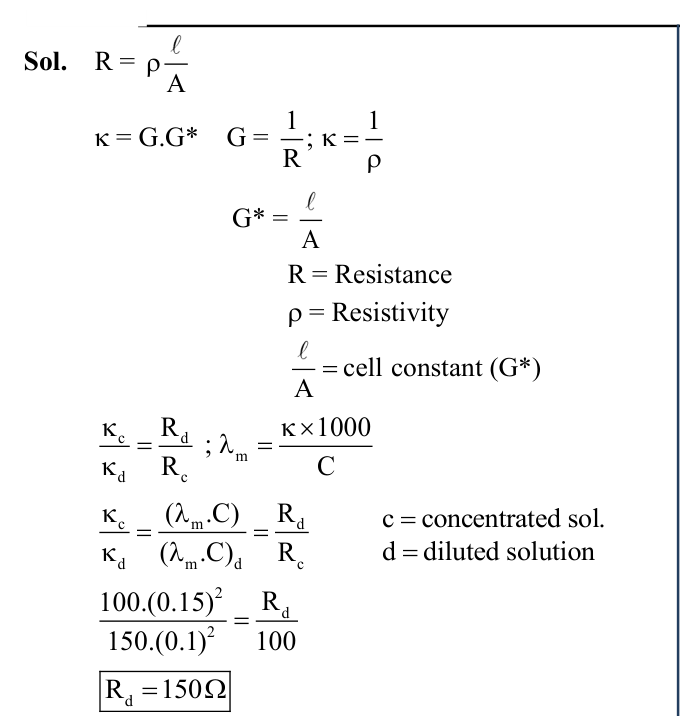
Step-by-Step Derivation
QUESTION 5
CHEMISTRY · Electrochemistry
SECTION A · MCQ (+4, -1)
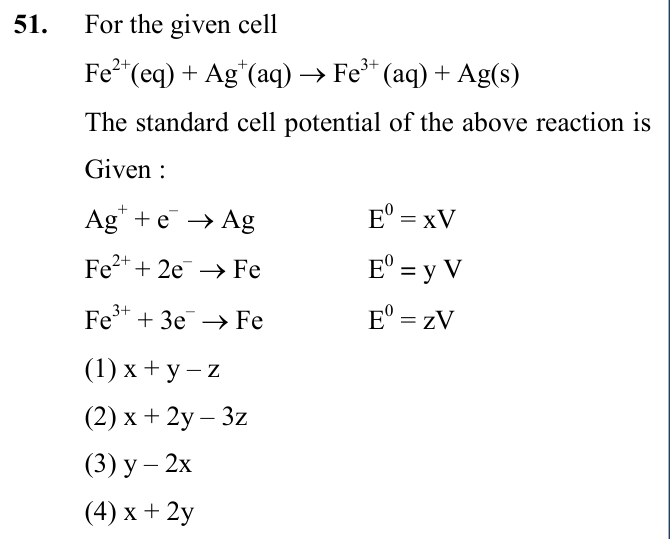
Candidate Response:
(1) (2) (3) (4)
⚡ OFFICIAL KEY: 2
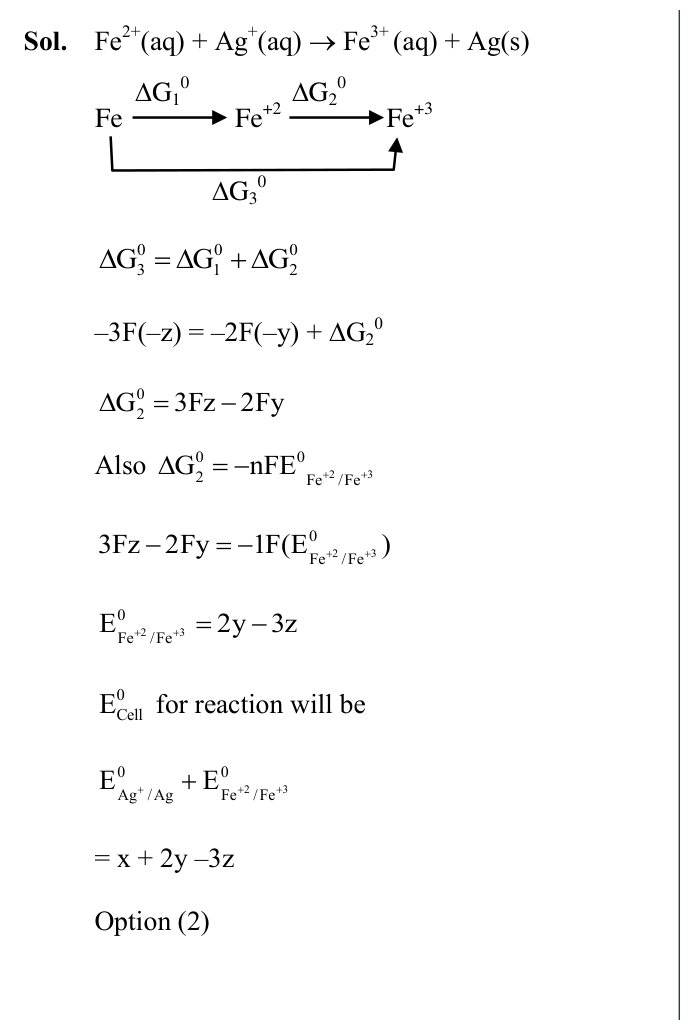
Step-by-Step Derivation
QUESTION 6
CHEMISTRY · Electrochemistry
SECTION A · MCQ (+4, -1)
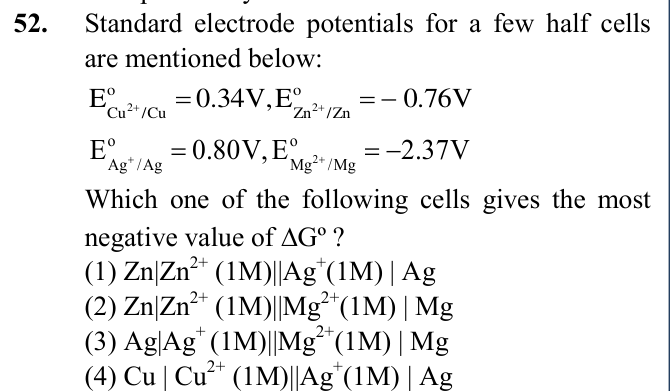
Candidate Response:
(1) (2) (3) (4)
⚡ OFFICIAL KEY: 1
Step-by-Step Derivation

QUESTION 7
CHEMISTRY · Electrochemistry
SECTION A · MCQ (+4, -1)
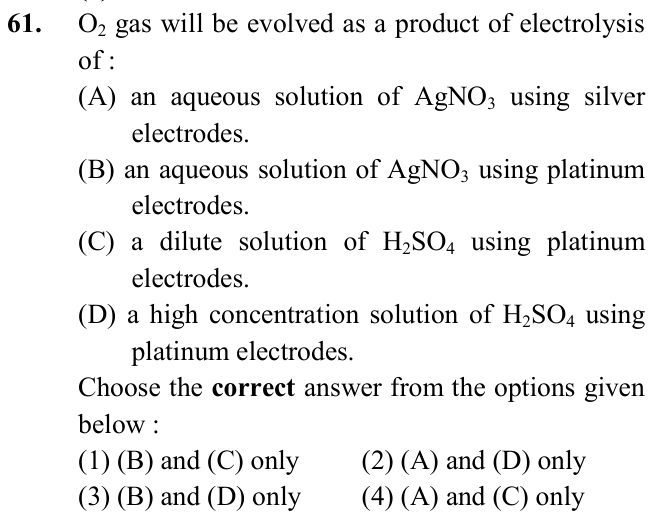
Candidate Response:
(1) (2) (3) (4)
⚡ OFFICIAL KEY: 1
Step-by-Step Derivation

QUESTION 8
CHEMISTRY · Electrochemistry
SECTION A · MCQ (+4, -1)
Why must the cations and anions of a salt bridge have nearly equal mobility (transport numbers)?
(1) To make the salt bridge chemically inert toward both electrodes
(2) To avoid net charge separation that would create a liquid junction potential
(3) To raise the temperature of the two half-cells
(4) To increase the total conductivity of the salt bridge
Candidate Response:
(1) (2) (3) (4)
⚡ OFFICIAL KEY: To avoid net charge separation that would create a liquid junction potential
Step-by-Step Derivation
If the salt-bridge ions migrated at unequal speeds, charge would separate across the junction, producing a liquid junction potential (LJP) that subtracts from the true cell EMF. Equal mobilities (e.g. u_K⁺ ≈ u_Cl⁻) prevent this.
QUESTION 9
CHEMISTRY · Electrochemistry
SECTION A · MCQ (+4, -1)
Why does galvanised (zinc-coated) iron resist rusting even when the coating is scratched?
(1) Zinc acts as a sacrificial anode and oxidises in place of iron
(2) Zinc raises the reduction potential of iron
(3) Zinc forms an impermeable oxide that seals the scratch
(4) Zinc converts iron into stainless steel
Candidate Response:
(1) (2) (3) (4)
⚡ OFFICIAL KEY: Zinc acts as a sacrificial anode and oxidises in place of iron
Step-by-Step Derivation
Zinc (E° = −0.76 V) is a stronger reducing agent than iron (E° = −0.44 V), so even where the iron is exposed, zinc oxidises preferentially as a sacrificial anode and protects the iron.
QUESTION 10
CHEMISTRY · Electrochemistry
SECTION A · MCQ (+4, -1)
A cell whose two electrodes are the same metal but whose electrolyte concentrations differ is called what?
(1) Concentration cell
(2) Electrolytic cell
(3) Fuel cell
(4) Daniell cell
Candidate Response:
(1) (2) (3) (4)
⚡ OFFICIAL KEY: Concentration cell
Step-by-Step Derivation
In a concentration cell, EMF arises from a concentration difference.
QUESTION 11
CHEMISTRY · Electrochemistry
SECTION A · MCQ (+4, -1)
In a hydrogen-oxygen fuel cell, which gas is reduced at the cathode?
(1) Nitrogen
(2) Hydrogen
(3) Carbon monoxide
(4) Oxygen
Candidate Response:
(1) (2) (3) (4)
⚡ OFFICIAL KEY: Oxygen
Step-by-Step Derivation
O2 is reduced to water at the cathode; H2 is oxidised at the anode.
QUESTION 12
CHEMISTRY · Electrochemistry
SECTION A · MCQ (+4, -1)
Why must the resistance of an electrolyte solution be measured with alternating current (AC) rather than direct current (DC)?
(1) DC is absorbed by the ions in solution
(2) DC is too weak to pass through an ionic solution
(3) DC changes the cell constant during measurement
(4) DC causes electrolysis and electrode polarisation
Candidate Response:
(1) (2) (3) (4)
⚡ OFFICIAL KEY: DC causes electrolysis and electrode polarisation
Step-by-Step Derivation
Direct current would electrolyse the solution and polarise the electrodes, changing the measured resistance. AC reverses the current rapidly (audio frequency), preventing chemical change.
QUESTION 13
CHEMISTRY · Electrochemistry
SECTION A · MCQ (+4, -1)
During electrolysis of aqueous NaCl, which gas is liberated at the anode?
(1) Hydrogen
(2) Chlorine
(3) Oxygen
(4) Nitrogen
Candidate Response:
(1) (2) (3) (4)
⚡ OFFICIAL KEY: Chlorine
Step-by-Step Derivation
The high overpotential of oxygen favours Cl⁻ discharge to Cl2 at the anode.
QUESTION 14
CHEMISTRY · Electrochemistry
SECTION A · MCQ (+4, -1)
A cell's EMF increases as the temperature rises. What does this imply about the entropy change ΔS of the cell reaction?
(1) ΔS cannot be determined from temperature alone
(2) ΔS is negative
(3) ΔS is positive
(4) ΔS is zero
Candidate Response:
(1) (2) (3) (4)
⚡ OFFICIAL KEY: ΔS is positive
Step-by-Step Derivation
ΔS = nF(∂E/∂T)_p, so a positive temperature coefficient of EMF means a positive entropy change for the cell reaction.
QUESTION 15
CHEMISTRY · Electrochemistry
SECTION A · MCQ (+4, -1)
How many coulombs are required to deposit one mole of Al³⁺ as aluminium metal? (F = 96500 C mol⁻¹)
(1) 96500 C
(2) 193000 C
(3) 289500 C
(4) 48250 C
Candidate Response:
(1) (2) (3) (4)
⚡ OFFICIAL KEY: 289500 C
Step-by-Step Derivation
Al³⁺ + 3e⁻ → Al requires 3 moles of electrons per mole of aluminium, i.e. 3 F = 3 × 96500 = 289500 C.
QUESTION 16
CHEMISTRY · Electrochemistry
SECTION A · MCQ (+4, -1)
A lead-acid storage battery is which type of cell?
(1) Concentration cell
(2) Secondary (rechargeable) cell
(3) Fuel cell
(4) Primary cell
Candidate Response:
(1) (2) (3) (4)
⚡ OFFICIAL KEY: Secondary (rechargeable) cell
Step-by-Step Derivation
Lead-acid batteries are rechargeable, so they are secondary cells.
QUESTION 17
CHEMISTRY · Electrochemistry
SECTION A · MCQ (+4, -1)
The Gibbs free energy change (ΔG) of a galvanic cell is related to its EMF (E) by which expression?
(1) ΔG = −E/nF
(2) ΔG = nFE
(3) ΔG = nF/E
(4) ΔG = −nFE
Candidate Response:
(1) (2) (3) (4)
⚡ OFFICIAL KEY: ΔG = −nFE
Step-by-Step Derivation
ΔG = −nFE links cell potential to maximum useful work.
QUESTION 18
CHEMISTRY · Electrochemistry
SECTION A · MCQ (+4, -1)
A galvanic cell has E_cell = +0.50 V. What is the sign of ΔG for the cell reaction, and why?
(1) Negative, because ΔG = +nFE
(2) Zero, because the cell is at equilibrium
(3) Positive, because E is positive
(4) Negative, because ΔG = −nFE
Candidate Response:
(1) (2) (3) (4)
⚡ OFFICIAL KEY: Negative, because ΔG = −nFE
Step-by-Step Derivation
ΔG = −nFE. With E_cell positive, ΔG is negative, so the reaction is spontaneous in the forward (discharge) direction.
QUESTION 19
CHEMISTRY · Electrochemistry
SECTION A · MCQ (+4, -1)
In a Daniell cell, which metal is oxidised at the anode?
(1) Copper
(2) Zinc
(3) Hydrogen
(4) Silver
Candidate Response:
(1) (2) (3) (4)
⚡ OFFICIAL KEY: Zinc
Step-by-Step Derivation
Zn is oxidised to Zn²⁺ at the anode of a Daniell cell.
QUESTION 20
CHEMISTRY · Electrochemistry
SECTION A · MCQ (+4, -1)
One faraday of charge is equal to how many coulombs?
(1) 9.65 C
(2) 9650 C
(3) 96500 C
(4) 965 C
Candidate Response:
(1) (2) (3) (4)
⚡ OFFICIAL KEY: 96500 C
Step-by-Step Derivation
1 F ≈ 96500 C, the charge on one mole of electrons.
QUESTION 21
CHEMISTRY · Electrochemistry
SECTION A · MCQ (+4, -1)
When a galvanic cell has completely discharged and reached equilibrium, which statement is correct?
(1) E_cell = 0 but E°cell remains a fixed, non-zero constant
(2) E_cell becomes negative
(3) E°cell = 0 but E_cell remains positive
(4) Both E_cell and E°cell become zero
Candidate Response:
(1) (2) (3) (4)
⚡ OFFICIAL KEY: E_cell = 0 but E°cell remains a fixed, non-zero constant
Step-by-Step Derivation
At equilibrium Q = Kc, so the Nernst term cancels E° and E_cell falls to zero. E°cell is an invariant constant fixed by standard reduction potentials and does NOT change.
QUESTION 22
CHEMISTRY · Electrochemistry
SECTION A · MCQ (+4, -1)
How is the limiting molar conductivity Λ°m of the weak acid CH₃COOH determined?
(1) By direct measurement at infinite dilution
(2) Λ°m(CH₃COONa) + Λ°m(HCl) − Λ°m(NaCl)
(3) Λ°m(CH₃COONa) − Λ°m(HCl) + Λ°m(NaCl)
(4) Λ°m(CH₃COONa) × Λ°m(HCl) / Λ°m(NaCl)
Candidate Response:
(1) (2) (3) (4)
⚡ OFFICIAL KEY: Λ°m(CH₃COONa) + Λ°m(HCl) − Λ°m(NaCl)
Step-by-Step Derivation
A weak acid never fully dissociates, so its Λ°m cannot be measured directly. Kohlrausch's law of independent migration lets us obtain it from strong electrolytes: Λ°m(CH₃COOH) = Λ°m(CH₃COONa) + Λ°m(HCl) − Λ°m(NaCl).
QUESTION 23
CHEMISTRY · Electrochemistry
SECTION A · MCQ (+4, -1)
The ratio of the distance between electrodes to the cross-sectional area of the electrodes is called what?
(1) Conductance
(2) Molar conductivity
(3) Resistivity
(4) Cell constant
Candidate Response:
(1) (2) (3) (4)
⚡ OFFICIAL KEY: Cell constant
Step-by-Step Derivation
Cell constant = l/A, used to convert conductance to conductivity.
QUESTION 24
CHEMISTRY · Electrochemistry
SECTION A · MCQ (+4, -1)
The primary function of the salt bridge in a galvanic cell is to do what?
(1) Maintain electrical neutrality of the two half-cells
(2) Increase the cell EMF
(3) Catalyse the redox reaction
(4) Transfer electrons between electrodes
Candidate Response:
(1) (2) (3) (4)
⚡ OFFICIAL KEY: Maintain electrical neutrality of the two half-cells
Step-by-Step Derivation
The salt bridge completes the circuit by balancing ion charges.
QUESTION 25
CHEMISTRY · Electrochemistry
SECTION A · MCQ (+4, -1)
In a working Daniell cell, in which direction do electrons flow through the external wire?
(1) From the salt bridge to the zinc electrode
(2) From the copper electrode to the zinc electrode
(3) From the CuSO4 solution to the ZnSO4 solution
(4) From the zinc electrode to the copper electrode
Candidate Response:
(1) (2) (3) (4)
⚡ OFFICIAL KEY: From the zinc electrode to the copper electrode
Step-by-Step Derivation
Zinc is oxidised at the anode (Zn → Zn²⁺ + 2e⁻), releasing electrons that travel through the external wire to the copper cathode, where Cu²⁺ is reduced. Electrons therefore flow Zn → Cu.