
⚡ OFFICIAL NTA ASSESSMENT GENERATOR & WORD (.DOCX) EXPORTER
Thermodynamics · Practice Worksheet
JEE Main Physics · Curated Assessment Set Print directly or export as a beautifully formatted Microsoft Word document with embedded 180-DPI mathematical prompt clips and step-by-step derivations.
EDUPROD JEE MAIN TEST SERIES · NTA PATTERN
Thermodynamics · Practice Worksheet
JEE Main Physics · Curated Assessment Set · Assessment Code: JEE-101
Total Marks: 80
Marking: +4 / -1 (Sec A) · +4 / 0 (Sec B)
QUESTION 1
PHYSICS · Thermodynamics
SECTION A · MCQ (+4, -1)
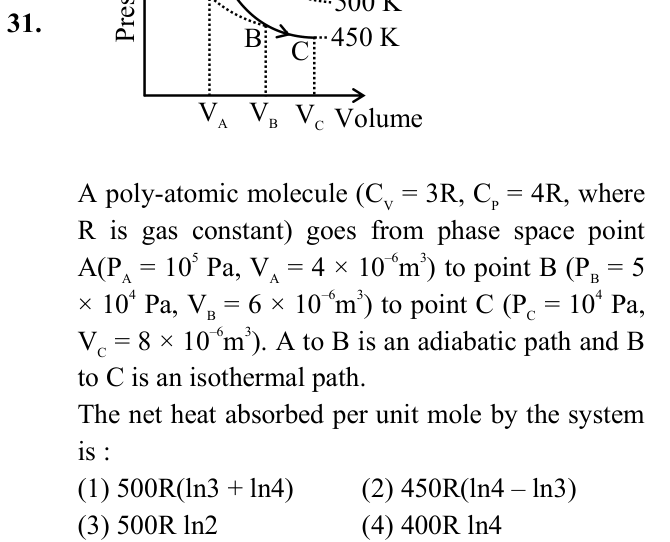
Candidate Response:
(1) (2) (3) (4)
QUESTION 2
PHYSICS · Thermodynamics
SECTION A · MCQ (+4, -1)
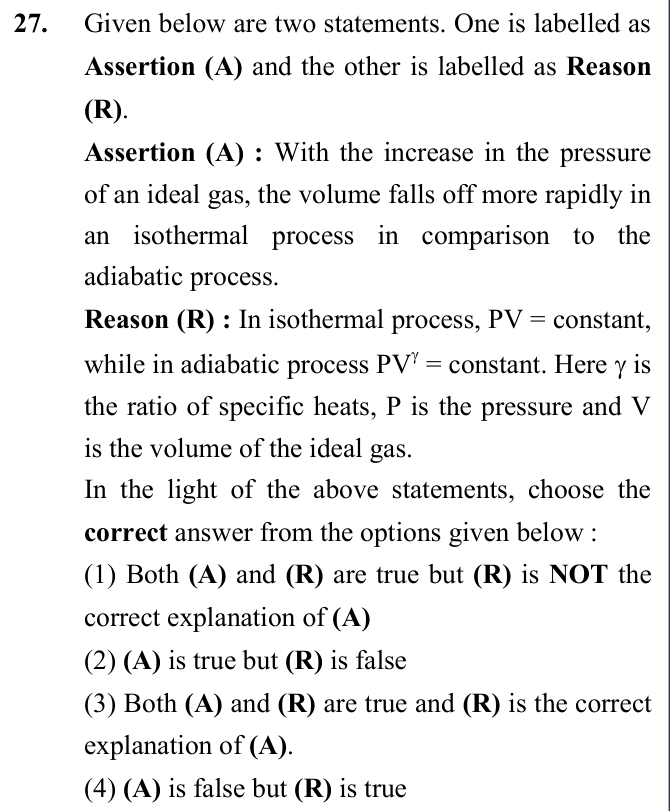
Candidate Response:
(1) (2) (3) (4)
QUESTION 3
PHYSICS · Thermodynamics
SECTION A · MCQ (+4, -1)
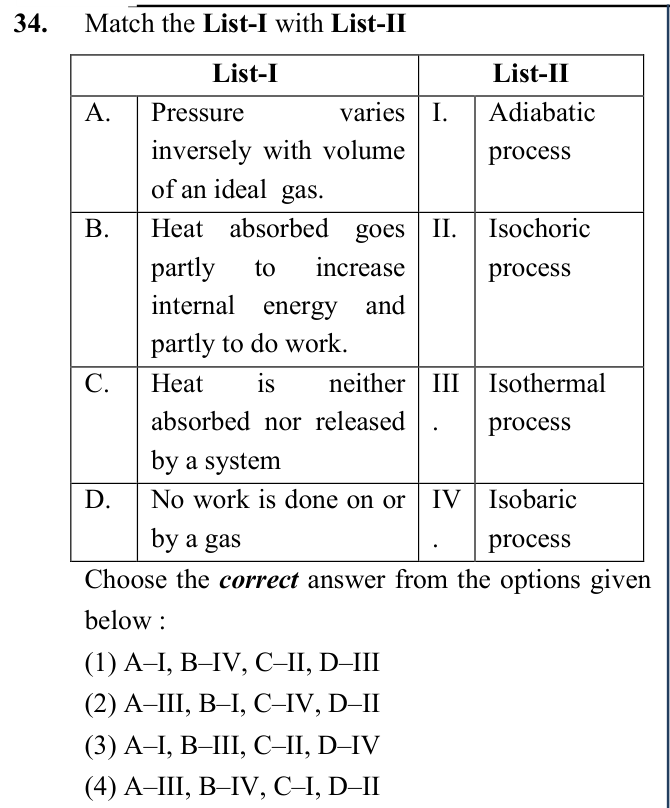
Candidate Response:
(1) (2) (3) (4)
QUESTION 4
PHYSICS · Thermodynamics
SECTION A · MCQ (+4, -1)
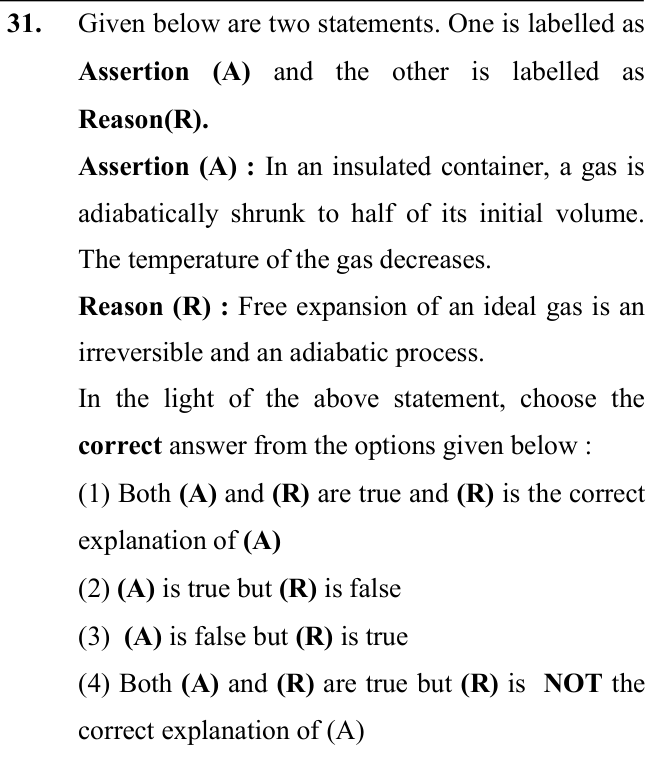
Candidate Response:
(1) (2) (3) (4)
QUESTION 5
PHYSICS · Thermodynamics
SECTION B · NUMERICAL (+4, 0)
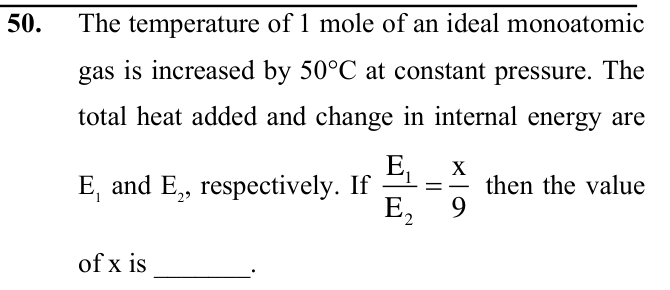
Numerical Value:
[ ]
QUESTION 6
PHYSICS · Thermodynamics
SECTION A · MCQ (+4, -1)
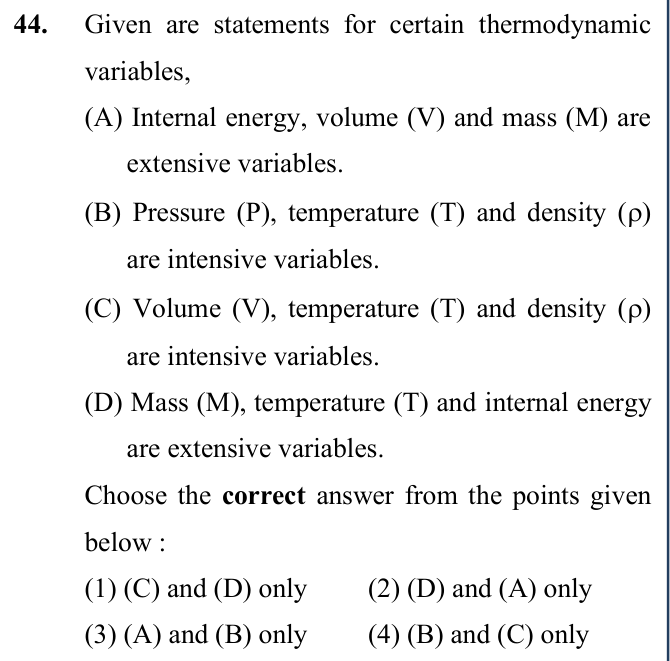
Candidate Response:
(1) (2) (3) (4)
QUESTION 7
PHYSICS · Thermodynamics
SECTION A · MCQ (+4, -1)
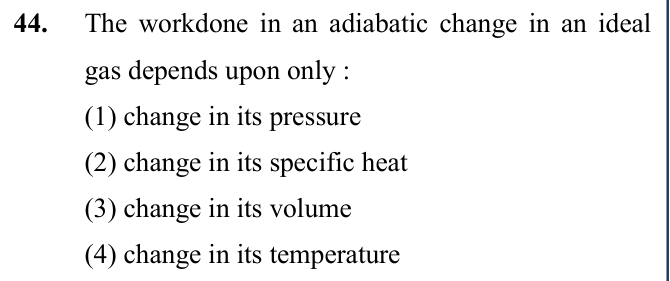
Candidate Response:
(1) (2) (3) (4)
QUESTION 8
PHYSICS · Thermodynamics
SECTION A · MCQ (+4, -1)
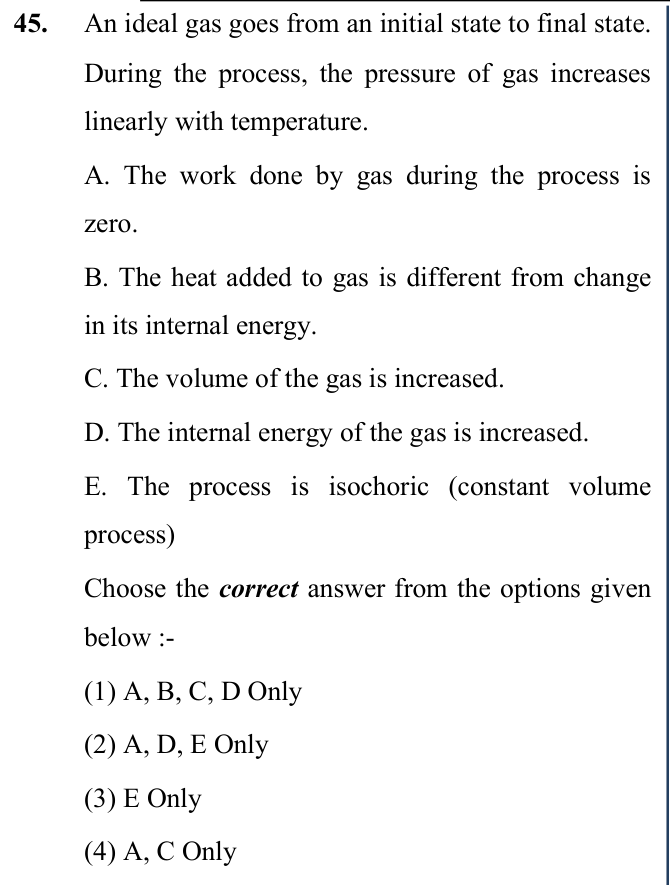
Candidate Response:
(1) (2) (3) (4)
QUESTION 9
PHYSICS · Thermodynamics
SECTION A · MCQ (+4, -1)
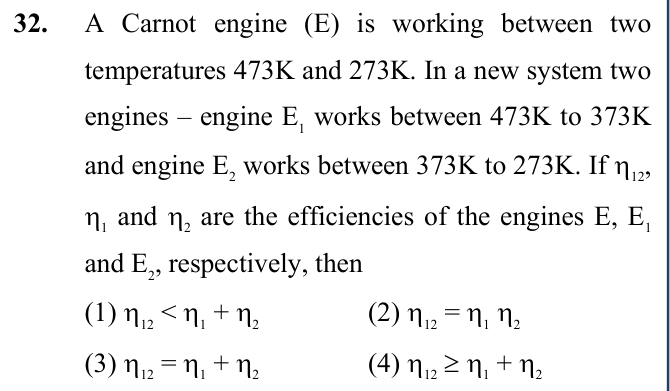
Candidate Response:
(1) (2) (3) (4)
QUESTION 10
PHYSICS · Thermodynamics
SECTION A · MCQ (+4, -1)
A temperature of 27 °C is equal to how many kelvin?
(1) 27 K
(2) 327 K
(3) 246 K
(4) 300 K
Candidate Response:
(1) (2) (3) (4)
QUESTION 11
PHYSICS · Thermodynamics
SECTION A · MCQ (+4, -1)
The maximum possible efficiency of a heat engine operating between two reservoirs is always less than
(1) 50%
(2) 100%
(3) 200%
(4) 0%
Candidate Response:
(1) (2) (3) (4)
QUESTION 12
PHYSICS · Thermodynamics
SECTION A · MCQ (+4, -1)
For a reversible process, the infinitesimal entropy change is defined as:
(1) dS = dQ_rev x T
(2) dS = dQ_rev - T
(3) dS = T / dQ_rev
(4) dS = dQ_rev / T
Candidate Response:
(1) (2) (3) (4)
QUESTION 13
PHYSICS · Thermodynamics
SECTION A · MCQ (+4, -1)
Mayer's relation for an ideal gas states that:
(1) C_p - C_v = 0
(2) C_p + C_v = R
(3) C_p - C_v = R
(4) C_p / C_v = R
Candidate Response:
(1) (2) (3) (4)
QUESTION 14
PHYSICS · Thermodynamics
SECTION A · MCQ (+4, -1)
When 80 J of heat is removed from a system and 20 J of work is done on it, the change in internal energy is
(1) 60 J
(2) -100 J
(3) 100 J
(4) -60 J
Candidate Response:
(1) (2) (3) (4)
QUESTION 15
PHYSICS · Thermodynamics
SECTION A · MCQ (+4, -1)
The mechanical equivalent of heat (Joule's constant) is approximately
(1) 9.8 J/cal
(2) 4.186 J/cal
(3) 1 J/cal
(4) 4.186 cal/J
Candidate Response:
(1) (2) (3) (4)
QUESTION 16
PHYSICS · Thermodynamics
SECTION A · MCQ (+4, -1)
The Zeroth Law of Thermodynamics states that:
(1) If two systems are each in thermal equilibrium with a third, then they are in thermal equilibrium with each other.
(2) The internal energy of a cyclic process is always positive.
(3) Work done in an adiabatic process is zero.
(4) Heat cannot flow from a cold body to a hot body under any circumstance.
Candidate Response:
(1) (2) (3) (4)
QUESTION 17
PHYSICS · Thermodynamics
SECTION A · MCQ (+4, -1)
A Carnot engine operates between a hot reservoir at 500 K and a cold reservoir at 300 K. Its efficiency is:
(1) 40%
(2) 30%
(3) 60%
(4) 100%
Candidate Response:
(1) (2) (3) (4)
QUESTION 18
PHYSICS · Thermodynamics
SECTION A · MCQ (+4, -1)
A gas absorbs 300 J of heat and does 100 J of work on its surroundings. The change in internal energy is:
(1) 100 J
(2) 400 J
(3) 300 J
(4) 200 J
Candidate Response:
(1) (2) (3) (4)
QUESTION 19
PHYSICS · Thermodynamics
SECTION A · MCQ (+4, -1)
For a monatomic ideal gas, C_v = 12.5 J mol⁻¹ K⁻¹. Taking R = 8.3 J mol⁻¹ K⁻¹, the value of C_p is:
(1) 4.2 J mol⁻¹ K⁻¹
(2) 20.8 J mol⁻¹ K⁻¹
(3) 12.5 J mol⁻¹ K⁻¹
(4) 8.3 J mol⁻¹ K⁻¹
Candidate Response:
(1) (2) (3) (4)
QUESTION 20
PHYSICS · Thermodynamics
SECTION A · MCQ (+4, -1)
Which of the following is a state function (depends only on the state, not the path)?
(1) Both heat and work
(2) Heat Q
(3) Internal energy U
(4) Work W
Candidate Response:
(1) (2) (3) (4)