
⚡ OFFICIAL NTA ASSESSMENT GENERATOR & WORD (.DOCX) EXPORTER
Current Electricity · Practice Worksheet
JEE Main Physics · Curated Assessment Set Print directly or export as a beautifully formatted Microsoft Word document with embedded 180-DPI mathematical prompt clips and step-by-step derivations.
EDUPROD JEE MAIN TEST SERIES · NTA PATTERN
Current Electricity · Practice Worksheet
JEE Main Physics · Curated Assessment Set · Assessment Code: JEE-101
Total Marks: 200
Marking: +4 / -1 (Sec A) · +4 / 0 (Sec B)
QUESTION 1
PHYSICS · Current Electricity
SECTION B · NUMERICAL (+4, 0)

Numerical Value:
[ ]
⚡ OFFICIAL KEY: 2
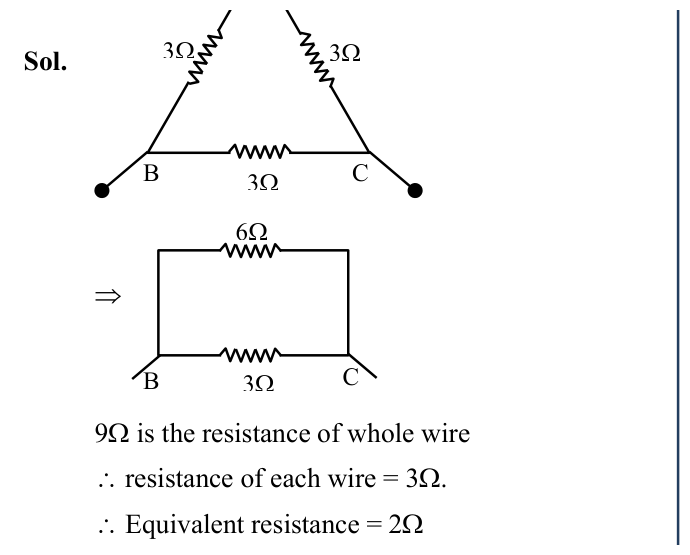
Step-by-Step Derivation
QUESTION 2
PHYSICS · Current Electricity
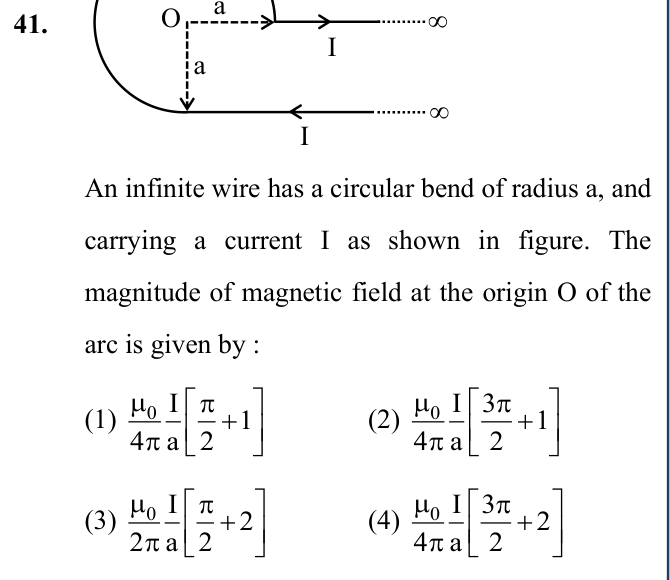
SECTION A · MCQ (+4, -1)
Candidate Response:
(1) (2) (3) (4)
⚡ OFFICIAL KEY: 2
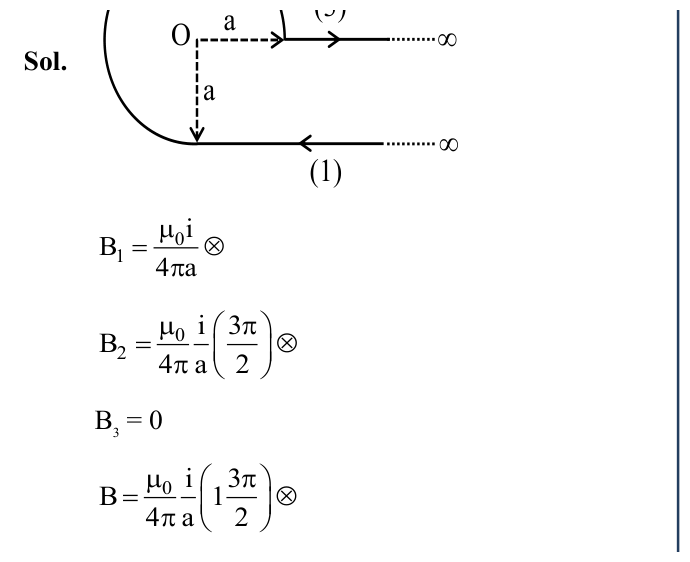
Step-by-Step Derivation
QUESTION 3
PHYSICS · Current Electricity
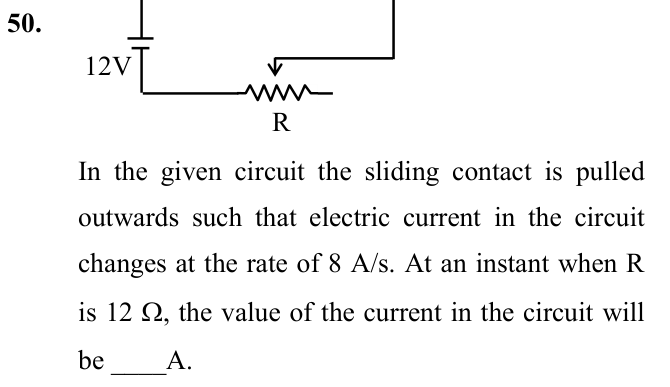
SECTION B · NUMERICAL (+4, 0)
Numerical Value:
[ ]
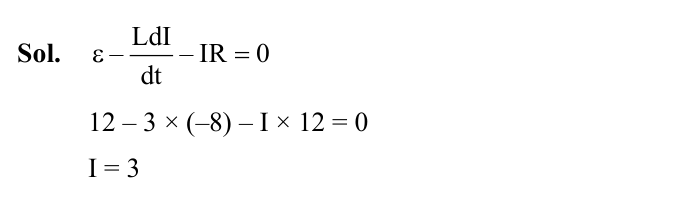
⚡ OFFICIAL KEY: 3
Step-by-Step Derivation
QUESTION 4
PHYSICS · Current Electricity
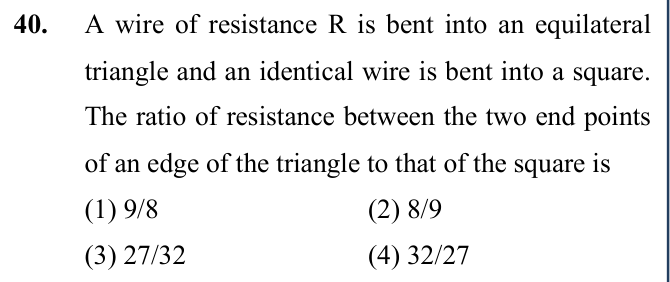
SECTION A · MCQ (+4, -1)
Candidate Response:
(1) (2) (3) (4)
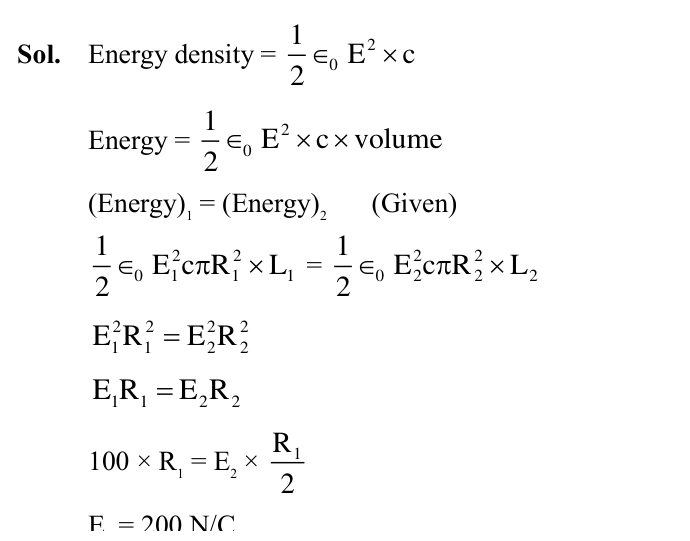
⚡ OFFICIAL KEY: 4
Step-by-Step Derivation
QUESTION 5
PHYSICS · Current Electricity
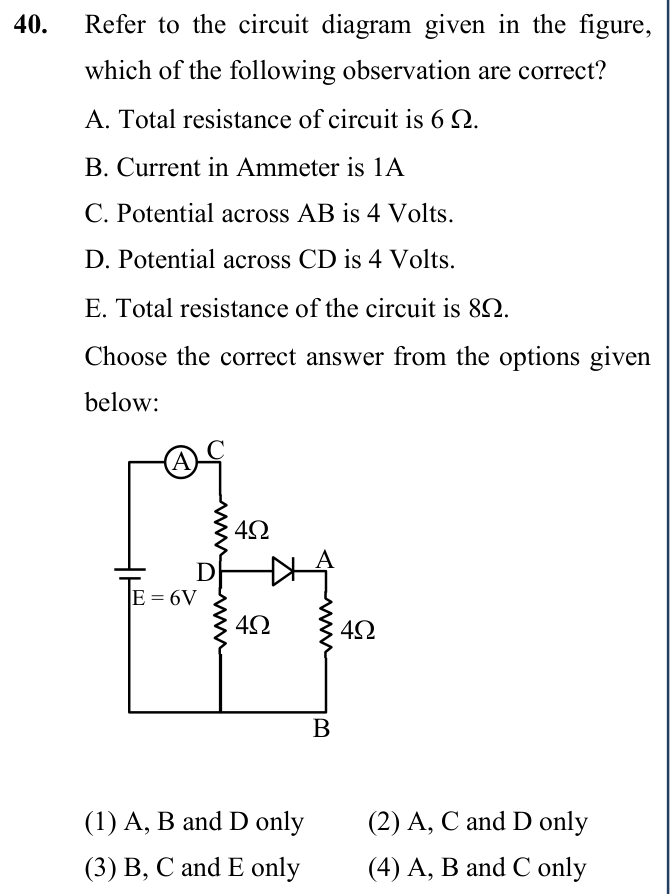
SECTION A · MCQ (+4, -1)
Candidate Response:
(1) (2) (3) (4)
⚡ OFFICIAL KEY: 1
Step-by-Step Derivation
QUESTION 6
PHYSICS · Current Electricity
SECTION A · MCQ (+4, -1)
Candidate Response:
(1) (2) (3) (4)
⚡ OFFICIAL KEY: 1
Step-by-Step Derivation

QUESTION 7
PHYSICS · Current Electricity
SECTION A · MCQ (+4, -1)
Candidate Response:
(1) (2) (3) (4)
⚡ OFFICIAL KEY: 2
Step-by-Step Derivation
QUESTION 8
PHYSICS · Current Electricity
SECTION A · MCQ (+4, -1)
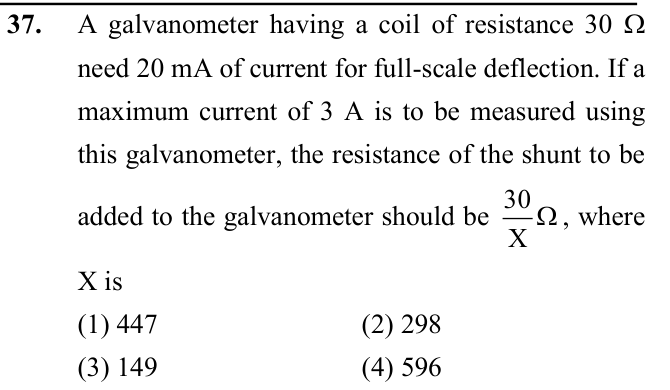
Candidate Response:
(1) (2) (3) (4)
⚡ OFFICIAL KEY: 3
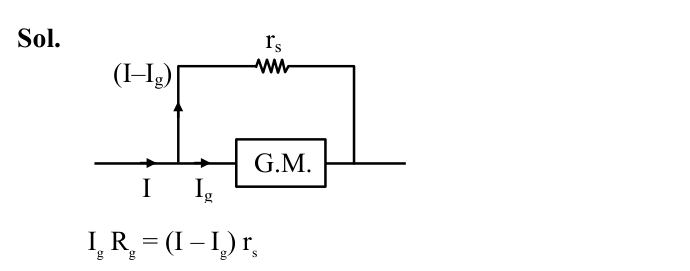
Step-by-Step Derivation
QUESTION 9
PHYSICS · Current Electricity
SECTION A · MCQ (+4, -1)
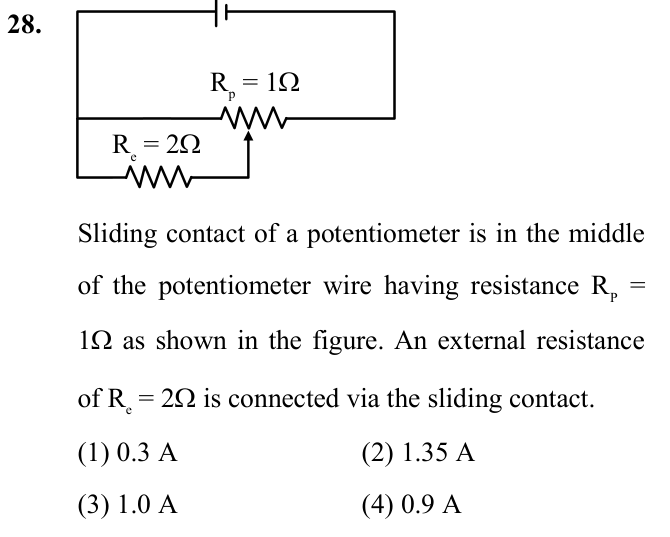
Candidate Response:
(1) (2) (3) (4)
⚡ OFFICIAL KEY: 3
Step-by-Step Derivation

QUESTION 10
PHYSICS · Current Electricity
SECTION A · MCQ (+4, -1)
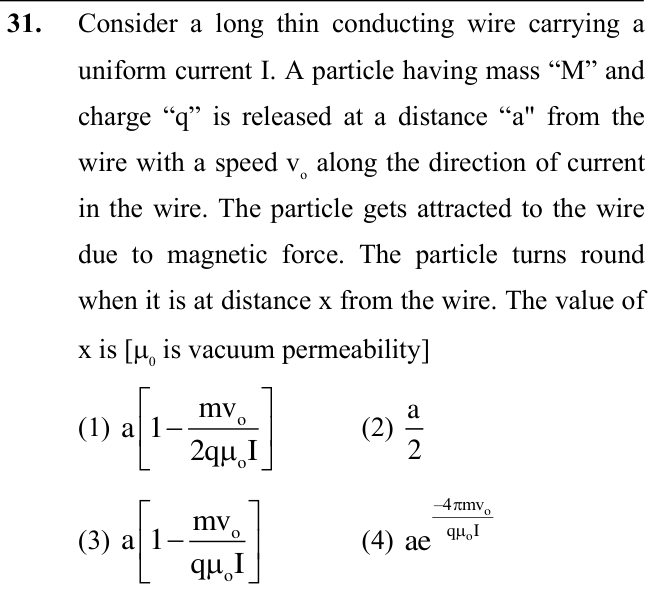
Candidate Response:
(1) (2) (3) (4)
⚡ OFFICIAL KEY: 4
Step-by-Step Derivation

QUESTION 11
PHYSICS · Current Electricity
SECTION A · MCQ (+4, -1)
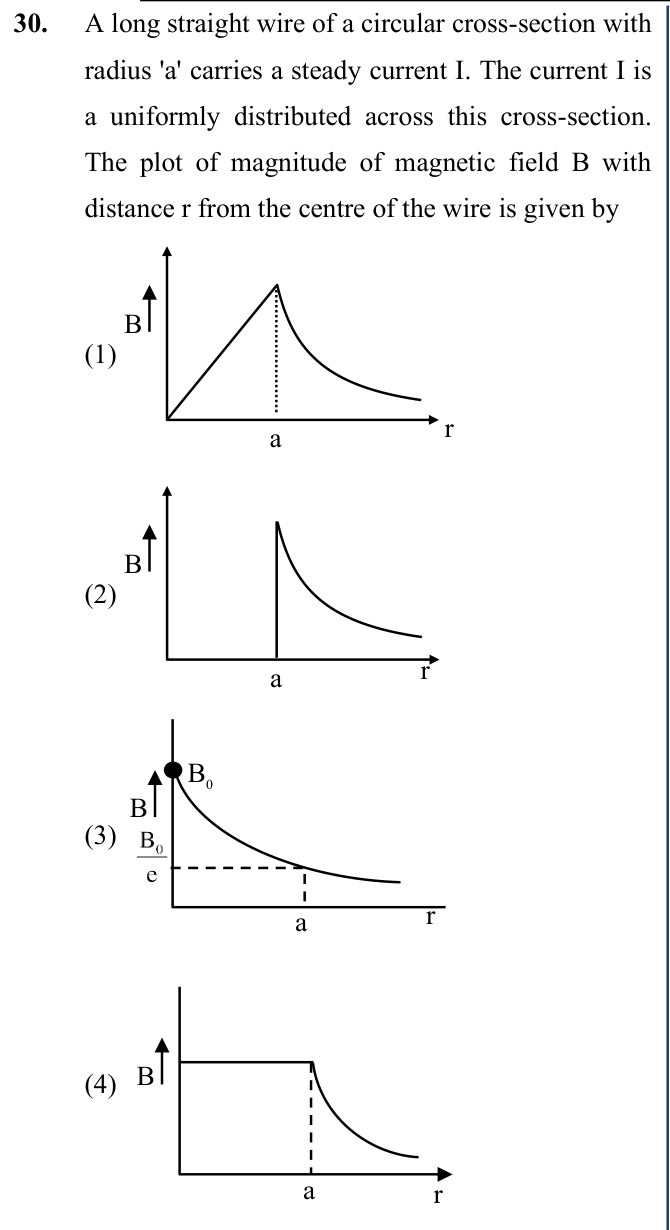
Candidate Response:
(1) (2) (3) (4)
⚡ OFFICIAL KEY: 1
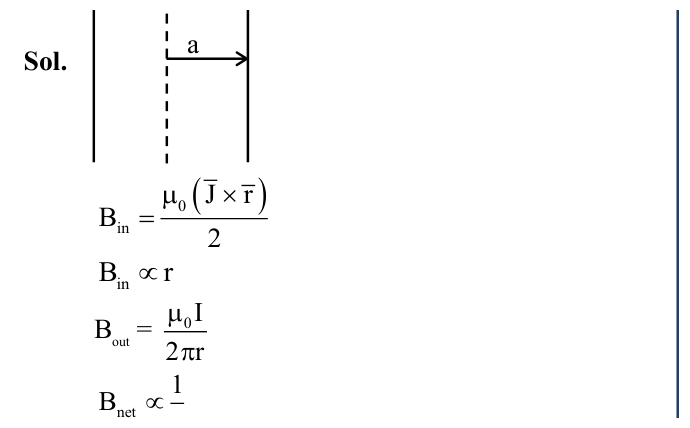
Step-by-Step Derivation
QUESTION 12
PHYSICS · Current Electricity
SECTION A · MCQ (+4, -1)
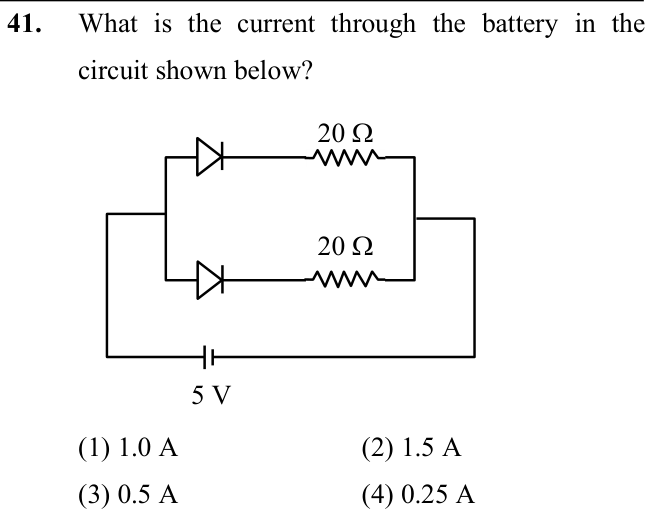
Candidate Response:
(1) (2) (3) (4)
⚡ OFFICIAL KEY: 3
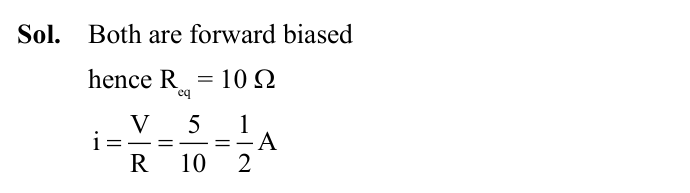
Step-by-Step Derivation
QUESTION 13
PHYSICS · Current Electricity
SECTION A · MCQ (+4, -1)
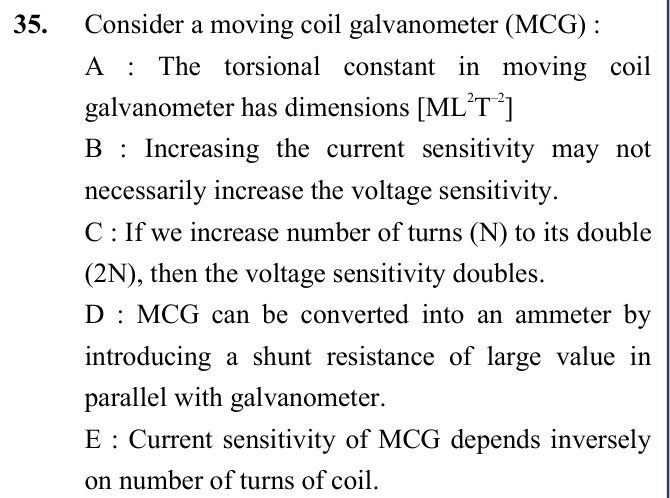
Candidate Response:
(1) (2) (3) (4)
⚡ OFFICIAL KEY: 1
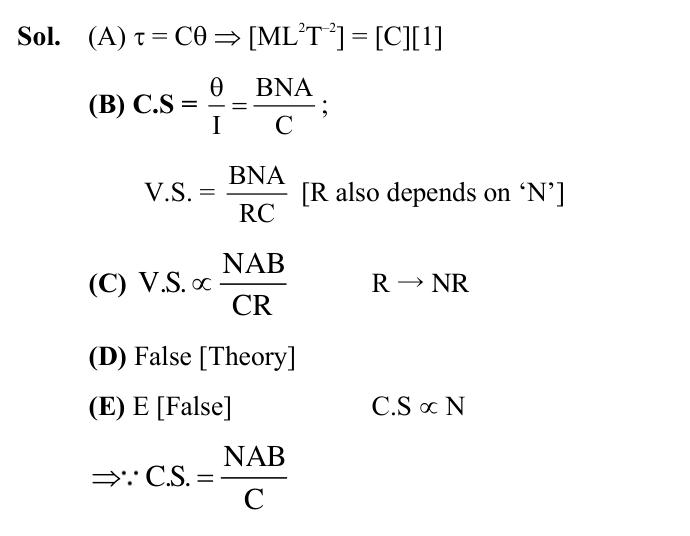
Step-by-Step Derivation
QUESTION 14
PHYSICS · Current Electricity
SECTION A · MCQ (+4, -1)
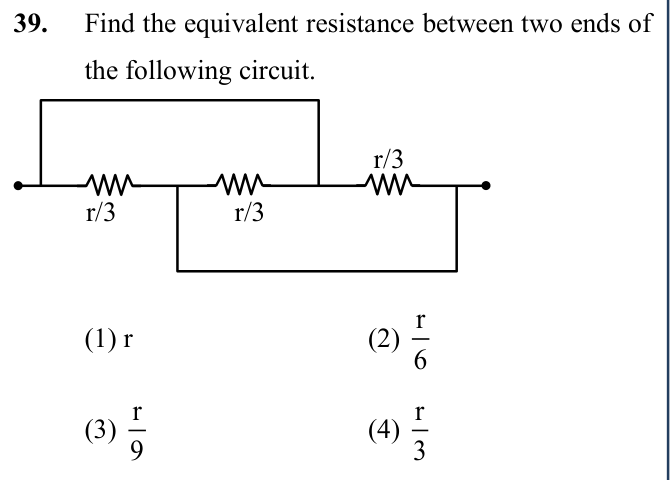
Candidate Response:
(1) (2) (3) (4)
⚡ OFFICIAL KEY: 3
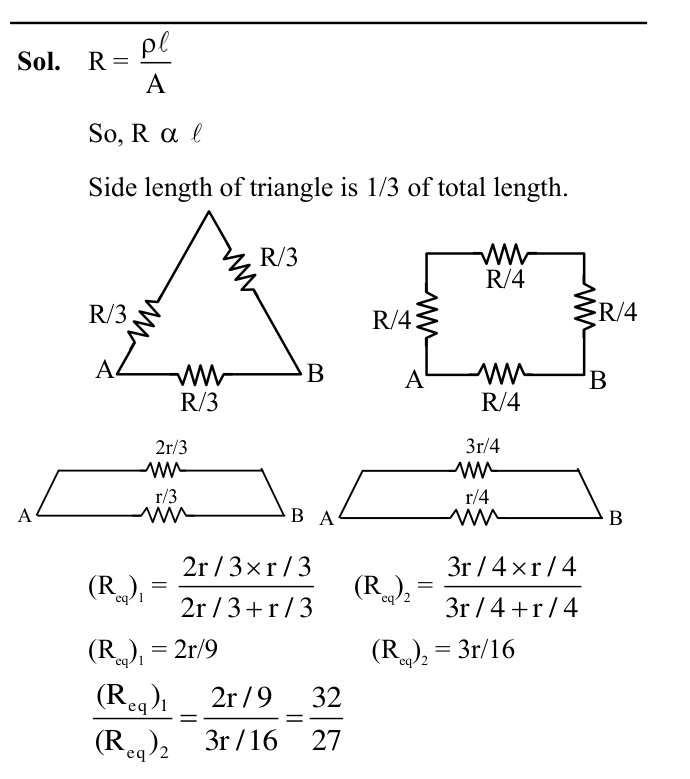
Step-by-Step Derivation
QUESTION 15
PHYSICS · Current Electricity
SECTION B · NUMERICAL (+4, 0)
Numerical Value:
[ ]
⚡ OFFICIAL KEY: 1
Step-by-Step Derivation
QUESTION 16
PHYSICS · Current Electricity
SECTION A · MCQ (+4, -1)
Candidate Response:
(1) (2) (3) (4)
⚡ OFFICIAL KEY: 2
Step-by-Step Derivation
QUESTION 17
PHYSICS · Current Electricity
SECTION B · NUMERICAL (+4, 0)
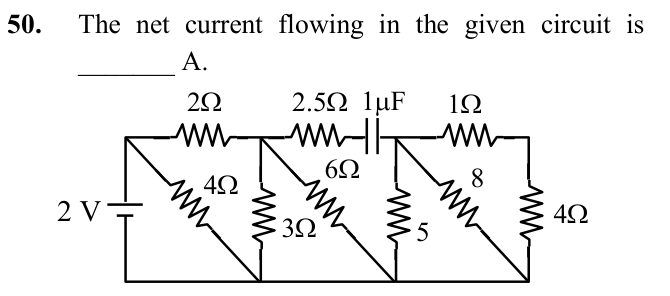
Numerical Value:
[ ]
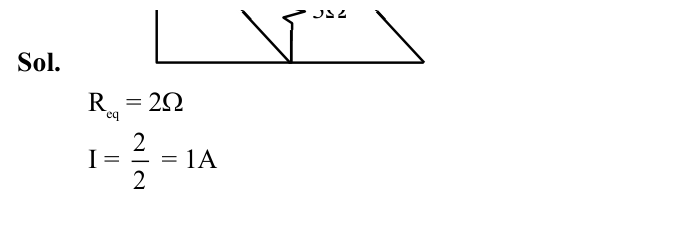
⚡ OFFICIAL KEY: 1
Step-by-Step Derivation
QUESTION 18
PHYSICS · Current Electricity
SECTION A · MCQ (+4, -1)
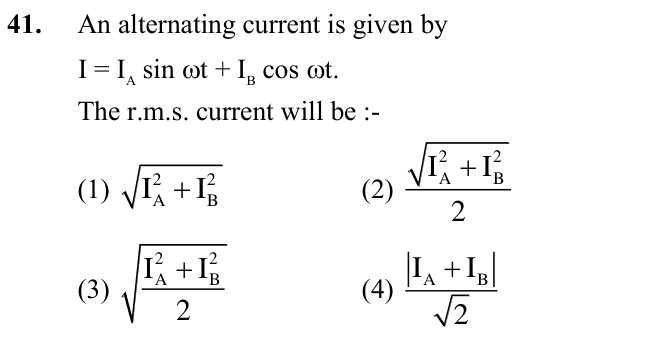
Candidate Response:
(1) (2) (3) (4)
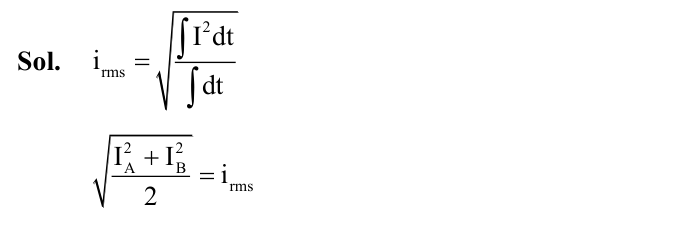
⚡ OFFICIAL KEY: 3
Step-by-Step Derivation
QUESTION 19
PHYSICS · Current Electricity
SECTION A · MCQ (+4, -1)
Candidate Response:
(1) (2) (3) (4)
⚡ OFFICIAL KEY: 4
Step-by-Step Derivation
QUESTION 20
PHYSICS · Current Electricity
SECTION B · NUMERICAL (+4, 0)
Numerical Value:
[ ]
⚡ OFFICIAL KEY: 8
Step-by-Step Derivation
QUESTION 21
PHYSICS · Current Electricity
SECTION A · MCQ (+4, -1)
Two cells of emf 1.5 V each are connected in series with the same polarity (aiding). The equivalent emf is:
(1) 3.0 V
(2) 1.5 V
(3) 0 V
(4) 0.75 V
Candidate Response:
(1) (2) (3) (4)
⚡ OFFICIAL KEY: 3.0 V
Step-by-Step Derivation
Aiding series cells add their emfs: ε_eq = ε₁ + ε₂ = 1.5 + 1.5 = 3.0 V. Their internal resistances also add.
QUESTION 22
PHYSICS · Current Electricity
SECTION A · MCQ (+4, -1)
How does the drift velocity v_d of electrons in a conductor compare with their random thermal speed?
(1) Both are of the same order of magnitude.
(2) Drift velocity (~10⁻⁴ m/s) is much smaller than thermal speed (~10⁵ m/s).
(3) Drift velocity is much larger than thermal speed.
(4) Thermal speed is zero while drift velocity is large.
Candidate Response:
(1) (2) (3) (4)
⚡ OFFICIAL KEY: Drift velocity (~10⁻⁴ m/s) is much smaller than thermal speed (~10⁵ m/s).
Step-by-Step Derivation
Electrons move chaotically at thermal speeds near 10⁵ m/s with zero average, while the applied field superimposes a tiny net drift velocity of order 10⁻⁴ m/s.
QUESTION 23
PHYSICS · Current Electricity
SECTION A · MCQ (+4, -1)
In a balanced Wheatstone bridge, the galvanometer shows zero deflection when:
(1) P + Q = R + S
(2) P/Q = R/S
(3) P/Q = S/R
(4) P·Q = R·S
Candidate Response:
(1) (2) (3) (4)
⚡ OFFICIAL KEY: P/Q = R/S
Step-by-Step Derivation
The bridge is balanced (null galvanometer deflection) when the ratio of the two arms in one branch equals that in the other: P/Q = R/S.
QUESTION 24
PHYSICS · Current Electricity
SECTION A · MCQ (+4, -1)
Electric power is the rate at which ____.
(1) voltage changes
(2) charge flows through a wire
(3) electrical energy is dissipated or consumed
(4) resistance increases
Candidate Response:
(1) (2) (3) (4)
⚡ OFFICIAL KEY: electrical energy is dissipated or consumed
Step-by-Step Derivation
Power P = W/t is the rate of energy dissipation.
QUESTION 25
PHYSICS · Current Electricity
SECTION A · MCQ (+4, -1)
With an increase in temperature, the resistivity of a metal ____.
(1) first decreases then increases
(2) remains constant
(3) increases
(4) decreases
Candidate Response:
(1) (2) (3) (4)
⚡ OFFICIAL KEY: increases
Step-by-Step Derivation
Metals have a positive temperature coefficient, so resistivity rises with temperature.
QUESTION 26
PHYSICS · Current Electricity
SECTION A · MCQ (+4, -1)
An electron has charge e = 1.6 × 10⁻¹⁹ C and mass m = 9.1 × 10⁻³¹ kg. If its relaxation time is τ = 2.5 × 10⁻¹⁴ s, its mobility is:
(1) 4.4 × 10⁻³ m²/(V·s)
(2) 4.4 m²/(V·s)
(3) 2.3 × 10⁻³ m²/(V·s)
(4) 4.4 × 10⁻⁶ m²/(V·s)
Candidate Response:
(1) (2) (3) (4)
⚡ OFFICIAL KEY: 4.4 × 10⁻³ m²/(V·s)
Step-by-Step Derivation
Mobility μ = eτ/m = (1.6 × 10⁻¹⁹ × 2.5 × 10⁻¹⁴)/(9.1 × 10⁻³¹) = 4.4 × 10⁻³ m²/(V·s).
QUESTION 27
PHYSICS · Current Electricity
SECTION A · MCQ (+4, -1)
One kilowatt-hour (1 kWh) of electrical energy equals ____.
(1) 1.0 × 10³ J
(2) 3.6 × 10⁸ J
(3) 3.6 × 10³ J
(4) 3.6 × 10⁶ J
Candidate Response:
(1) (2) (3) (4)
⚡ OFFICIAL KEY: 3.6 × 10⁶ J
Step-by-Step Derivation
1 kWh = 1000 W × 3600 s = 3.6 × 10⁶ J.
QUESTION 28
PHYSICS · Current Electricity
SECTION A · MCQ (+4, -1)
Electric current is defined as the ____.
(1) rate of change of voltage
(2) amount of charge stored
(3) rate of flow of energy
(4) rate of flow of electric charge
Candidate Response:
(1) (2) (3) (4)
⚡ OFFICIAL KEY: rate of flow of electric charge
Step-by-Step Derivation
Current I = Q/t is the rate at which charge flows.
QUESTION 29
PHYSICS · Current Electricity
SECTION A · MCQ (+4, -1)
Which option gives the correct ordering of resistivity magnitude for metals, semiconductors, and insulators?
(1) Metals < Semiconductors < Insulators
(2) Semiconductors < Metals < Insulators
(3) Metals < Insulators < Semiconductors
(4) Insulators < Semiconductors < Metals
Candidate Response:
(1) (2) (3) (4)
⚡ OFFICIAL KEY: Metals < Semiconductors < Insulators
Step-by-Step Derivation
Metals have the lowest resistivity (~10⁻⁸ Ω·m), semiconductors are intermediate (10⁻⁵ to 10² Ω·m), and insulators the highest (10¹⁰ to 10¹⁶ Ω·m).
QUESTION 30
PHYSICS · Current Electricity
SECTION A · MCQ (+4, -1)
The drift velocity of electrons in a typical copper wire carrying current is of the order of ____.
(1) 3 × 10⁸ m/s
(2) 10⁴ m/s
(3) 10⁻¹⁹ m/s
(4) 10⁻⁴ m/s
Candidate Response:
(1) (2) (3) (4)
⚡ OFFICIAL KEY: 10⁻⁴ m/s
Step-by-Step Derivation
Drift speeds are very small, of the order of 10⁻⁴ m/s.
QUESTION 31
PHYSICS · Current Electricity
SECTION A · MCQ (+4, -1)
In a metre bridge experiment, a known resistance of 20 Ω gives a balance point at 80 cm from one end. The unknown resistance in the other gap is:
(1) 80 Ω
(2) 20 Ω
(3) 5 Ω
(4) 100 Ω
Candidate Response:
(1) (2) (3) (4)
⚡ OFFICIAL KEY: 5 Ω
Step-by-Step Derivation
S = R(100 − l₁)/l₁ = 20 × (100 − 80)/80 = 20 × 20/80 = 5 Ω.
QUESTION 32
PHYSICS · Current Electricity
SECTION A · MCQ (+4, -1)
A cell of emf 1.5 V and internal resistance 0.5 Ω is connected to a 2.5 Ω resistor. The terminal voltage of the cell is:
(1) 1.5 V
(2) 0.25 V
(3) 1.0 V
(4) 1.25 V
Candidate Response:
(1) (2) (3) (4)
⚡ OFFICIAL KEY: 1.25 V
Step-by-Step Derivation
Current I = ε/(R + r) = 1.5/3 = 0.5 A. Terminal voltage V = ε − Ir = 1.5 − 0.5 × 0.5 = 1.25 V.
QUESTION 33
PHYSICS · Current Electricity
SECTION A · MCQ (+4, -1)
Six identical cells, each of emf 1.5 V and internal resistance 1 Ω, are arranged as 3 rows in parallel with 2 cells in series in each row. The total current through a load of 2 Ω is:
(1) 1.125 A
(2) 1.5 A
(3) 0.75 A
(4) 4.5 A
Candidate Response:
(1) (2) (3) (4)
⚡ OFFICIAL KEY: 1.125 A
Step-by-Step Derivation
For mixed grouping with m = 3 rows and n = 2 cells per row, I = mnε/(mR + nr) = (3 × 2 × 1.5)/(3 × 2 + 2 × 1) = 9/8 = 1.125 A.
QUESTION 34
PHYSICS · Current Electricity
SECTION A · MCQ (+4, -1)
A uniform wire of resistance 10 Ω is stretched to three times its original length, with its volume remaining constant. Its new resistance is:
(1) 60 Ω
(2) 30 Ω
(3) 10 Ω
(4) 90 Ω
Candidate Response:
(1) (2) (3) (4)
⚡ OFFICIAL KEY: 90 Ω
Step-by-Step Derivation
At constant volume, stretching to 3 times the length reduces the area to A/3. R' = ρ(3L)/(A/3) = 9R = 9 × 10 Ω = 90 Ω.
QUESTION 35
PHYSICS · Current Electricity
SECTION A · MCQ (+4, -1)
The SI unit of the temperature coefficient of resistivity α is ____.
(1) K⁻¹
(2) Ω m
(3) K
(4) Ω m K⁻¹
Candidate Response:
(1) (2) (3) (4)
⚡ OFFICIAL KEY: K⁻¹
Step-by-Step Derivation
α is the fractional change in resistivity per unit temperature, so its unit is per kelvin.
QUESTION 36
PHYSICS · Current Electricity
SECTION A · MCQ (+4, -1)
A charge of 5 C flows through a wire in 10 s; the current is ____.
(1) 2 A
(2) 5 A
(3) 50 A
(4) 0.5 A
Candidate Response:
(1) (2) (3) (4)
⚡ OFFICIAL KEY: 0.5 A
Step-by-Step Derivation
I = Q/t = 5/10 = 0.5 A.
QUESTION 37
PHYSICS · Current Electricity
SECTION A · MCQ (+4, -1)
The resistivity of copper at room temperature is of the order of ____.
(1) 10⁻⁶ Ω m
(2) 10⁸ Ω m
(3) 10⁻⁸ Ω m
(4) 10² Ω m
Candidate Response:
(1) (2) (3) (4)
⚡ OFFICIAL KEY: 10⁻⁸ Ω m
Step-by-Step Derivation
Copper has a resistivity around 1.7 × 10⁻⁸ Ω m.
QUESTION 38
PHYSICS · Current Electricity
SECTION A · MCQ (+4, -1)
A steady current of 2 A flows through a conductor for 1 minute. How much charge crosses any cross-section of the conductor in this time?
(1) 120 C
(2) 30 C
(3) 60 C
(4) 2 C
Candidate Response:
(1) (2) (3) (4)
⚡ OFFICIAL KEY: 120 C
Step-by-Step Derivation
Charge Q = I × t. Converting 1 minute to 60 s gives Q = 2 A × 60 s = 120 C.
QUESTION 39
PHYSICS · Current Electricity
SECTION A · MCQ (+4, -1)
A Wheatstone bridge is balanced when the current through its galvanometer is ____.
(1) alternating
(2) infinite
(3) zero
(4) maximum
Candidate Response:
(1) (2) (3) (4)
⚡ OFFICIAL KEY: zero
Step-by-Step Derivation
At balance the galvanometer shows no deflection (zero current).
QUESTION 40
PHYSICS · Current Electricity
SECTION A · MCQ (+4, -1)
Which statement correctly distinguishes conventional current from the physical motion of charge carriers in a metallic conductor?
(1) Conventional current flows from higher to lower potential, while electrons physically drift from lower to higher potential.
(2) Conventional current flows from lower to higher potential, while electrons drift from higher to lower potential.
(3) Conventional current and electron drift both flow in the same direction, from higher to lower potential.
(4) Conventional current flows opposite to electron drift only in semiconductors, never in metals.
Candidate Response:
(1) (2) (3) (4)
⚡ OFFICIAL KEY: Conventional current flows from higher to lower potential, while electrons physically drift from lower to higher potential.
Step-by-Step Derivation
Conventional current is defined as the flow of positive charge, which moves from higher to lower potential. Electrons are negatively charged, so they drift against the electric field, from lower to higher potential.
QUESTION 41
PHYSICS · Current Electricity
SECTION A · MCQ (+4, -1)
In a metallic conductor, electric current is carried primarily by ____.
(1) bound electrons
(2) protons
(3) free electrons
(4) positive ions
Candidate Response:
(1) (2) (3) (4)
⚡ OFFICIAL KEY: free electrons
Step-by-Step Derivation
Metals have free conduction electrons that drift to carry current.
QUESTION 42
PHYSICS · Current Electricity
SECTION A · MCQ (+4, -1)
For a cell of emf E and internal resistance r delivering current I, its terminal voltage is ____.
(1) E/I
(2) E - Ir
(3) E + Ir
(4) Ir
Candidate Response:
(1) (2) (3) (4)
⚡ OFFICIAL KEY: E - Ir
Step-by-Step Derivation
Terminal voltage V = E - Ir due to the internal voltage drop.
QUESTION 43
PHYSICS · Current Electricity
SECTION A · MCQ (+4, -1)
What constitutes an electric current?
(1) A static accumulation of charge
(2) The vibration of nuclei
(3) The flow of electric charge
(4) The flow of atoms
Candidate Response:
(1) (2) (3) (4)
⚡ OFFICIAL KEY: The flow of electric charge
Step-by-Step Derivation
Current electricity deals with charges in motion, i.e., a net flow of charge.
QUESTION 44
PHYSICS · Current Electricity
SECTION A · MCQ (+4, -1)
The resistivity of a material is independent of its ____.
(1) composition
(2) nature
(3) temperature
(4) length and cross-sectional area
Candidate Response:
(1) (2) (3) (4)
⚡ OFFICIAL KEY: length and cross-sectional area
Step-by-Step Derivation
Resistivity is a material property; resistance, not resistivity, depends on length and area.
QUESTION 45
PHYSICS · Current Electricity
SECTION A · MCQ (+4, -1)
When several cells are connected in series, the total emf of the combination is obtained by ____ their individual emfs.
(1) multiplying
(2) subtracting
(3) adding
(4) averaging
Candidate Response:
(1) (2) (3) (4)
⚡ OFFICIAL KEY: adding
Step-by-Step Derivation
In series, the individual emfs add to give the total emf.
QUESTION 46
PHYSICS · Current Electricity
SECTION A · MCQ (+4, -1)
n identical cells, each of internal resistance r, are connected in series; the total internal resistance is ____.
(1) nr
(2) n²r
(3) r/n
(4) r
Candidate Response:
(1) (2) (3) (4)
⚡ OFFICIAL KEY: nr
Step-by-Step Derivation
Internal resistances add in series, giving nr.
QUESTION 47
PHYSICS · Current Electricity
SECTION A · MCQ (+4, -1)
A current of 2 A flows through a 10 Ω resistor for 5 minutes. The heat produced is:
(1) 600 J
(2) 12 kJ
(3) 1.2 kJ
(4) 1200 J
Candidate Response:
(1) (2) (3) (4)
⚡ OFFICIAL KEY: 12 kJ
Step-by-Step Derivation
H = I²Rt = (2)² × 10 × 300 = 12000 J = 12 kJ.
QUESTION 48
PHYSICS · Current Electricity
SECTION A · MCQ (+4, -1)
The small average velocity acquired by free electrons in a conductor under an applied electric field is called the ____.
(1) terminal velocity
(2) thermal velocity
(3) drift velocity
(4) escape velocity
Candidate Response:
(1) (2) (3) (4)
⚡ OFFICIAL KEY: drift velocity
Step-by-Step Derivation
Drift velocity is the net average velocity of electrons due to the applied field.
QUESTION 49
PHYSICS · Current Electricity
SECTION A · MCQ (+4, -1)
Which statement about the temperature coefficient of resistivity α is correct?
(1) Metals have α > 0 because increased lattice vibrations reduce the relaxation time τ.
(2) Metals have α < 0 because carriers multiply with temperature.
(3) Both metals and semiconductors have α = 0.
(4) Semiconductors have α > 0 because carriers multiply with temperature.
Candidate Response:
(1) (2) (3) (4)
⚡ OFFICIAL KEY: Metals have α > 0 because increased lattice vibrations reduce the relaxation time τ.
Step-by-Step Derivation
In metals the carrier density n is fixed, so heating increases lattice vibrations, shortens τ, and raises resistivity (α > 0). Semiconductors instead gain carriers with temperature, giving α < 0.
QUESTION 50
PHYSICS · Current Electricity
SECTION A · MCQ (+4, -1)
For a resistor R carrying current I under potential difference V, the power dissipated is:
(1) P = VI = I²R = V²/R
(2) P = VR²
(3) P = V²I
(4) P = I²/V
Candidate Response:
(1) (2) (3) (4)
⚡ OFFICIAL KEY: P = VI = I²R = V²/R
Step-by-Step Derivation
Electrical power is P = VI; substituting V = IR gives P = I²R, and substituting I = V/R gives P = V²/R.