
⚡ OFFICIAL NTA ASSESSMENT GENERATOR & WORD (.DOCX) EXPORTER
Electromagnetic Induction · Practice Worksheet
JEE Main Physics · Curated Assessment Set Print directly or export as a beautifully formatted Microsoft Word document with embedded 180-DPI mathematical prompt clips and step-by-step derivations.
EDUPROD JEE MAIN TEST SERIES · NTA PATTERN
Electromagnetic Induction · Practice Worksheet
JEE Main Physics · Curated Assessment Set · Assessment Code: JEE-101
Total Marks: 60
Marking: +4 / -1 (Sec A) · +4 / 0 (Sec B)
QUESTION 1
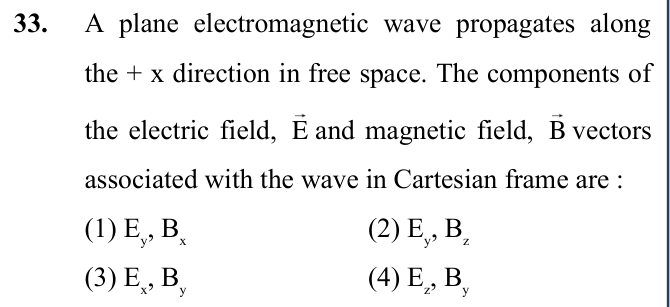
PHYSICS · Electric Charges and Fields
SECTION A · MCQ (+4, -1)
Candidate Response:
(1) (2) (3) (4)
⚡ OFFICIAL KEY: 2
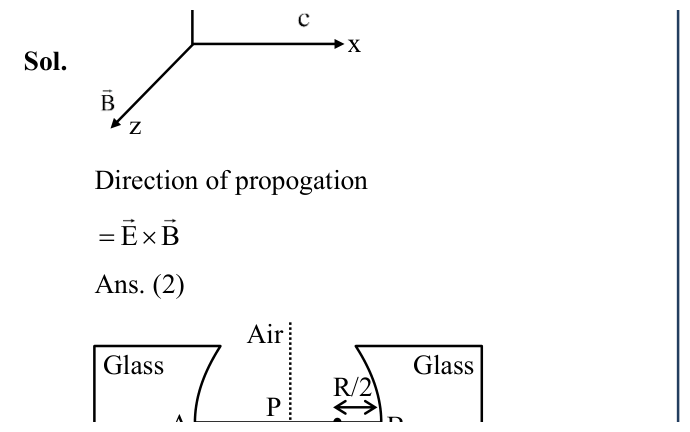
Step-by-Step Derivation
QUESTION 2
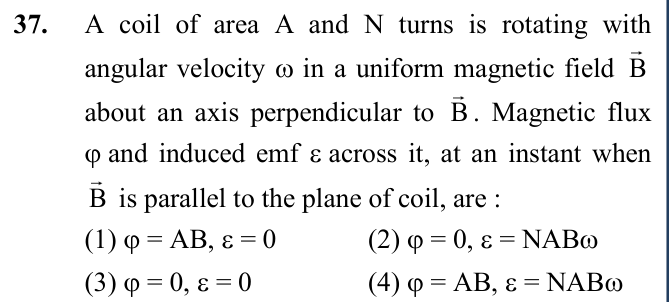
PHYSICS · Electromagnetic Induction
SECTION A · MCQ (+4, -1)
Candidate Response:
(1) (2) (3) (4)
⚡ OFFICIAL KEY: 2
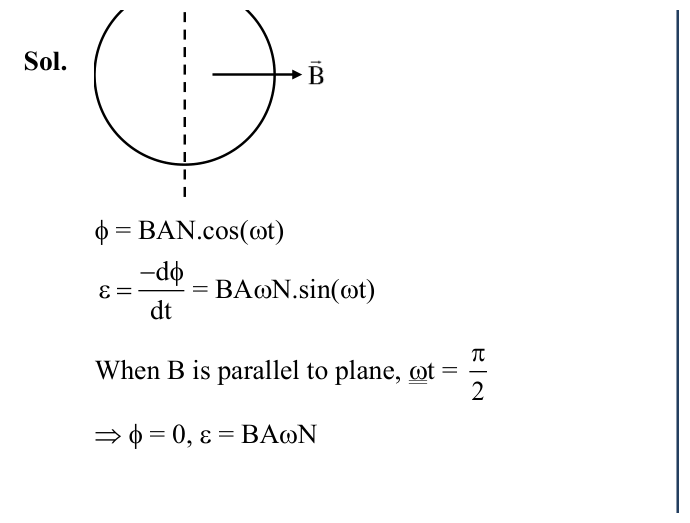
Step-by-Step Derivation
QUESTION 3
PHYSICS · Laws of Motion
SECTION A · MCQ (+4, -1)
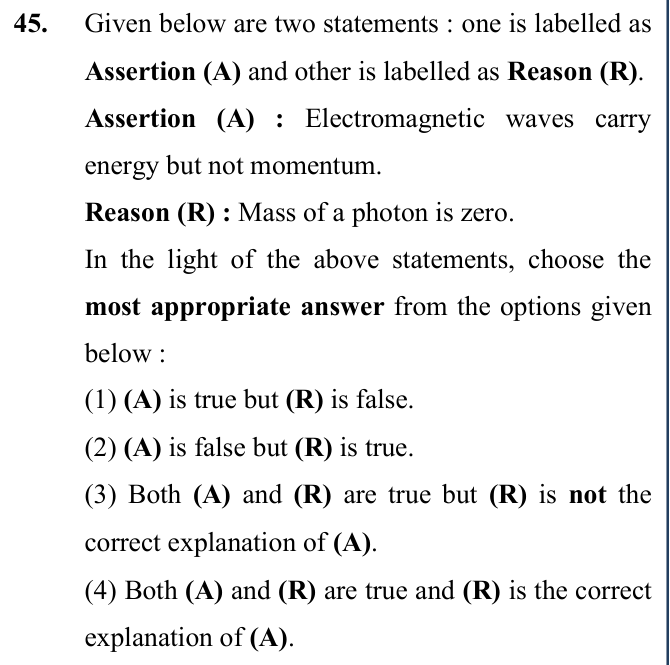
Candidate Response:
(1) (2) (3) (4)
⚡ OFFICIAL KEY: 2
Step-by-Step Derivation

QUESTION 4
PHYSICS · Oscillations
SECTION A · MCQ (+4, -1)
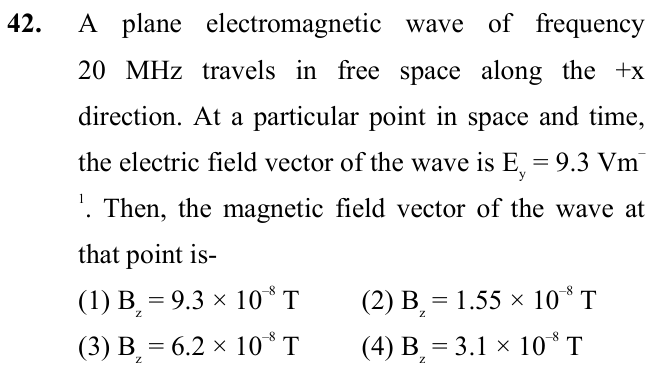
Candidate Response:
(1) (2) (3) (4)
⚡ OFFICIAL KEY: 4
Step-by-Step Derivation

QUESTION 5
PHYSICS · Electromagnetic Induction
SECTION A · MCQ (+4, -1)
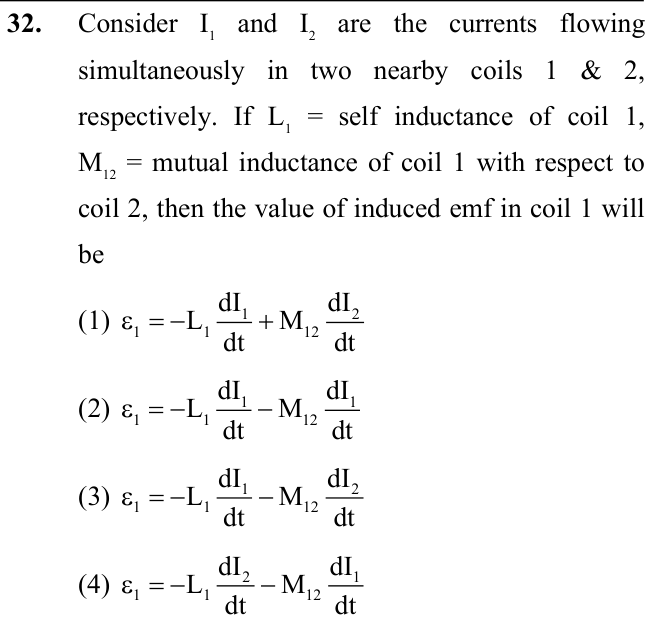
Candidate Response:
(1) (2) (3) (4)
⚡ OFFICIAL KEY: 3
Step-by-Step Derivation
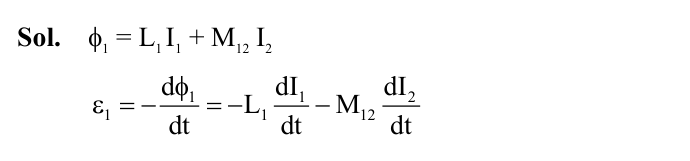
QUESTION 6
PHYSICS · Electromagnetic Induction
SECTION A · MCQ (+4, -1)
Candidate Response:
(1) (2) (3) (4)
⚡ OFFICIAL KEY: 2
Step-by-Step Derivation
QUESTION 7
PHYSICS · Electric Charges and Fields
SECTION A · MCQ (+4, -1)
Candidate Response:
(1) (2) (3) (4)
⚡ OFFICIAL KEY: 3
Step-by-Step Derivation
QUESTION 8
PHYSICS · Current Electricity
SECTION A · MCQ (+4, -1)
Candidate Response:
(1) (2) (3) (4)
⚡ OFFICIAL KEY: 2
Step-by-Step Derivation
QUESTION 9
PHYSICS · Electromagnetic Induction
SECTION A · MCQ (+4, -1)
A strong bar magnet is dropped with its north pole downward toward a fixed, closed metal ring. During the interval the magnet is approaching the ring from above but has not yet passed through, what is observed about its acceleration?
(1) The magnet moves with constant velocity, because the induced current exactly cancels gravity.
(2) The magnet accelerates with a = g, since gravity is the only force acting.
(3) The magnet accelerates with a > g, because the induced current adds to the gravitational pull.
(4) The magnet accelerates with a < g, because the ring induces a current whose magnetic field repels the approaching magnet.
Candidate Response:
(1) (2) (3) (4)
⚡ OFFICIAL KEY: The magnet accelerates with a < g, because the ring induces a current whose magnetic field repels the approaching magnet.
Step-by-Step Derivation
By Lenz's law the ring opposes the increase in flux caused by the approaching magnet, so it induces a current whose face toward the magnet is a like (north) pole. The resulting upward repulsion reduces the net downward acceleration below g.
QUESTION 10
PHYSICS · Electromagnetic Induction
SECTION A · MCQ (+4, -1)
An AC generator works on the principle of
(1) electromagnetic induction
(2) electrostatic repulsion
(3) photoelectric effect
(4) magnetic resonance
Candidate Response:
(1) (2) (3) (4)
⚡ OFFICIAL KEY: electromagnetic induction
Step-by-Step Derivation
An AC generator induces an emf by rotating a coil in a magnetic field.
QUESTION 11
PHYSICS · Electromagnetic Induction
SECTION A · MCQ (+4, -1)
The SI unit of magnetic flux is the
(1) weber
(2) henry
(3) tesla
(4) gauss
Candidate Response:
(1) (2) (3) (4)
⚡ OFFICIAL KEY: weber
Step-by-Step Derivation
Magnetic flux is measured in weber (Wb).
QUESTION 12
PHYSICS · Electromagnetic Induction
SECTION A · MCQ (+4, -1)
The magnetic flux through each turn of an N-turn coil of resistance R is changed by ΔΦ over some time interval. The total charge that flows through the coil during this interval is given by which relation?
(1) Δq = N ΔΦ / R, and it increases as the change is made slower.
(2) Δq = N ΔΦ / R, and it is independent of the duration of the flux change.
(3) Δq = N ΔΦ / R², and it is independent of the number of turns.
(4) Δq = N ΔΦ × R, and it increases as the change is made slower.
Candidate Response:
(1) (2) (3) (4)
⚡ OFFICIAL KEY: Δq = N ΔΦ / R, and it is independent of the duration of the flux change.
Step-by-Step Derivation
The total charge flown is Δq = ∫ i dt = ∫ (ε/R) dt = (N/R)∫ (dΦ/dt) dt = N ΔΦ / R. The time interval cancels out, so the charge depends only on the total flux change, not on how fast it occurs.
QUESTION 13
PHYSICS · Electromagnetic Induction
SECTION A · MCQ (+4, -1)
The SI unit of inductance is the
(1) weber
(2) ohm
(3) henry
(4) farad
Candidate Response:
(1) (2) (3) (4)
⚡ OFFICIAL KEY: henry
Step-by-Step Derivation
Inductance is measured in henry (H).
QUESTION 14
PHYSICS · Electromagnetic Induction
SECTION A · MCQ (+4, -1)
Magnetic flux through a surface is a measure of the number of magnetic field lines
(1) parallel to it
(2) passing through it
(3) circulating around it
(4) leaving it
Candidate Response:
(1) (2) (3) (4)
⚡ OFFICIAL KEY: passing through it
Step-by-Step Derivation
Magnetic flux counts the field lines crossing a surface.
QUESTION 15
PHYSICS · Electromagnetic Induction
SECTION A · MCQ (+4, -1)
A coil in which a changing current induces an EMF that opposes the change is said to possess self-inductance. Which pair correctly gives the defining relation and the SI unit of self-inductance?
(1) ε = L (dI/dt), with unit farad (F), where 1 F = 1 C/V.
(2) ε = −L (dI/dt), with unit henry (H), where 1 H = 1 V·s/A = 1 Wb/A.
(3) ε = −L (dI/dt), with unit tesla (T), where 1 T = 1 N/(A·m).
(4) ε = −L (d²I/dt²), with unit henry (H).
Candidate Response:
(1) (2) (3) (4)
⚡ OFFICIAL KEY: ε = −L (dI/dt), with unit henry (H), where 1 H = 1 V·s/A = 1 Wb/A.
Step-by-Step Derivation
Self-inductance L is defined by ε = −L (dI/dt): a coil has L = 1 henry when a current changing at 1 A/s induces an EMF of 1 V. Hence 1 H = 1 V·s/A = 1 Wb/A.